

-
Recently Browsing 0 members
- No registered users viewing this page.
-
Forum Statistics
250.6k
Total Topics2.7m
Total Posts -
Member Statistics
343,007
Total Members8,960
Most Online
-
Latest Articles
-
Posts
-
 So, GMCustomerService: Judging by the Update History pictured above, is this truck missing any updates that it actually needs. If it's just for the infotainment system, the radio is working fine and no trouble with SeriusXM. and Android Auto is working fine wirelessly with my phone. Some months ago, an update notice was sent to my truck. I approved the update and it finished saying that the update was successful, but it seems that whatever that update was, it didn't actually get installed - at least not if I'm to go by the Update History shown above. So, again, are there any updates that this truck really should have? I've checked with my dealer but they're reluctant or commit to anything and if I want them to check, they require a $200.00 fee just to check it out and then I'd have to pay for the actual update(s). Ignorance is bliss, and if none of the updates goes to fixing any mechanical discrepancies, I'll just leave things as is.
 -
 Hey everyone, I recently had an issue with my 07 2500HD GMT900. My DRL’s stay on at all times. Right front turn and right mirror turn signal indicator stay on solid at all times. By “at all times” I mean the only way to make them go off is disconnecting the battery. I tore the headlight assemblies out, tried disconnecting the harnesses to eliminate bad wiring at the harness, I unplugged the headlight switch, no change and the mirror turn signal still stayed on. My first thoughts were : Bad bulb and/or socket somewhere, under hood fuse panel bad, bcm bad, tail light or trailer wiring problem, or some random short to power in the harness. Possibly a bad ground but unlikely. I had a big clue in the fuse panel, it had a burnt smell. I started pulling every fuse that had to do with DRL or right turn/park lamp. Nothing made the right directional turn off but pulling the DRL2 fuse made the DRL’s go out. After studying wiring diagrams, I found that both problems had that fuse panel in common, the bcm also controls both problems but knowing the fuse panel had a burnt smell I removed and disassembled the fuse panel and found a little corrosion on the printed circuit board. I ordered a new fuse panel from Amazon for like $260. When it arrived I installed it, and put everything back together, the problem was fixed. I figured the fuse panel needed to be replaced anyway so that was a logical place to start. Hopefully this story helps someone in the future. Regretfully I didn’t scan for codes before I did everything.
 -

By 2022LtTbZ71 · Posted
That stinks. I’m sitting on the side of the road right now with the same issue. Never had an issue before taking it in for the ground strap recall. Now I’m outside of warranty and they’ll probably want $200 just to diagnose what they already “fixed”. -

By jagabom (Esquire) · Posted
I wonder kind of nuts and bolts they will come up with next? Jim -
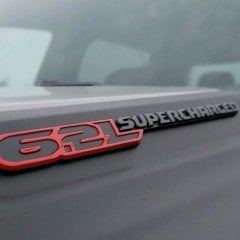 “It should be recognized, however, that there becomes a point where fuel economy oils do not make much economic sense for the end consumer—we talk about a fuel saving of ~€100 compared to a risk of €1000 Euros if the oil is too thin and causes increased engine wear rates. However, the benefit of these oils accrues to the car manufacturers. If their vehicles can save 1–2% fuel by using a special fuel economy lubricant, then that OEM can drastically reduce the amount of fines they need to pay.” I liked this and the following paragraph as well but it’s really only touching the beginning of the benefits OEMs see from spec’ing these oils. After you factor in “out of warranty” service work and new car sales when these engines fail before their time, it’s a good racket for them. Just because you're paranoid doesn't mean they're not out to get you!
-
-
GM-Trucks.com Clubs
-

Black Truck Club
Open Club · 613 members
-

White Truck Club
Open Club · 381 members
-

Canadian Owners Club
Open Club · 282 members
-

Red Truck Club
Open Club · 158 members
-

diesel 3.0
Open Club · 281 members
-

Texas Owner's Group
Open Club · 371 members
-

NorthSky Blue Club
Open Club · 118 members
-

Midwest Owner's Group
Open Club · 213 members
-

2015 Custom Sport Club
Open Club · 5 members
-

GM Snow Plowing Club HD
Closed Club · 14 members
-
-
Popular Contributors
-
1
.thumb.JPG.2c573de60d3a3a4407c7d92298db46dd.JPG)
-
2

-
3
-
4

-
5
.thumb.JPG.2707f5cf70ec02838ebf5bc9a9c2f7dc.JPG)
-
-

Recommended Posts
Archived
This topic is now archived and is closed to further replies.