Jump to content

Info on Flex Fuel Engines?


Recommended Posts

Posted

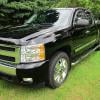
I just purchased a 2005 Chevy Silverado Z71 with the 5.3 liter flex fuel engine. What are your opinions on the reliability and performance of this engine? What are the differences between it and the regular 5.3 liter? Thanks for the info!

Posted
I just purchased a 2005 Chevy Silverado Z71 with the 5.3  liter flex fuel engine. What are your opinions on the reliability and performance of this engine?  What are the differences between it and the regular 5.3 liter?  Thanks for the info!


The engine is the same as the regular gas. The flex fuel has different fuel pump assy, seals (O-rings) , extra sensors to detect the fuel, different PCM programming. There is also a in-line fuel filter that the reg. gas doesnt have.

If you dont use E-85 than its invisible to you except you paid about $380 more.

Posted

I've got 65K on mine and it still runs like brand new. Oh wait. Actually better then new thanks to westers :seeya:


I do run E85 from time to time and have had no performance issues at all with it. You do loose some MPG. I get about 12-14 mpg with E85 and 16-18 mpg with 93 Octane but for the price difference it is comparable in cost.


I also believe the flex-fuel have larger stock injectors which I have heard can very slightly effect performance because the larger injector doesn't have as good of a spray pattern. I don't know if there is any truth to that but just thought I would share.

Posted

Just to add to the positive so far, I have the FFV, and I am about to turn 50K with no problems.


One other difference in the newer FFV vs conventional, is that the FFV hasa lower hp and tq rating.

Posted

I thought the 2005 FFV was rated at 295Hp just like the standard 5.3 liter Vortec? I knew there was a 310 Hp all aluminum 5.3. I am by no means an expert...am I wrong?

Posted

Here's some info...


Fuel Composition Sensor Description


The fuel composition sensor (FCS), or flex fuel sensor (service parts term), measures the ethanol-gasoline ratio of the fuel being used in a flexible fuel vehicle. Flexible fuel vehicles can be operated with a blend of ethanol and gasoline, up to 85 percent ethanol. In order to adjust the ignition timing and the fuel quantity to be injected, the engine management system requires information about the percentage of ethanol in the fuel.


The FCS uses quick-connect style fuel connections, an incoming fuel connection, and an outgoing fuel connection. The two connections have different diameters, to prevent incorrect attachment of the fuel lines. All fuel passes through the fuel composition sensor before continuing on to the fuel rail. The fuel composition sensor measures two different fuel related parameters, and sends an electrical signal to the powertrain control module (PCM) to indicate ethanol percentage, and fuel temperature.


The fuel composition sensor has a three-wire electrical harness connector. The three wires provide a ground circuit, a power source, and a signal output to the PCM. The power source is vehicle system voltage, +12 volts), and the ground circuit connects to chassis ground. The signal circuit carries both the ethanol percentage and fuel temperature within the same signal, on the same wire.


The FCS uses a microprocessor inside the sensor to measure the ethanol percentage and fuel temp, and change an output signal accordingly. The electrical characteristic of the FCS signal is a square-wave digital signal. The signal is both variable frequency and variable pulse width. The frequency of the signal indicates the ethanol percentage, and the pulse width indicates the fuel temperature. The PCM provides an internal pull-up to five volts on the signal circuit, and the FCS pulls the 5 volts to ground in pulses. The output frequency is linear to the percentage of ethanol content in the fuel. The normal range of operating frequency is between 50 and 150 Hertz, with 50 Hertz representing 0 percent ethanol, and 150 Hertz representing 100 percent ethanol. The normal pulse width range of the digital pulses is between 1 and 5 milliseconds, with 1 millisecond representing -40°C (-40°F), and 5 milliseconds representing 125°C (257°F).


The microprocessor inside the sensor is capable of a certain amount of self-diagnosis. An output frequency of 170 Hertz indicates either that the fuel is contaminated or contains methanol (it should not), or that an internal sensor electrical fault has been detected. Certain substances dissolved in the fuel can cause the fuel to be contaminated, raising the output frequency to be higher than the actual ethanol percentage should indicate. Examples of these substances include water, sodium chloride (salt), and methanol.


It should be noted that it is likely that the FCS will indicate a slightly lower ethanol percentage than what is advertised at the fueling station. This is not a fault of the sensor. The reason has to do with government requirements for alcohol-based motor fuels. Government regulations require that alcohol intended for use as motor fuel be DENATURED. This means that 100 percent pure ethanol is first denatured with approximately 4½ percent gasoline, before being mixed with anything else. When an ethanol gasoline mixture is advertised as E85, the 85 percent ethanol was denatured before being blended with gasoline, meaning an advertised E85 fuel contains only about 81 percent ethanol. The FCS measures the actual percentage of ethanol in the fuel.


GM Document ID# 815756

Posted

da wife's '04 Tahoe with the E85 5.3 is doing just great after almost 29K miles. Never used the actual E85 fuel here in TX tho...


She get mucho greater milage than me too... she gets about 17 city compared to my 13 in my Silverado... Must be her smaller foot huh...


James.

Posted
I thought the 2005 FFV was rated at 295Hp just like the standard 5.3 liter Vortec?  I knew there was a 310 Hp all aluminum 5.3.  I am by no means an expert...am I wrong?


The 310 hp aluminum block 5.3 is not a flex fuel. The L59 flex is rated at 295 just like the standard LM7 5.3L.

Archived

This topic is now archived and is closed to further replies.

×
×
  • Create New...