


lapoolboy
-
Posts
1,730 -
Joined
-
Last visited
-
Days Won
13
Content Type
Profiles
Forums
Gallery
Events
Articles
RPO
Store
Blogs
Everything posted by lapoolboy
-

Readylift SST Trail boss questions
lapoolboy replied to Flyboygt's topic in Modifications, Wheels & Tires
The axle and ball joint angles are no more "out of whack" than they were when stock. The suspension can only travel through a specific range of motion bound by its physical limits; i.e. UCA droop stops and bump stops. Most trucks won't even see these two extreme ends of the articulation angles during normal operation, everything else is within the same range of motion as the stock setup. The axles and ball joints are engineered to function properly within these parameters and have plenty of margin built-in. If you put the truck on a lift and take the front struts off, you can cycle the suspension from total droop to total compression with a physical "stop" at each end. The ball joints and axles are designed to work inside this envelope (plus a little margin each way for reliability). This doesn't change simply by adding an aftermarket lift strut. Limits are just that. -
License Plate Lights to LEDs? Anyone?
lapoolboy replied to ILSilverado's topic in Modifications, Wheels & Tires
Vatozone -
Just bought a 21 Silverado 2.7l!
lapoolboy replied to mdchaser's topic in 2019-2026 Silverado 1500 & Sierra 1500
The 2.7L is known to be pretty thirsty. -
2020 Hood Hinge LED Mounts
lapoolboy replied to jeepincbum11's topic in Modifications, Wheels & Tires
Me too. I like VisionX stuff myself. -
Readylift SST Trail boss questions
lapoolboy replied to Flyboygt's topic in Modifications, Wheels & Tires
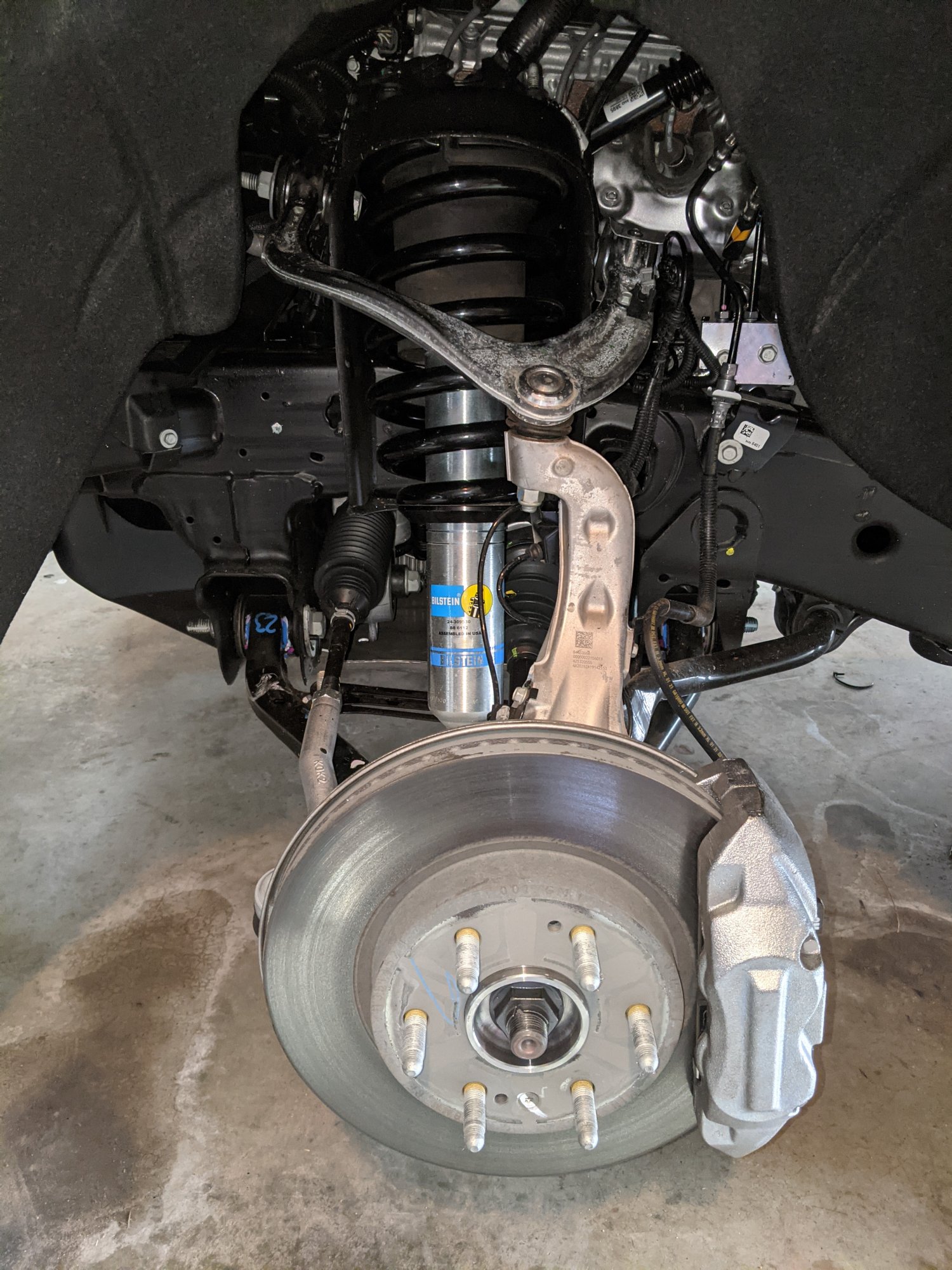
I'll just leave this right here... Bilstein 6112 for TB/AT4. Set on highest clip to bring front up 1.2" for a total of 3.2" up front....levels the truck nicely.
-
Any speaker can only be as good as the import source it is given.
-
Readylift SST Trail boss questions
lapoolboy replied to Flyboygt's topic in Modifications, Wheels & Tires
-
Yes, if you don't have an auto-dimming mirror....there will be no power up there. Although there may be a harness installed at the factory that terminates under the headliner up there? May be worth a look to see. Do you have OnStar?
-
What Have You Done With Your T1 Today ?????
lapoolboy replied to Sierra Dan's topic in Modifications, Wheels & Tires
No, I always have run the single. It connects inline between the driver side valve cover and intake port. I suppose I'd catch more if I ran the dual, but I didn't want a spaghetti bowl of hoses running everywhere and I'm content with the performance of the single. The intake on my 2017 was spotless when I had it off to install the blower so I'm convinced. -
Yes, you can see it there behind the A/C hose.
-
Nope. But I always take it off before any dealer visits during warranty period just to be sure I don't get any grief. It's one bolt and disconnecting two hoses....takes less than 3 minutes.
-
UPR.....all I've ever used and quality is impeccable.
-
TrailBoss w/ Bilsteins Fronts
lapoolboy replied to Coles5515's topic in Modifications, Wheels & Tires
ReadyLift says no to their kits with anything other than stock shocks. I don't see why it would matter if set to stock height, but they were pretty adamant. -
Just put one on my 2021 today at 440 miles. I've never ran a DI engine without one.
-
What Have You Done With Your T1 Today ?????
lapoolboy replied to Sierra Dan's topic in Modifications, Wheels & Tires
Installed my catch can at 440 miles before intake and valves get nasty.
-
Video Rear View Mirror - Wiring Diagram Needed
lapoolboy replied to Descartian's topic in Modifications, Wheels & Tires
Aren't you going to need BCM programming for this? -
No longer for sale, installed them on my new truck.
-
Bilstein 6112 thread for ‘19-‘20
lapoolboy replied to Tcolburntexas's topic in Modifications, Wheels & Tires
You don't need UCAs with the 6112s. Stimulus money burning a hole? -
Long-shot I know.... but does anyone know how deep the pockets are between the lug holes on the backside of the factory 2019+ LTZ wheels? I don't want to have to take a wheel off to measure, but I will if I have to! Lazy, I know! I think I read somewhere the studs are 1-9/16" long? Can someone confirm this? I'm wanting to try 1-1/4" spacers and they would leave me with 5/16" stud protruding past the face of the spacer. Hopefully the wheel pockets are deeper than that.
-
If it is a GOOD shop and they've lifted T1's before, you should be o.k. The CV boots on these trucks are hard plastic and are prone to tearing if the tech isn't careful during the installation process. I entrust the GM dealer with this since they know these trucks best. I have a good relationship with my dealer and their prices are in-line with the aftermarket shops around here anyway so it's a no-brainer choice for me.
-
BDS
-
Lift/level, dealer install or take it to "your" mechanic?
lapoolboy replied to ero2's topic in Modifications, Wheels & Tires
I always have my dealer do it. The suspension tech there is excellent and always does a fantastic job taking care of me. Around here at least, the price is right inline with 4 Wheel Parts and I wouldn't let them even catch a glimpse of my truck, much less touch it. -
No, I ran 275/60R20 Ridge Grapplers. There seemed to be plenty of room for bigger tires though. I want to try a 35x11.5, but haven't yet.
-
I believe you're going to run into problems trying to lift a Denali. Doesn't the magnetic ride control gizmo come standard on all of them?
-
I ran the Bilstein 6112 kit set at the 1.2" mark and my truck was level. I didn't put a tape on it, but it certainly passed the eyeball test.





-
Forum Statistics
250.5k
Total Topics2.7m
Total Posts -
Member Statistics
342,971
Total Members8,960
Most Online
-
Who's Online 8 Members, 0 Anonymous, 668 Guests (See full list)