Jump to content

New Silverado + Questions


Zeetwentyfour

Recommended Posts

Posted

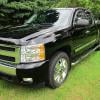
Hey guys, new guy here. I just finished fixing up a 1999 Silverado 1500 5.3 for myself. This is my first truck and got three questions (no owners manual). Whats the difference between 4WD and auto 4WD? how or when do the side mirror defrosters work? And last, Whats this empty space on the overhead console for? th_overhead.jpg

BTW here are some quick shots I took with my phone.

th_snowtruck001.jpg

th_snowtruck002.jpg

th_snowtruck003.jpg

Posted

Welcome aboard James, the space in the overhead console on mine is just a cubby hole for losing shit in. I put my sunglasses up there.

4X4 vs Auto4WD: In Auto the truck will go into 4WD when a the computer senses wheel slip, in 4X4 it is putting power to all 4 wheels all the time. I don't know about the mirror defroster stuff.

Posted

The heated mirror defrosters turn on whenever you turn on the rear window defogger.

The empty space on the overhead console is where the rear HVAC controls would be if you had a Tahoe/Suburban.

Posted

This should answer any questions on the 4WD system...


Transfer Case Description and Operation

General Operation

The New Venture Gear model NVG 246 RPO NP8 transfer case is a 2-speed automatic, active, transfer case. The NVG 246 EAU provides 5 modes, Auto 4WD, 4HI, 4LO, 2HI and NEUTRAL. The Auto 4WD position allows the capability of an active transfer case, which provides the benefits of on-demand torque biasing wet clutch and easy vehicle tuning through software calibrations. The software calibrations allow more features such as flexible adapt ready position and clutch preload torque levels. The technology allows for vehicle speed dependent clutch torque levels to enhance the performance of the system. For example, the system is calibrated to provide 0-6.78 N·m (0-5 lb ft) of clutch torque during low speed, low engine torque operation, and predetermined higher torque for 40 km/h (25 mph) and greater. This prevents crow-hop and binding at low speeds and provides higher torque biases at higher vehicle speeds, in order to enhance stability.


Transfer Case Shift Control Switch

The NVG 246 EAU transfer case features a 4 button shift control switch located on the instrument panel. When the ignition key is in the RUN position, the transfer case shift control module monitors the transfer case shift control switch to determine if the driver desires a new mode/range position. At a single press of the transfer case shift control switch, the lamp of the new desired position will begin flashing to inform the driver that the transfer case shift control module has received the request for a new mode/range position. The lamp will continue to flash until all shifting criteria has been met and the new mode/range position has been reached, or has been engaged. Once the new mode/range position is fully active, the switch indicator lamp for the new position will remain ON constantly.


During normal driving situations, the transfer case can operate in the Auto 4WD mode. In the Auto 4WD mode, the transfer case shift control module monitors rear wheel slip speed, based on the inputs from both the front and rear propshaft speed sensors. When the vehicle experiences a rear wheel slip condition, the transfer case shift control module sends a pulse width modulated (PWM) signal to an electronic motor, which is the transfer case encoder motor. This motor rotates the transfer case control actuator lever shaft, applying a clutch pack. This clutch pack is designed to deliver a variable amount of torque, normally delivered to the rear wheels, and transfers it to the front wheels. Torque is ramped up to the front wheels until the front propshaft speed sensor matches that of the rear propshaft speed sensor. Torque is ramped down to the front wheels. The process would repeat if rear wheel slip is detected again.


The NVG 246 EAU transfer case has the added feature of also providing the driver with 3 manual mode/range positions:


• 4HI - 4 Wheel Drive high range


• 2HI - 2 Wheel Drive high range


• 4LO - 4 Wheel Drive low range


The driver may choose to select any of these mode/range positions while driving the vehicle. However, the transfer case will not allow a shift into or out of 4LO unless the following criteria has been met:


• The engine is running.


• The automatic transmission is in NEUTRAL.


• The vehicle speed is below 5 km/h (3 mph).


This transfer case also has a NEUTRAL position. A shift to the NEUTRAL position allows the vehicle to be towed without rotating the transmission output shaft. NEUTRAL position may be obtained only if the following criteria has been met:


• The engine is running.


• The automatic transmission is in NEUTRAL.


• The vehicle speed is below 5 km/h (3 mph).


• The transfer case is in 2HI mode.


Once these conditions have been met, press and hold both the 2HI and 4LO buttons for 10 seconds. When the system completes the shift to NEUTRAL, the red Neutral lamp will illuminate.


The NVG 246 EAU case halves are high-pressure die-cast magnesium. Ball bearings support the input shaft, the front output shaft, and the rear output shaft. A thrust bearing is located inside of the input shaft gear to support the front of the rear output shaft. The transfer case requires Auto Trac® II Fluid GM P/N 12378508 (Canadian P/N 10953626) which is blue in color. The fluid is designed for smooth clutch application. An oil pump, driven by the rear output shaft, pumps the fluid through the rear output shaft oil gallery to the clutch and bearings.


There are two versions of the NVG 246 EAU, which depend on the transmission applications and vehicle applications. If the vehicle is equipped with a transmission RPO M30, the transmission splines in the input gear will have 27 teeth. With this application the planetary carrier assembly will have 3 pinion gears. If the vehicle is equipped with transmission RPO MT1 or MN8, the transmission splines in the input gear will have 32 teeth. The planetary carrier assembly on this application will have 6 pinion gears.


Some of the changes to the transfer case, that will take place during this model year, include the following components to the high/low range shifting mechanism:


• The range shift fork pads change from a Peak® 3-piece design to a Vespel® 2-piece design.


• The 3 notches in the high/low range shift fork are deeper for the Vespel® pads.


• The high/low range sleeve collar is wider for the Vespel® pads.


• The high/low range sleeves can be identified by the grooves in the collar.


- The 1st design high/low range sleeve that uses the Peak® 3-piece pads has 2 narrow grooves in the collar.


- The 2nd design high/low range sleeve that uses the Vespel® 2-piece pads has 1 wide groove in the collar.


2WD Power Flow

When the NVG 246 EAU is in the 2HI mode, the power flows from the transmission to the input shaft gear. The input shaft gear is connected to the rear output shaft by the high/low range collar. The range collar outer teeth are engaged with the input shaft gear inner, high-speed position teeth. At the same time the range collar is slip splined to the rear output shaft. The rear output shaft delivers the power flow to the rear propshaft. The position of the control actuator lever shaft allows no clutch engagement. The high/low range shift fork, is in the high-speed position on the control actuator lever shaft.


4HI and AUTO 4WD Power Flow

In the 4HI mode, the power flow to the rear propshaft is the same as it is in the 2HI mode. To deliver power flow to the front propshaft during the 4HI position, the transfer control module commands the encoder motor to apply the clutch to a calibrated torque. The encoder motor turns the control actuator lever shaft. A brake in the encoder motor holds the control actuator lever shaft in the full clutch position. The control actuator lever shaft is cam designed and the cam action moves the clutch lever. The clutch lever pivots on the clutch lever pivot studs and moves toward the clutch apply plate, to engage the clutch. As more pressure is applied to the clutch apply plate, the clutch discs are compressed. Using inner clutch discs, which are engaged with the clutch hub, and the outer clutch discs, which are engaged with the clutch housing, the power flow is delivered to the clutch housing. The clutch hub is splined to the rear output shaft, and the clutch housing rotates on a needle bearing on the rear output shaft. The chain drive sprocket is splined to the clutch housing. The power flows from the drive sprocket, through the chain, to the chain driven sprocket. The driven sprocket is splined to the front output shaft. The power flow is delivered to the front propshaft through the front output shaft.


During the Auto 4WD mode, the power flow is the same as it is in the 4HI mode. Except, during the Auto 4WD mode, the encoder motor rotates the control actuator shaft lever to the correct torque level positions. Rotating the control actuator to the various positions changes the clutch torque level. When a difference of front propshaft to rear propshaft speed is recognized, the transfer case control modules command for more, or less clutch torque.


4LO Power Flow

When shifting the transfer case to the 4LO mode, it commands the encoder motor to turn the control actuator lever shaft, to move the high/low range shift fork. The shift fork moves the high/low range collar, which is slip splined on the rear output shaft toward the rear of the transfer case. The range collar outer teeth disengage from the input shaft gear inner teeth. The range collar outer teeth then engage in the planetary carrier teeth. The power flow is now from the input shaft gear planetary teeth to the planetary gears in the carrier. Rotating the planetary gears , which are engaged in the annulus gear, the planetary carrier rotates. The planetary carrier engaged to the range collar, drives the rear output shaft, providing a 2.72:1 reduction to the speed of the rear output shaft. The power flow to the front propshaft is the same as it is in the 4HI.


A NEUTRAL position is obtained when the range collar is not engaged to the input shaft gear or the planetary carrier. NEUTRAL position is used for towing the vehicle.


Service 4WD Indicator

The Service 4WD indicator is an integral part of the cluster and cannot be serviced separately. This lamp is used to inform the driver of the vehicle that a transfer case system malfunctioned. The Service 4WD indicator is controlled by the transfer case shift control module via Class 2.


Transfer Case Encoder

The encoder is mounted to the transfer case motor/encoder assembly and is replaced as an assembly. The encoder converts the shift detent lever shaft position, representing a mode or range, into an electrical signal input to the transfer case shift control module. The module detects what position the transfer case is in by monitoring the voltage returned on the encoder signal circuit. This voltage translates into AUTO 4WD, 2HI, 4HI, NEUTRAL, and 4LO or in transition between gears.


Transfer Case Motor/Encoder

The transfer case motor/encoder consists of a permanent magnet DC motor and gear reduction assembly. It is located on the left hand side, driver's side, of the transfer case. When activated, it turns the shift detent lever shaft of the transfer case, clockwise or counterclockwise, to shift the transfer case. The motor/encoder is controlled with a PWM signal by the transfer case shift control module. This circuit consists of a driver on both the Motor A and Motor B circuits. The encoder motor is bi-directional in order to allow the motor to shift the transfer case from 2HI or 4HI to NEUTRAL and 4LO positions.


Transfer Case Motor Lock

The transfer case motor lock is used to provide a 2HI, 4HI, and 4LO lock-up feature. When the lock circuit is energized, the transfer case encoder motor is allowed to turn. When the transfer case is placed 2HI, 4HI, or 4LO the motor lock circuit is de-energized and the lock is applied. This assures that the transfer case remains in the current gear position until a new gear position is requested. When AUTO 4WD is selected, the motor lock remains applied until an adaptive mode, torque being applied to the front propshaft, is required. During an adaptive mode the motor lock circuit is energized and the motor lock is released, enabling the encoder motor to turn and apply or release torque at the front propshaft.


Transfer Case Shift Control Module

The transfer case shift control module uses the VIN information for calculations that are required for the different calibrations used based on axle ratio, transmission, tire size, and engine. The system does not know which calibration to use without this information. When the vehicle is in the AUTO 4WD mode, the transfer case shift control module monitors the speed of the front and rear propshaft, in order to detect wheel slippage. When wheel slippage is detected, the module applies a clutch pack contained inside the transfer case. This clutch pack is used to lock-in and apply the front propshaft, transferring torque to the front wheels. The clutch pack is applied by a motor/encoder assembly. When slip is no longer detected by the transfer case shift control module, the clutch is no longer applied.


Transfer Case Speed Sensors

There are three speed sensors on the automatic transfer case (ATC), two on the rear output shaft and one on the front output shaft. Each speed sensor is a permanent magnet generator. The permanent magnet generator produces a pulsing AC voltage. The AC voltage level and number of pulses increases as speed increases.


Vehicle Speed Sensor

One of the two speed sensors on the rear output shaft is the vehicle speed sensor (VSS) input to the powertrain control module (PCM). The PCM sends this information to the transfer case shift control module via the Class 2 serial data bus.


Rear Propshaft Speed Sensor

The transfer case shift control module converts the pulsating AC voltage from the rear transfer case speed sensor to a rear propshaft speed in RPM to be used for calculations. The rear propshaft speed can be displayed with a scan tool.


Front Propshaft Speed Sensor

The transfer case shift control module converts the pulsating AC voltage from the front transfer case speed sensor to front propshaft speed in RPM to be used for calculations, and to monitor the difference between the front and rear sensor speed. It is also used in the AUTO 4WD mode to determine the amount of slip and the percent of torque to apply to the front axle. The front propshaft speed can be displayed with a scan tool.

Posted
The heated mirror defrosters turn on whenever you turn on the rear window defogger.


I don't think I have a rear window defogger, I don't see any of those lines on the back window, unless its different from a regular car defroster? Here is what my HVAC controls look like.

th_defroster001.jpg

th_defroster002.jpg


So if I understand you correctly, when I have my switch turned all the way to the right (window defroster/defogger) the rear window is defogged and the heated mirrors turn on?

Posted
The heated mirror defrosters turn on whenever you turn on the rear window defogger.


I don't think I have a rear window defogger, I don't see any of those lines on the back window, unless its different from a regular car defroster? Here is what my HVAC controls look like.

th_defroster001.jpg

th_defroster002.jpg


So if I understand you correctly, when I have my switch turned all the way to the right (window defroster/defogger) the rear window is defogged and the heated mirrors turn on?


No,Theres a separate switch for the rear window defogger (Its a push button type switch)

If you don't have a rear window defogger then you don't have heated mirrors,The rear window defogger was required in order to have heated mirrors....From '99 to '02 you could get just a rear window defogger by itself,or get it plus heated mirrors,but you had to have the rear defogger in order to have the heated mirrors.

Now that all changed in late '03/early '04 when you could order a sliding rear window in place of the rear window defogger,in that case you had the heated mirrors without the defogger.

I can't really make out the picture you posted,its too small,but if you post me your VIN I can run a build sheet and see exactly what you have.

Posted
The pics are click-able to enlarge. the first is of the drivers mirror with the little heated mirror design on it. the second is the HVAC.


VIN: 2GCEK19T3X1279929


OK,I ran your VIN's build sheet...It is not equipped with the rear window defogger or heated mirrors from the factory,Someone has replaced the factory "non-heated" mirror with a heated one.

If you look inside your glovebox at the SPID label you'll see RPO code "D48",This is for the "non-heated" power adjustable mirrors...If they were heated it would have RPO code "DL8"

Posted
The pics are click-able to enlarge. the first is of the drivers mirror with the little heated mirror design on it. the second is the HVAC.


VIN: 2GCEK19T3X1279929


OK,I ran your VIN's build sheet...It is not equipped with the rear window defogger or heated mirrors from the factory,Someone has replaced the factory "non-heated" mirror with a heated one.

If you look inside your glovebox at the SPID label you'll see RPO code "D48",This is for the "non-heated" power adjustable mirrors...If they were heated it would have RPO code "DL8"


Very interesting; Thank you kind sir! :shakehead:

Archived

This topic is now archived and is closed to further replies.

  • Recently Browsing   0 members

    • No registered users viewing this page.
  • Forum Statistics

    250.3k
    Total Topics
    2.7m
    Total Posts
  • Member Statistics

    342,679
    Total Members
    8,960
    Most Online
    Old Bay
    Newest Member
    Old Bay
    Joined
  • Who's Online   1 Member, 0 Anonymous, 691 Guests (See full list)

×
×
  • Create New...