
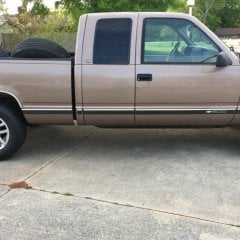
'97 still having P0300 or P0303 only under load or on steep roadway
-
Recently Browsing 0 members
- No registered users viewing this page.
-
Forum Statistics
250.5k
Total Topics2.7m
Total Posts -
Member Statistics
342,914
Total Members8,960
Most Online
-
Who's Online 3 Members, 0 Anonymous, 1,299 Guests (See full list)
-
Latest Articles
-
Posts
-
 Thanks newdude! By the time manual selection is needed, I'm probably too much of a control-freak to depend on the transmission sensing braking to activate automatic downshifting. I would be anticipating the situation and already be manually downshifting. This truck replaced a 2004.5 LLY diesel with the Allison 5-speed. Putting it in T/H made noticeable differences (when the torque converter locked, upshift points, downshift behavior). On this 2024 gasser with the 10L1000 I haven't been able to detect much, if any, difference. Ok, I can never tell now when the torque converter locks up. But I also don't notice differences in shifting. For downhills, I've probably already manually downshifted by then anyway. Since it's also more awkward (than the 2004.5) to engage/disengage I don't even bother. Or maybe it doesn't really matter with just a 3k lb. camper in the bed? Thanks also for the list of reasons the charging system might select various voltages. However, what I am seeing doesn't fall into any of those categories. It very definitely, and very consistently, rises after coasting/braking. Maybe not immediately, but not very long after coasting/braking. Very consistently drops voltage when no longer coasting/braking. It might also be interacting with the camper battery charging (I might disconnect the camper and see if it changes the charging behavior). I also need to recheck turning on headlights for when I want to force it to charge the camper. Another JR, in June I converted the camper to LiFePO4. Since it's not a good idea to try to charge lithiums directly using truck, I installed a Victron Orion XS DC-DC charger (which BTW is AMAZING!!). Being cheap, I only had to buy that one item (besides the battery, of course) to do the conversion. The camper OEM 120v battery charger (only 19 years old and works perfectly) and the truck feed the input to the DC-DC charger (not at the same time). But I didn't want the camper charger feeding back to the truck so I kept the old separator. I considered replacing the separator with a 30amp diode but that means more work and might add another 1/2 volt drop. One thing that surprised me was the voltage drop over the long 10awg wire run, so I can only charge smoothly at 8 amps (because the DC-DC charger is completely configurable). Another reason I don't want an added voltage drop with the diode. I might also be a little lazy but all this work is being done under the sink with a small cabinet opening.
 -
 apparently CA smog is (or at least was) checking that the vehicle is using the oem and/or a ca smog approved tune, so I expect you'll fail inspection doing it.
 -
yes, leaking exhaust will mess up o2 sensor readings, which in turn messes up fuel trims.
-
.thumb.JPG.2c573de60d3a3a4407c7d92298db46dd.JPG)
By Grumpy Bear · Posted
286,740 Mile Services 8/6/2026 New AC Compressor. Refrigerant oil and dye, evacuate and charge system. New exhaust system from cat back. New Iridium plugs plus replace #3 coil Repair/rewire headlamp wiring (passenger side) and replace all forward bulbs. Polish lenses of both assemblies. Pull rear rotors, clean and adjust parking assembly. Inspect, clean and grease front calipers. Check pads and shoes. 4 wheel power bleed of brake system. Dot 4 Reset idle speed 50 rpm higher New Serpentine belt. Will need new pads in the rear in about 5K more miles. Tax Title and License out the door just short of a grand. AC clutch had bitten the dust. 1 year warranty on the pick and save replacement. Thing will make a Polar Bear cry Uncle. He spent quite some time on the wiring. It was in the harness and he does nothing half. I got off cheap. I have considerable more light down the road. Sylvania Silver Star replacements. Gas seal between the porcelain and shell of plug #3 was blown, cooked the coil. That was the cold miss. Love the new exhaust. I can sneak into the neighborhood again. Nice to have a working parking brake again. Belle Tire never got it done. That was disappointing. This was one of her bigger bills and still way cheaper than a payment even given the oil consumption. This thing cost me under a hundred a month in repairs and normal routine costs. What is my incentive to replace it? 🤔 -
By AidenVorpagel · Posted
hello I recently bought a 2012 gmc 1500 with a 5.3 and have a AFM disabler on it I'm interested in doing a cam but I'm worried if I remove the AFM system I will fail smog does anyone have info if they are able to detect that or a work around to it (not talking about hot smogging) please let me know thank you
-
-
GM-Trucks.com Clubs
-

Black Truck Club
Open Club · 613 members
-

White Truck Club
Open Club · 380 members
-

Canadian Owners Club
Open Club · 282 members
-

Red Truck Club
Open Club · 158 members
-

diesel 3.0
Open Club · 281 members
-

Texas Owner's Group
Open Club · 371 members
-

NorthSky Blue Club
Open Club · 118 members
-

Midwest Owner's Group
Open Club · 213 members
-

2015 Custom Sport Club
Open Club · 5 members
-

GM Snow Plowing Club HD
Closed Club · 14 members
-
-
Popular Contributors
-




Recommended Posts
Create an account or sign in to comment
You need to be a member in order to leave a comment
Create an account
Sign up for a new account in our community. It's easy!
Register a new accountSign in
Already have an account? Sign in here.
Sign In Now