
Leaderboard
.thumb.JPG.2c573de60d3a3a4407c7d92298db46dd.JPG)

Popular Content
Showing content with the highest reputation on 04/30/2022 in all areas
-
Brand loyalty is for suckers. GM, Ford, Toyota, and RAM all build good trucks and to be honest I've had them all. I like my Chevy a lot, but also liked the 19 RAM I had before it as well.3 points
-
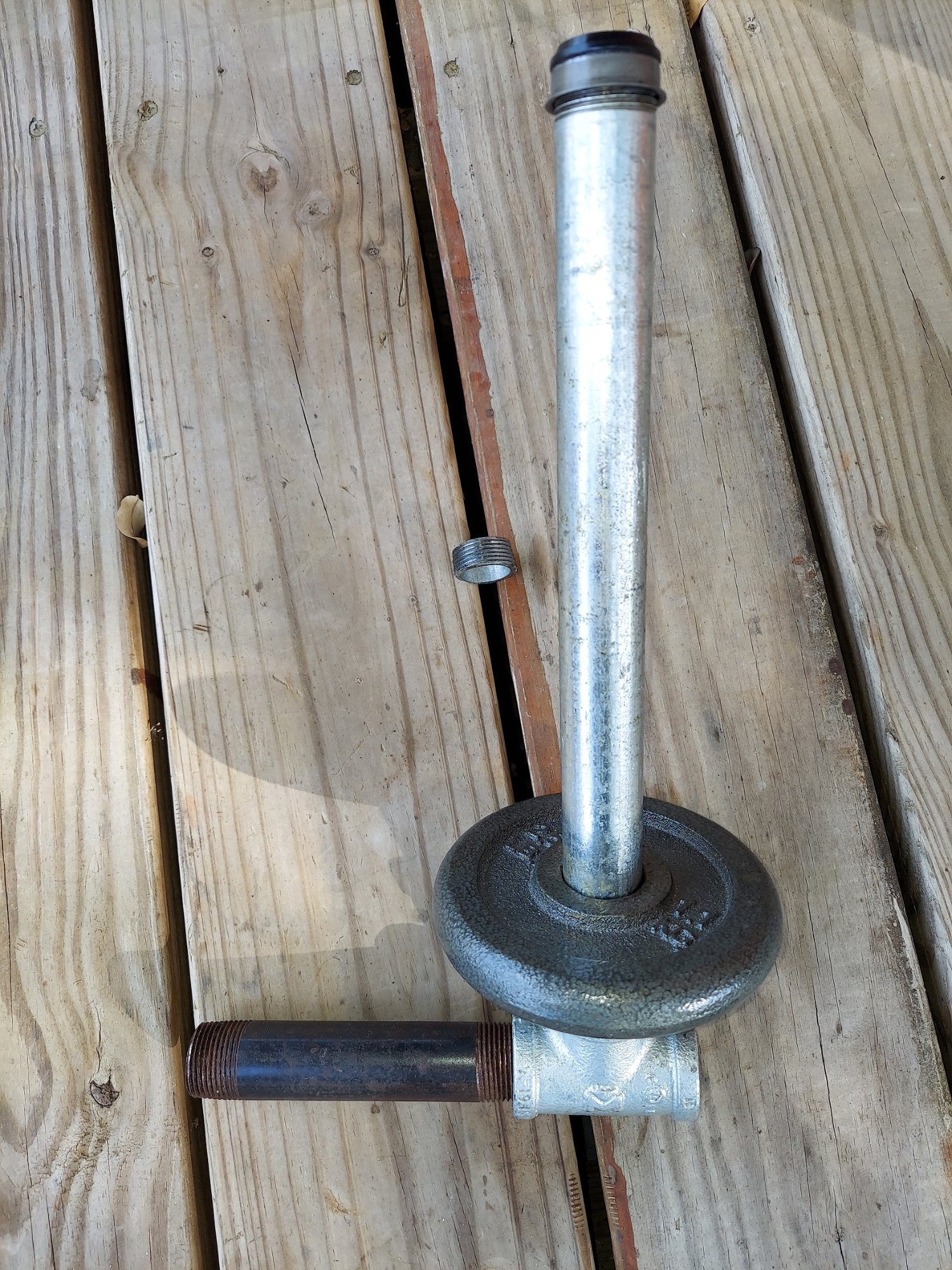
So I have 45000 or so miles and decided to do drop the pan and replace the filter in the 6spd trans. I was looking for a seal remover tool but could not locate one so I decided to make my own from suggestions I saw on the net. I purchased a 12: 3/4 metal pipe with the 3/4 NPT thread on both ends. Cost about 6 bucks, I also picked up a Tee fitting and I had a 5in section of 3/4 I reused. I seal is about 1/2 inch total height so took the 12: pipe and I cut about 7/16 off the threads. I did this so it would not go into the trans past the seal an mess it up. I had 2.5 lb weight I used as a slide hammer, it fits perfectly on the 3/4 pipe. I assembled the thing with the weight and Tee with the additional 5in pipe and threaded it directly into the seal in the trans, as soon as all the threads on the pipe were inside the seal the seal began to rotate. At this point I used the 2.5lb weight and with two drops the seal popped right out. I was amazed how well it worked.
 2 points
 -
ElCamino and Grumpy Bear shared truth. Here's the problem, few dealers and techs have time or care to know baseline science about why we are having issues with IC engines. We are asking a lot from todays engines and a better quality engine oil can go a long way to help. HOWEVER I can crush your engine with a small miss that the MIL system won't pick up and add fuels to the engine oil and make significant oil burn off in 500 miles. Air filter, coils, plugs, ccv/pvc system, injectors, vac leaks, leaking coolant from heat exchangers that NO ONE sees or notices will ruin your engine over time and THE ONLY WAY TO KNOW EARLY is get one of Nicks ISO CERTIFIED ADVANCED OIL ANALYSIS. Quit guessing and quit trusting people who don't care to help YOU. He's a site sponsor and will help you before anyone who is checking off boxes will. Black02Silverado Nick Mikitka Independent AMSOIL Dealer Synthetic Advantage LLC email: [email protected] Phone: 910-290-23712 points
-
Ford starting to have the same problem with their 2.7l, read on. Dozens of Low-Mile 2.7L Ford Bronco Engines Have Already Failed (msn.com)2 points
-
Lets go Brandon, go somewhere else. You won't be missed.2 points
-
From my earlier post: http://k0jdd.netlogger.org/VehicleStatus.php Asn Date is the build date.2 points
-
Thanks for the explanation. I was about to pack my bags, and be your neighbor.1 point
-
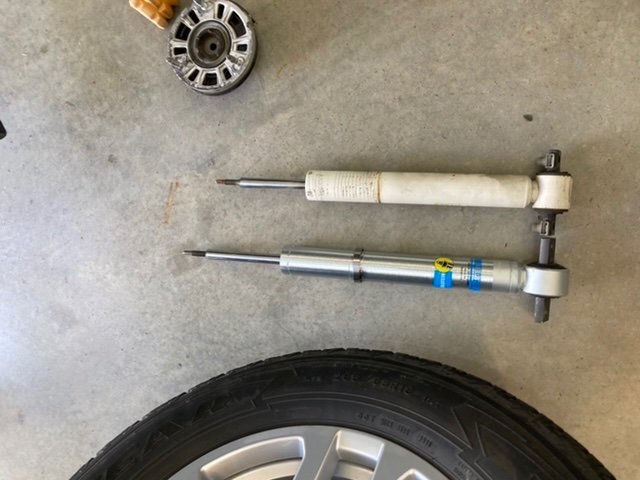
Go longer Bilsteins. The ride/handling improvement is immense.
1 point
-
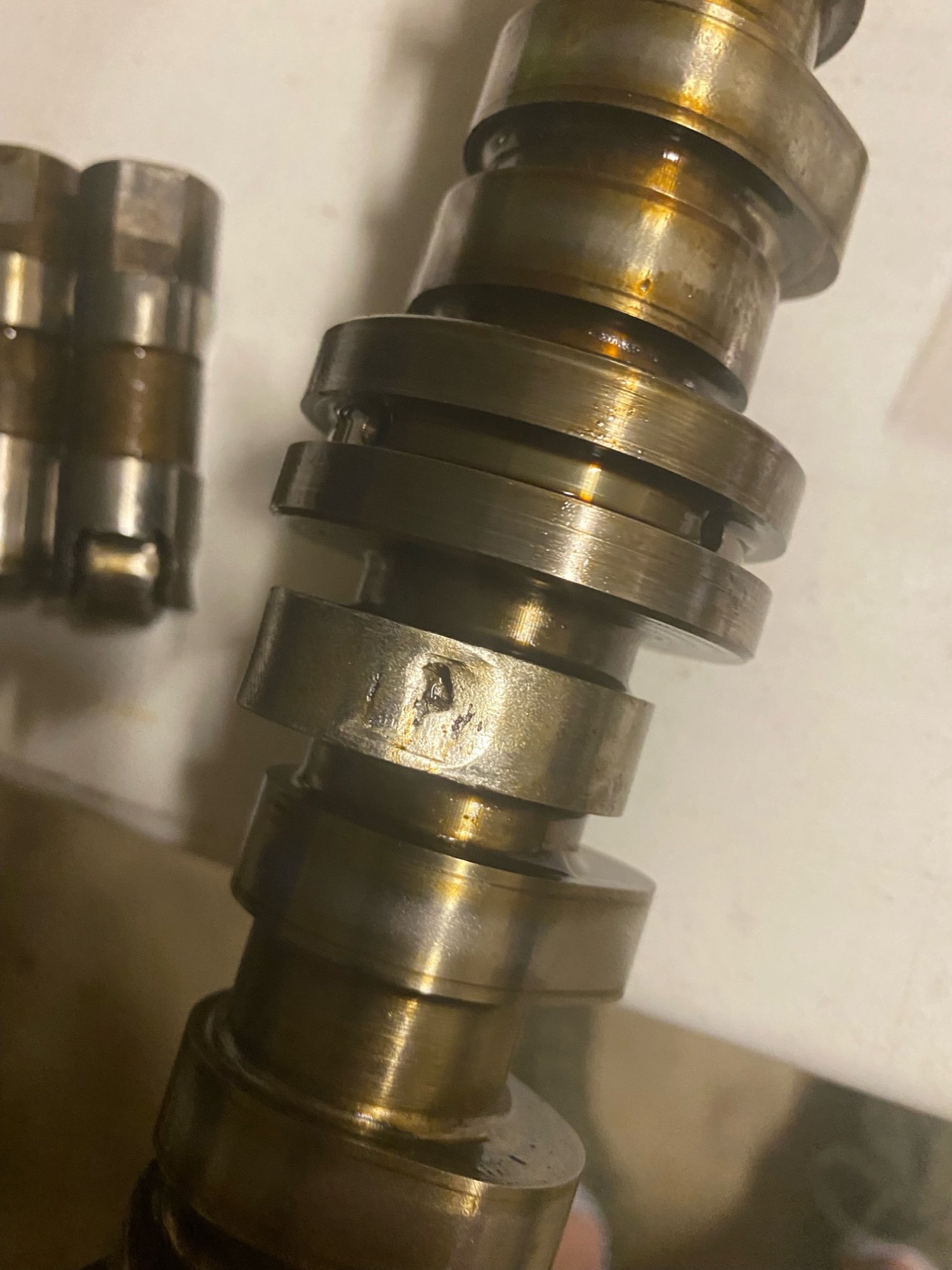
First of all, I owe you guys. Had a ticking noise, and through this forum guessed that it was likely a collapsed AFM lifter. After getting $4k-$6k quotes to repair, watching a LOT of YouTube, and reading on this forum, I decided that if I was going to spend that kind of money I’d rather delete the AFM altogether. So, DIY, here I came. I think I made the right call. Imagine my surprise when I opened it up and did NOT find a collapsed AFM lifter. Instead, I found a stuck roller lifter in Cylinder 3. Wouldn’t pull out, so I had to knock it back into the block and fish it out with a magnet after removing the cam. Pics are what I found. My questions - what would cause this, and what would you do after finding this? TIA!
1 point
-
Sadly, a good anything these days is hard to find. So much of the quality and care in work went out the window. I took it back up there this morning. Now only time will tell. As long as the bubbles dry out like they are supposed to, it will look good. I did have the put 45% on the windshield instead of 35% though. I dont think the Silverado's headlights are as bright as the Sierra's. Granted, considering the difference in looking at my windshield, it makes me wonder if they put darker on it originally that they were supposed to. Who knows now though. At least its done and my interior, minus the windows, is cleaned back up. Tomorrow my detailer comes to strip buff and wax her.1 point
-
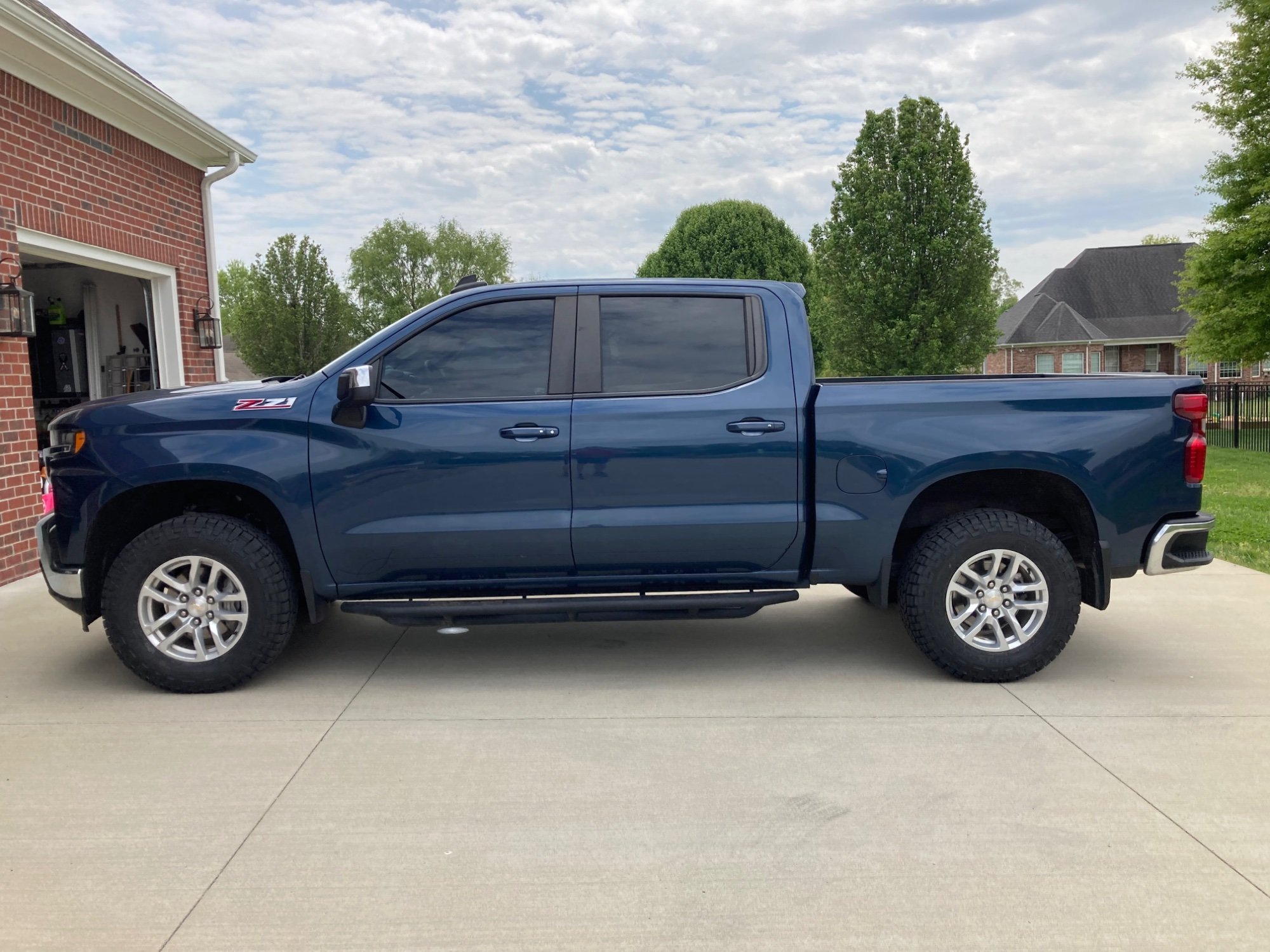
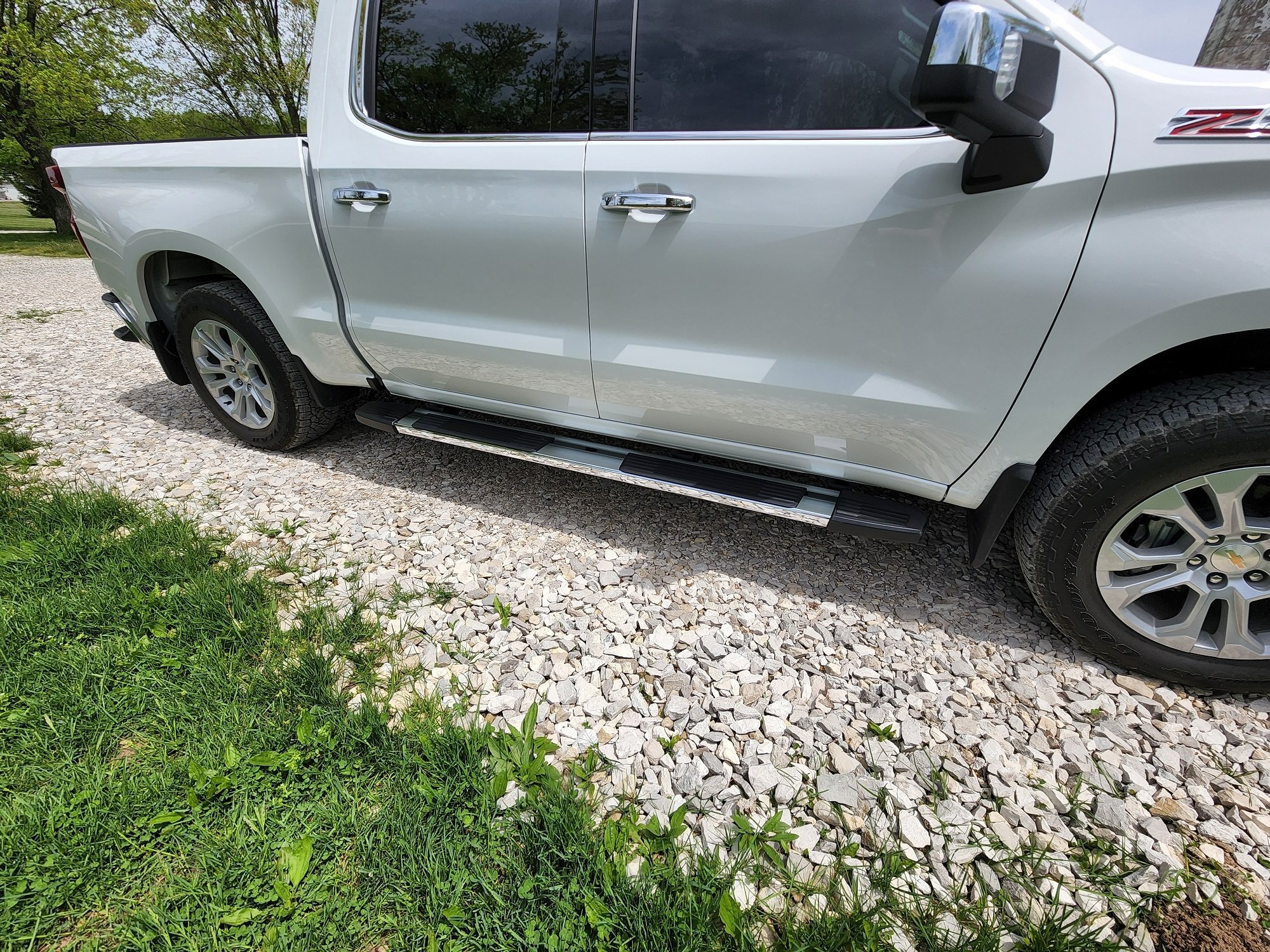
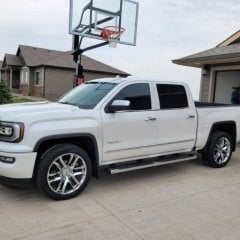
Added the 6" chrome side steps.
1 point
-
JACKPOT!! What a great article @elcameno! Well done. From that post some notes I believe key 1.) Engine oil volatility ties strongly into drain intervals. @Customboss is on this one like yellow on a banana all the time. Fuel dilution percent increases with time/miles and viscosity is influenced by operation conditions and tune conditions. 2.) Passenger car motor oils face similar pushes for longer drain intervals and lower viscosity. In fact, the PCMO market has seen considerably lower viscosities than the heavy duty market, due primarily to stricter fuel economy and emissions requirements. Point I make often. The Spec viscosity isn't about engineering considerations first but rather in addition to. Why the same motor is 'other' service gets a different spec. 3.) In the Noack test, as in an engine, volatility is highly dependent on the rate at which the volatilized material is carried away by the flow of air through the space above the oil. In a running motor this means the condition of the PCV system. Many PCV valves have been replaced by fixed orifices for this very reason. Problem is that often the 'one size fits all' of a orifice leads to poor CCV operation and causes more problems than it cures. 4.) When base oils are distilled, viscosity grade stems from the boiling range of a given cut, explains Amy Claxton of My Energy Consulting & Training. Lighter viscosity oils have a lower boiling point. The volatility of the cut results from the amount of lighter material that will vaporize easily. This does NOT mean a *w20 is more volatile than a *W30. It means a 0W30 is more volatile than a 10W30. This point of references is the first number in the SAE grade not the second. That number is controlled by the VI improvers molecular weight. 5.) 4 centiStoke viscosity oil with a V.I. of 100 has volatility of 20 to 30 percent. Another 4 cSt oil with a V.I. of 120 would have about 13 to 16 percent volatility. This VI number is NOT the number printed in the marketing information. That number is the 'fully formulated oil's in the bottle VI which is influenced by the VI package which includes both VI chemistries and Pour Point chemistries. In a UOA by fuel dilution and other things. Your only clue about the base oils Viscosity Index will be in knowing what base oil was used. That number climbs as the base oil Group Number increases. Caution however is needed in the Group V class and ANYTHING not mineral oil or PAO is tossed into that group. In example; Alkylated Naphthalene is a Group V base oil whose VI is not very high even at higher viscosities. AN's and used allot and that trend will continue to increase. AN's have some very useful traits but they are volatile. This should not stop you from using oils with them. You might find it hard to sources an oil without them. There are some properties of matter that are pretty interesting and useful to know. Such as the law of Partial Pressure. The final vapor pressure is the sum of the volume weighted partial pressures. Used to adjust Butane levels in gasoline for RVP requirements. Add a pound of 100 F water to a pound of 50 F water and you get two pounds of 75F water. The basis for you showers ability to adjust temperature finitely. Base oil volatility follows a law similar to partial pressure. Blenders have tables to draw on to balance all the physical properties of the finished blend before ever mixing a drop. The NOACK number of finished oil is valuable information. Keep in mind that this number, like all others, changes with miles/time in the crankcase and why UOA's can be so useful. At least until you have a feel for your unit driven as you drive it using the lubricant of your choice.1 point
-
The metal on the camshaft failed and the roller took a beating because of it. You did the only thing can do at the this point, replace the camshaft and lifters with new parts. This was/is still a fairly common on the older LS engines too, a lobe gets wiped out and takes the roller with it. Here's a pictures of a different camshaft lobe that failed.1 point
-
Have experience with pretty much all 3 of them. Had a 2020 5.3 10 speed. Currently have a 2022 3.0 10 speed. Also have a 6.2 Camaro. So not exactly the same, but close enough. Originally went with the 5.3 over the 6.2 in the 2020 for a few reasons. First was because it is my wife’s DD and our tow vehicle. She isn’t a huge fan of driving my Camaro. Too much power for her. Second was because it doesn’t require premium gas. Already have that with the Camaro so didn’t want to have to run premium in both. The 6.2 seemed to be the only engine with the lifter issues at that time too so that squashed any urge to go that route. Also the 3.0 wasn’t an option in the TrailBoss at that time. When the 2020 got totaled the 3.0 made the most sense. 6.2 and 5.3 both took a significant gas mileage hit and are subject to the lifter issues. We all know the tank size doesn’t favor those who tow so while the mileage hit may not be that big a deal to most it mattered to us. Got a 2022 LTD 3.0 TrailBoss about a month ago that is nearly identical to our 2020. We have been pleased with the 3.0 so far. There is pretty much no noticeable difference between it and the 5.3 performance wise except for the diesel sound. Have gotten over 26 MPG on some highway trips. Haven’t towed long distance yet but got 12.5 mpg in the city towing our trailer to and from storage. The 5.3 got around 10.5-11 on the highway. Like someone else said they all have their place, but I’d recommend the 3.0 to anyone interested.1 point
-
Come to Yankton, SD. My buddy owns business for 30 years. He is flawless. He is so damn picky! He won a tournament in Vegas in the 90s. I drove back from Vegas when I lived there to have him tint my Trailblazer. It was tinted from dealership and I could have tinted it better. Looks like they drug it across the ground before applying and used damn toe nail clippers to round off the edges. People think tinting is easy. It’s not it’s an ART. The way they can shrink the film to fit a curved window is amazing. Good tinters are hard to find. There is a reason we become great friends and now he is my son’s God Father.1 point
-
2022 Trail Boss LTD 2.7L Turbo 3 tests Nicks ISO Certified Advanced Analysis1 point
-
I ran 20-50 Amsoil in all my gas engines up to my trailblazer ss at 25K oil changes or one year. They ( the dealer) used mobile 1 at 12-15k oil changes in the trailblazer per oil minder. First experience of the dealership using full synthetic. Now with most dealerships using full synthetic I just let them do it. 0-20 seems wrong haven’t lost an engine so I just go with it. My Avalanche just gets Amsoil in everything. The rest at the dealership. I can get under the Avalanche without jacking it up, so I do it mostly.1 point
-
You did! Nothing wrong with your post. Don't even think you were talking to me but the question was a good one so I responded. Engineering at it's very best We own a 2006 Civic which from the factory uses upper control members that are to short to provide an alignment that does not eat tires at a horrible rate. TSB attached. Horrid negative camber. https://static.nhtsa.gov/odi/tsbs/2014/SB-10052495-1405.pdf Note the date of this TSB 2/2014. From 2008 to 2014 this was not a recall but a Factory Service Bulletin that was addressed with only customers that 'repeatedly' and loudly complained of rapid tire wear. From 2006 until the FSB came out complains were first addressed by Honda providing NEW ALIGNMENT specs which did nothing but by stroke of a pen put the out of camber situation in mid spec. That was replaced in 2008 with an additional spec change to increase to the stupid rear toe in a effort to even the wear. And some tire relief IF when inspected it still had the OEM BRAND, TYPE AND SIZE it came with. None did naturally. About this time (2008) they also released a new upper control arm whose design length SPEC was longer but as the production tolerance for +/- was huge many replacement arms that were close to the minimum length were actually shorter than the original arms at their maximum length. That the set they installed on ours. We bought the car from my sister-in-law who bought it new with 60K on the clock and already had eaten 3 sets of tires. We went through 2 more sets before Honda replaced the arms and then another set only 8K miles after the repair. Yea wore out faster fixed than not. 6 sets of tires in under 100K. MOOG Problem Solver line had an adjustable length arm that I bought an installed and then had my local private shop dial in the alignment to specs to MY CHOICE. Did the next 100 K on one set and now 30K into a second set and look new yet. Added almost 5 mpg to the normal average. Handling improvement was off the hook. As was braking and the run in twitch was gone. I have a few more accounts like this including Dizzy's breather system and the issues that FUBAR design caused. And a totally messed up 76 Ford Granada I bought new. There is no Elfin Magic factory or 'special' engineers except those that get to work on the Corvette projects.1 point
-
Here is one from when we had our 2002 Venture. Turns out we had another intake gasket leak so we traded it in before it got worse. It was already fixed one time under warranty back at 33k miles. Other than that issue, it was actually a great vehicle.
1 point
-
Installed a bed extender today. I had a net that stretched across but found it to be lacking. Now its so much better.1 point
-
Fuses good. Previous owner may have done some wiring hacks.1 point
-
Sadly they do this now with T1. 1/2 ton beds are steel with aluminum tailgate and the overall height is higher, the HD beds are all steel, shorter rail height and even the tailgate is shorter height. Floor to rail is 21.5" on the HD, about 22-3/4" on the 1500. The tailgate when measured from the outsides same thing, 1 inch shorter on the HD. Cab and doors are different as well.1 point
-
Had my 2000 Sierra 1500 since 06, and have never had a functioning parking brake. This year I got dinged on the safety inspection for it. New shoes and the parts kit went in fine. New cable under the doors went on easy. but then I discovered that the cable at the pedal is off. It seems to be intact, just the knob at the end disengaged and it’s off it’s track, and sucked all the way down to the bracket holding the cable. it runs between the side wall and the foot pedal lever. There’s no room to snake it up and reconnect it. Is there a trick to that? also, the pedal is not springing back up. Is the tension in the cable responsible for returning the pedal? Or is there another issue? Thanks1 point
-
Figured it out. Had to take the whole assembly out. Just a couple nuts to take off and very little cussing.1 point
-
Hello.I installed the JLT oil catch can on my '20 5.3v8. It works as advertised. I empty the container every time I change my oil (every 3500K miles). Cheers...1 point

















This leaderboard is set to New York/GMT-04:00