
Leaderboard


.thumb.JPG.2c573de60d3a3a4407c7d92298db46dd.JPG)
Popular Content
Showing content with the highest reputation on 07/10/2023 in all areas
-
You went to the Walmart of car dealerships and you had expectations of professionalism? Lol. Another example of you get what you pay for. Best of luck!2 points
-
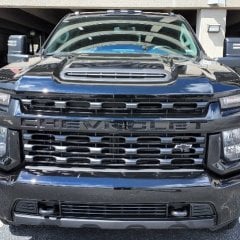
Just finished my HD hood install on my 2016 GMC And I would like to share the part numbers and information for anyone that would like to do the same. This should be the same for 2014 and up. For Silverados I think the same parts are required just different part numbers. Parts: Nut Part Number: 11546860 $2.31 × 4 $9.24 Assist Spring, RIGHT Part Number: 23258272 $17.24 × 1 $17.24 Insulator Retainer Part Number: 11571159 $2.84 × 6 $17.04 Insulator Part Number: 84101780 $63.22 × 1 $63.22 Duct Part Number: 84167144 $211.30 × 1 $211.30 Hood Part Number: 84152916 $385.56 × 1 $385.56 Vent Part Number: 84183578 $105.49 × 1 $105.49 Spring Part Number: 23258271 $17.79 × 1 $17.79 Hinge Part Number: 84097791 $27.83 × 1 $27.83 Hinge Part Number: 84097792 $27.83 × 1 $27.83 * Subtotal Amount: $882.54 Prices based on GMDirect Sent from my iPhone using Tapatalk1 point
-
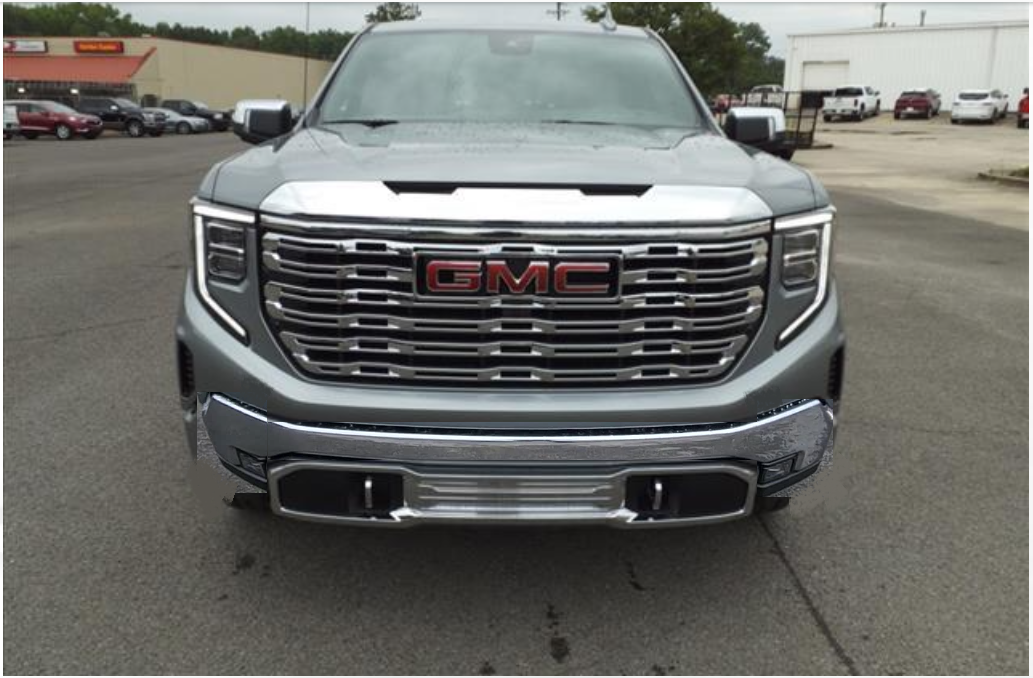
I am a fan of chrome bumpers (easier to clean bugs off) versus painted bumpers. How difficult would it be to purchase a Denali, remove the panted bumper and replace with SLT bumpers?
 1 point
 -
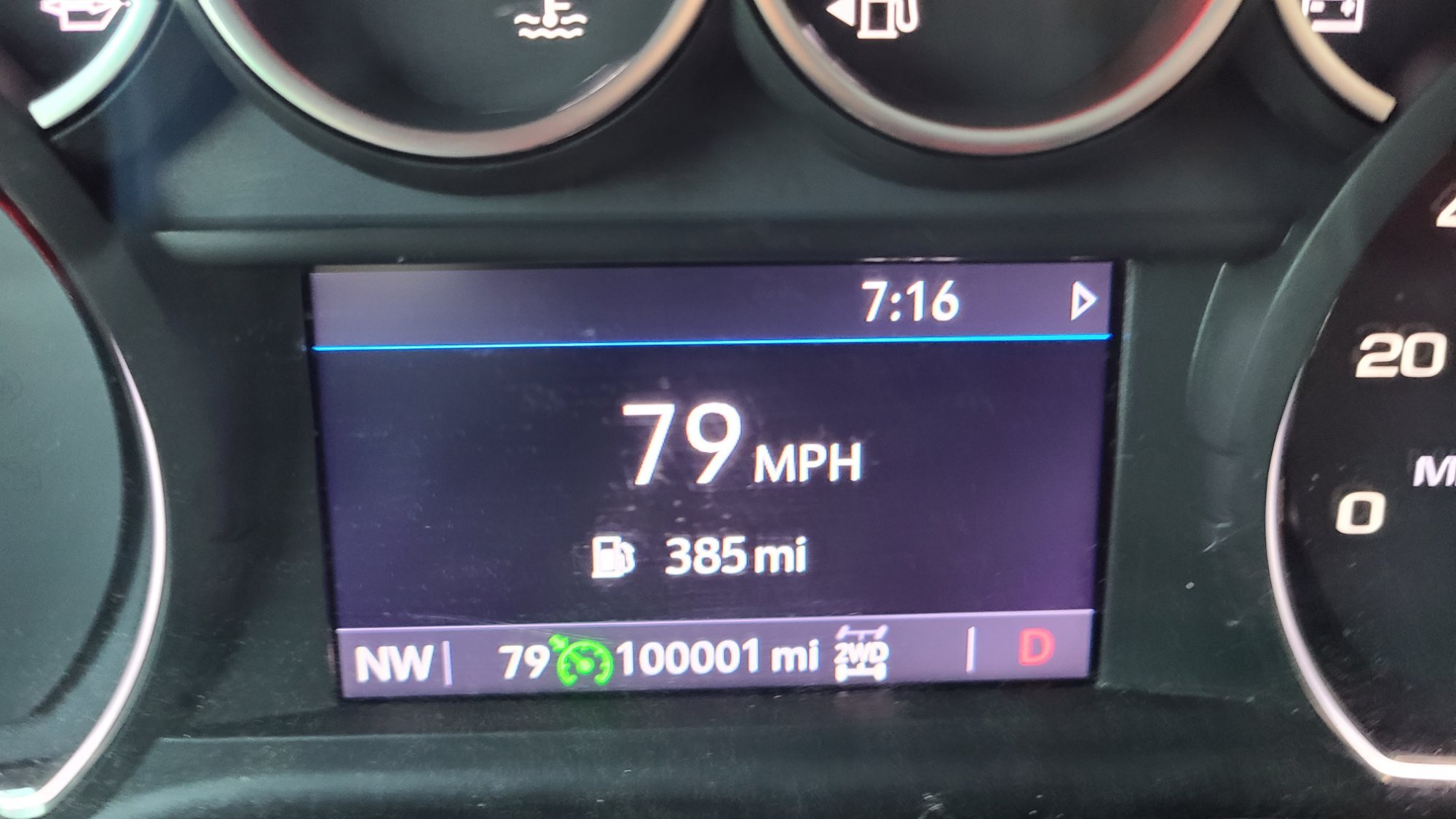
People generally only come here to ask questions about issues they are having with their vehicle, so I figured I would make a post about how decent mine has been. 2020 5.3 8-Speed CC Z71 - I've had the tuck for a hair over 3 years and finally clipped 100,000 miles on my way to work the other morning. The truck has been a trooper and has held up well so I have no real complaints about its durability. The engine and transmission are both as smooth as the day I purchased the truck, and I cant really say anything negative about the power train as a whole. Overall, it has been a good purchase up to this point and I hope it continues all the way up to 200,000 miles(my personal break even point on a truck). Repairs: Rear Window Leak - Factory Replaced the rear window Serpentine Belt - Threw the serpentine belt at 40k and 80k miles(I keep a spare with me) Transfer Case Leak - The only powertrain leak I've had was from the transfer case input seal that was noticed around 85k miles. I was able to replace the seal myself which took an afternoon to do. Shocks - The Rancho shocks were shot at 20K miles with fluid visibly leaking. I replaced them with Eibach shocks and the install took half of an afternoon to do. I have a spare set of new-in-box Eibach shocks ready to replace these when they wear out, but I have 80K miles on them right now and they still feel great. Maintenance: Transfer Case Fluid - Drained and refilled around 85K+ miles with Mobile 1 Blue Label Oil and Filter - Castrol® EDGE® with Fluid TITANIUM Technology(0W-20) and FRAM Ultra Synthetic 20,000 Mile Protection. I usually do the oil and filter change before the indicator gets to 10% life remaining(around 6,500 - 7,500 miles depending on usage). Air Filter -AC Delco OEM replacement swapped according to the GM recommended change indicator somewhere in the 90K+ miles range. Tires - The Goodyear DuraTracs and Bridgestone Duelers have been great, with the Duratracs finally getting to noisy for me. Considering I'm at 100K miles and have only had to purchase a single set of replacement tires, I think both brands have held up well. I will most likely be purchasing a new set around September/October since these are getting low enough to where I wouldn't want my wife driving around on them in the winter. Upcoming Maintenance: Transmission Thermal Bypass Valve(TBV) - It's sitting on my work bench ready to be installed, I just haven't had the time to do it. I'll most likely make a YouTube video of the install and fluid flush when I do.
1 point
-
There is nothing on the approved DEXOS list I'm aware of that has enough solvency at the recommended OCI's. This is a property of esters, OS/PAGs, and SOME AN's, not all. A fair indicator is a VOA oxidation value over 30. There may be some Mobil 1 formulations that pass muster, but I could not tell you which one(s). If you insist on DEXOS then change it often and you have a chance. 3K often or sooner. It's all I got if DEXOS is a priority. You could look on BITOG at the VOA lists and perhaps find an oil with a 30+ oxidation on the DEXOS list. It's a resource. But watch dates and lab used. If you find something double check with your own VOA. Before the ink dries on this post two dozen people with a bazillion miles using Casey's Dexos oil at 10K mile OCI's will pop off say'n Not So. Whatever.1 point
-
I just picked up an AT4 gasser and was somewhat worried by this. Just did my first oil change around ~1000 miles, but I'll definitely report back when I get to the normal oil change intervals!1 point
-
New phenomenon. Several MFGs (possibly all) have an acceptable amount of oil loss. So now we need an accurate oil level gauge in vehicles just like the gas gauge since we will need to add oil every 3 tanks of gas. I am 6' 4" and can't fill my oil without a step ladder. This will suck in the Winter!1 point
-
No impact to the HUD at all. Definitely worth it to prevent the heat coming in while driving. I’ve been amazed at the difference.1 point
-
What I used to do in those situations is lock out 6th and maybe 5th. It keeps the RPM up and you won't lose speed as bad, if at all. Also, I found that the towing MPG was actually better when doing that. The engine stayed in it's sweet spot and wasn't playing catch up constantly.1 point
-
Are they 100% on no leaks? We've seen quite a few bad oil cooler lines on these new HD. They are still on and off backorder from GM too due to their demand. They are using the correct document #6143939 which is for trucks at GVWR above 8600lbs. What they are not describing correctly and an important piece of information missing here is oil consumption per GM at 8600lbs GVWR and higher is NOT measured at the allowed limit of 1 quart per 2000mi, rather its 1qt for every 100 gallons of fuel used is the limit. So. If you towed and used 100 gallons of gas, that's almost 3 full tanks. Lets say you are getting 8mpg towing, that's 288mi per tank. 3 tanks of fuel, thats 864mi of driving. At the weight you are pulling, you are also exposed to higher RPMs to maintain speed over say a 6000lbs trailer, and long standing higher RPMs with heavy load or high wind resistance can increase consumption. Here is the document they are referencing. I've bolded some key areas including the most important part, the actual consumption test they should be using to document: 03-06-01-023F: Higher Than Expected Oil Consumption at 8600 GVW and Above - (Aug 26, 2022) Information on Engine Oil Consumption Guidelines All engines require oil to lubricate and protect the load bearing and internal moving parts from wear including cylinder walls, pistons and piston rings. When a piston moves down its cylinder, a thin film of oil is left on the cylinder wall. During the combustion process, part of this oil layer is consumed. As a result, varying rates of oil consumption are accepted as normal in all engines. Oil Consumption Oil usage has a direct relationship with the amount of fuel used. The harder an engine works, the more fuel and oil it will use. Therefore, oil usage as a factor of fuel usage is a more accurate indicator of acceptable oil consumption levels than vehicle mileage for vehicles at or above 8600 GVW. The accepted rate of oil consumption for gasoline engines in vehicles at or above 8600 GVW is 0.946 liter (1 qt) within 379 liters (100 gallons) of fuel used. This rate only applies to vehicles under warranty, maintained in accordance with the appropriate maintenance schedule, driven at legal speeds and within design intent of the vehicle. Many factors can affect an owner's concern with oil consumption. Driving habits and vehicle maintenance vary from owner to owner. Thoroughly evaluate each case before deciding whether the vehicle in question has abnormal engine oil consumption. Gasket and External Leaks Inspect the oil pans, engine covers, and the engine oil cooler for leakage. Inspect for oil leakage into the engine coolant. Improper Reading of the Oil Level Indicator (Dipstick) The vehicle must be parked on a level surface to obtain accurate oil level readings. Verify that the dipstick tube is fully seated in the block. When checking the oil level, make sure the dipstick is wiped clean before taking an oil level reading and fully depress the dipstick until the shoulder bottoms out on the dipstick tube. The dipstick should be the proper part number for the engine/vehicle that is being checked. Not Waiting Long Enough After Running Engine to Check Oil Level The vehicle should be allowed to sit for at least 15 minutes, after the engine has been shut off, before taking an oil level reading to assure the oil has had enough time to drain back into the crankcase. In order to ensure accurate results, the temperature of the oil should be close to the same temperature as the last time the oil level was checked. Improper Oil Fill After an Oil Change Following an oil change, verify that the proper amount and type of oil was put in the engine and that the oil level on the dipstick is not above the full mark or below the add marks. Refer to the Owner's Manual or Service Manual for information on recommended oil quantity, viscosity, and quality. High Speed or High RPM Driving Continuous driving at high speeds/high RPMs may increase oil consumption. Because this may not always be an everyday occurrence, it is hard to determine exactly how much the oil economy will be affected. Towing or Heavy Usage Towing a trailer or hauling additional weight will increase oil consumption. Large frontal area trailers will further increase the work required from the engine, especially at highway speeds, and thus increases the rate of oil consumption. PTO Operation Operation of a PTO will increase fuel and oil usage, as the PTO driven accessory uses engine power to operate. Crankcase Ventilation System Verify that the positive crankcase ventilation (PCV) system is operating properly. Blockages, restrictions or damage to the PCV system can result in increased oil use. Oil Dilution from Condensation On vehicles that are usually driven short distances, less than 8 km (5 mi), especially in colder weather, condensation generated from cold engine operation may not get hot enough to evaporate out of the oil. When this occurs, the dipstick may indicate that the oil level is over-full. Subsequent driving on a trip of sufficient length to enable normal engine operating temperature for 30 minutes or more, in order to vaporize excess moisture, may give the customer the impression of excessive oil consumption. Engine Temperature If an engine is run at overheated temperatures (see Owner's Manual or Service Manual) for more than brief periods, oil will oxidize at a faster than normal rate. In addition, gaskets may distort, piston rings may stick, and excessive wear may result. Verify that all cooling system components are in proper working order. Engine Wear Piston scuffing, excessive piston-to-wall clearance, tapered or out of round cylinders, worn, damaged or improperly installed valve guides, seals and piston rings will all cause an increase in oil consumption. Measurement of Oil Consumption Engines require a period of time to BREAK IN so that moving parts are properly seated. Therefore, oil economy should not be tested until the vehicle has accumulated at least 8000 km (5000 mi) and the oil has been changed for the first time. During initial engine break-in periods before the first oil change, oil consumption may exceed 1.9 liters (2 quarts) or more per 379 liters (100 gallons) of fuel used. Verify that the engine has no external leaks. Repair as necessary. Begin oil consumption test after next regularly scheduled oil and filter change. Oil changes should not be performed during the test. Verify that the engine is at normal operating temperature (see Owner's Manual or Service Manual). Park the vehicle on a level surface. Wait at least 15 minutes, after the engine is shut off, before checking the oil level to make sure that most of the oil has had time to drain back into the crankcase. Verify that the oil level is at, but not above, the full mark on the dipstick and that the proper viscosity and quality oil are being used as recommended in the Owner's Manual. Dealer should record the vehicle mileage, date and engine hours at the start of the test on the form included in this bulletin. Ask the customer to verify and record the date, odometer, oil level, fuel added, and engine hours, each time the vehicle is fueled, following steps 3-5 and return the vehicle to the dealership if the oil level is found at or below the add mark, 0.946 liter (1 qt) low, if possible. The dealer will add oil to return the oil level to full. If the oil level remains above the add mark, the customer should continue to operate the vehicle and verify the engine oil level until either the oil level drops to or below the add mark or at least 4800 km (3000 mi) has accumulated since the test began before returning to the dealership for a final evaluation. If the final evaluation shows that the engine uses more than 0.946 liter (1 qt) in 379 liters (100 gallons) of fuel used, follow the published symptom diagnostics as described in the appropriate Service Manual. If the oil consumption test shows that the engine uses less than 0.946 liter (1 qt) in 379 liters (100 gallons) of fuel used, explain to the customer that their engine meets the guidelines for oil consumption.1 point
-
Growing up in New Jersey by 60K miles the body was rotting out. I think in a non scientific way the best GM engines were from the the LT1s to 2006 before cylinder deactivation. I’ve seen my brother in law during that time period routinely hit 300K miles with GM small blocks in Tahoes and Suburbans including 1 GM truck. His daily Tahoe was his wife’s family vehicle, put his daughter through college and now close to 300K miles become his to work vehicle. His newest a 2013 is crossing 130K miles. Sitting next to his 69 Firebird is the 2005 Truck that put his oldest daughter through college. Once a family vehicle with high mileage as a backup to Tahoe. Just under 200K miles. He saving it for retirement in a couple of years because he likes it so much. All routine maintenance.1 point
-
Had my windshield done as well. What a difference in interior heat. WOW! 3M ceramic but high transmittance. Don't remember the exact number, like 80%, legal here, but it didn't darken the windshield very much. Just blocked the infrared and UV. Took me a few weeks to get used to it at night. I helped that with brighter low beam bulbs. The 5% 6-inch visor took some getting used to as did the side glass at night which is also at legal limits for my state. I think I would lighten the side curtains about 10% if I did it again. But blocking ceramic tint or films are the cat's meow.1 point
-
Not bad at all! My front windshield is also tinted. I see a lot of people around here doing the same, sure, it's illegal, but have never seen people cited for that. From the outside, it looks really dark, but if you're inside, you can still see everything. It's like sunglasses. People can't see your eyes but you can see outside just fine. Same thing.1 point
-
It might, not really that noticeable and not sure they warrant a seperate forum. I really don't care one way or the other, just my thoughts after owning both, all good.1 point
-
LAWYERS ARE TO BLAME IMO. Whats 18 inches long and hangs around and a$$hole? A tie on a LAWYER!1 point
-
Looks great! I also went with ceramic all the way around including the front windshield and the results are amazing. A must have for here in Texas.1 point
-
In his defense it's like $200 for fender flares or a few grand for new bed sides. He could save the money now and spend it later.1 point
-
1 point
-
I hope I get a good tech. My appointment is the first one of the week so it should be a good one. They will definitely be fixing this before the warranty is expired.1 point
-
Not sure if this helps but, I cannot recommend enough, the GM Borla Catback Exhaust. Imo, it's perfect- sounds awesome, has their million mile warranty and most importantly, absolutely no drone. I've had it for at least 25,000 miles, probably more.1 point
-
I believe a small drop in oil on the dipstick is totally normal. Most every vehicle I've owned will typically use a quart of oil in 5k miles. What I'm basing that on is how much I was able to drain out of it compared to how much I put it in at the last oil change. Not scientific at all, just putting the old oil in jugs from the drain pan. But yeah. Half to a quart in 5k miles was the norm.1 point
-
Following up to my original post, had the window tint installed today @ Black Diamond here in Minnesota. I went with the IRX ceramic tint on front side windows, rear side windows, and rear window with slider. Front Sides: 25% Rear Sides: 40% Rear windows and slider: 5% This is over the top of the factory tint of 70/20. I love the look and should be great with reducing interior heat and sun damage. The tinting flows nicely from front to back, rather than stock that just looks weird IMHO.
1 point
-
Are you sure they just didn't roll the deposit into the truck? Did you explicitly ask for the deposit back? I can see them refunding you if you backed out of the deal, but you bought the truck so did they just roll that $1000 into the deal towards the truck? Might want to double check your paperwork.1 point
-
1 point
-
1 point
-
That's a great way to describe how mine feels when downshifting into first gear approaching a stop sign or stoplight. It makes nice linear stops kindof a pain. I have about 400 miles on my truck so far so I'm hoping that improves. It's going on a 4000 mile RV towing trip pretty much the second it hits 500 miles. Maybe that'll teach that transmission a thing or two.1 point
-
OK, sure, it's just over a 25 mile range, but it's still the best I've seen in the 28k miles on the truck so far. I'm not sure what changed, but recently my mpg just seems better. Overall, I'm still at 17.9. I'm curious what others have seen as their highest recorded mpg. I hit this 32mpg on my way home from work last week, it's actually 110 miles round trip from home to the office and back, mostly on back roads and in sport mode, using cruise control at about 60mph most of the time.
1 point
-
1 point
-
I totally agree. Back in the early 90's I knew a guy that was a huge mobil 1 fan, I was too at the time. He would drain it out of his engine at 5k miles and put in his lawnmowers and whatever else needed oil....lol...1 point
-
As we all know, a lot of people come to these forums with problems not necessarily with answers or help. But I'm starting to see a change in the winds on this forum. People are starting to really get involved with helping others and themselves with a problem they might have. So I was just curious is all. Thank you voting you old grumpy bear best writer ever!!1 point
-
A guy (he says he was an mechanical engineer) told me a story once about the Pontiac T-1000 and the Chevy Chevette. The problem was with a noise during a turn every time you went right (or left it doesn't matter for your purposes) around a street corner there was a popping sound. The Chevy/Pontiac dealers couldn't figure it out, the GM engineers couldn't figure it out. The guy says a mallet blow to the floor pan (where you rest your feet) would stop the noise, he wouldn't tell them unless they paid him X dollars... because the floor pan was "oil canning", you know pops in and out like the bottom of an oil can? Well maybe your truck's body is about to pop like an oil can but there isn't quite enough force for that to happen but it's groaning/squeaking. Metal will squeak when flex the right way. I would start by making sure all the shackles are oiled/greased, oil, grease, or replace the bushings and their bolts on the control arms, grease both ends of the torsion bars and both sides of the torsion bar keys, you'll need to remove the keys to do any torsion bar related work; you can rent a tool to release the tension at any Auto parts store that "rents" tools for free. Let the forum know how it goes. I would say should the squeak still be there you must have a situation like or similar to the T 1000/Chevette thing.1 point
-
I will be looking forward to the thread titled “ it got even more expensive, I’m going to get a LTZ therefore I’m not retiring yet” next week sir. Haha1 point
-
LOL what are yall doing, drafting big rigs to get these numbers? Best ive done on a long trip is 20. 19 at4 with 6.2 and 35s.1 point
-
Just a larger area to collect contaminates. I use the largest filter I can but that is just me.1 point
-
I have 3M ceramic tint all around, including front windshield. Totally worth it but it repels heat so well I climb in cold interiors during winters.1 point
-
I used to have a 2022 F-250 Lariat SuperCrew FX4 w/ 7.3L *F-250 was taken out (totaled) in a violent hail storm last spring. We're talking golf ball to baseball size hail. Horrible. So thankful for Insurance! After a lot of research and shopping, I decided to buy a 2024 GMC 2500HD AT4 w/ L8T ('Allison' 10spd). Here are my observations now that I've owned both Ford and GM Heavy Duty gassers w/ 10 speed: The drivetrain in the GMC is a bit smoother. The "Allison" transmission shifts smoother, feels a bit higher in overall quality. Shifting from Park -> Reverse, Reverse -> Drive, Drive -> Park, etc is smoother in the Allison vs the Ford 10R140. ALL the shifting is very very nice in the Allison. I didn't have any issues with the Ford 10R140, but the Allison feels like an upgrade. I do wish the GM would display what gear you're in (Ford does this). Definitely a transmission win for GM! The ride is a definitely smoother in the GMC, as it has independent front suspension vs the Ford's solid front axle. This makes a very noticeable difference in daily driving a HD truck! Exterior and Interior design (personal preference of course): I like the GMC AT4 better. Especially when you consider the 2023 Ford Super Duty design. I feel Ford missed on the 2022 -> 2023 redesign. Again, this is just personal preference and opinion. The 6.6L L8T revs quicker and is quieter. Not that I was looking for a quieter V8. Just an observation. The mpg seems to be about the same between the two (~ 14 mpg average in city/hwy). Highway in my area is 70 to 75mph speed limits....so not pokey (ie not ideal for fuel economy). Also I drive a lot in stop/go traffic. I can feel the -29 hp reduction in power with the 6.6L (not horrible, but I think the Ford was a little faster). Off the line acceleration = GM is faster (but that is mostly due to 3.73 gears vs Ford 3.55 gears (2023+ F-250 offers 3.73 or 4.30). The 2024 GM 2500HD is a heavier truck (7472 lbs) vs the 2022 F-250 (6800 lbs). So my GM is 672 lbs heavier! 7.3L Godzilla 430 hp, 475 lb-ft (2023+ 485 lb-ft) 6.6L L8T 401 hp, 464 lb-ft. 2024 GMC 2500HD CrewCab AT4: *my specific truck Payload = 3378 lbs Conventional Towing = 16,000 lbs 2022 F-250 Lariat SuperCrew FX4: *my specific truck Payload = 2983 lbs Conventional Towing = 14,500 lbs. For those that work on their own vehicles, the one thing that I was surprised to discover was that GM 'wax dips' their frames vs e-Coat Paint. When working on the GMC (greasing front suspension) it is easy to get the oily wax all over your arms. Not a bad thing per say. Just wish GM would e-coat their frames (like Ford) and not use the messy wax coating that rubs off on you so easily. Conclusion: Overall I like the GMC better. Nothing really bad to say about the 2022 F-250, EXCEPT that I did notice some rough idling on occasion in the 7.3L....the internet 'lifter' concerns were in the back of my mind when that would happen. Was it an actual issue? I don't know. My 6.6L L8T is not using oil (as this is a reported issue for some out there). I think this is mostly on 2020, 2021 trucks? I've read many people say their truck does NOT have this oil consumption issue. So it might just be internet amplification (like the lifter issue probably is on the 7.3L)? I've been a loyal Ford customer for 20+ years...so going GMC was a big deal to me. So far I'm very happy with my decision to buy the GMC 2500HD (6.6L L8T w/ Allison)!1 point
-
I do definitely notice some “whine” with the the new Allison. Nothing annoying, but it’s there. I finally got the pickup to the dealer today to diagnose that “noise”. The tech could hear what talking about, although faint, and went to his computer to check any TSB’s. About five minutes later came back with a document that pretty much to a tee summed up what I was experiencing. It was PIT5544G for those that want the specifics. Some customers may comment on a hydraulic rush or flow type noise from the power steering gear. The noise is most noticeable in the cab at idle, with all accessories off. It only affects vehicles with RPO code NV8. Basically it’s noise from the Active Hydraulic Assist Power Steering system. So GM considers this “normal”. So I don’t really care to hear it but it is what it is I guess. You only hear it in park or idling with the radio and HVAC off so I guess it’s not a huge deal. This L8T is so quiet I imagine on the diesel you’d never even hear it. But so far thats the only issue I’ve had and thats pretty minor in the scheme of things. Really loving this new platform.1 point
-
0 points
















This leaderboard is set to New York/GMT-04:00