Jump to content

Still a Problem


Texasdriver

Recommended Posts

Posted

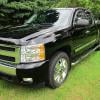
Bought a brand 2014 Silverado and right after I bought it noticed a problem with either the engine or possibly the transmission. When accelerating from a dead stop, as the truck goes from 2nd to 3rd gear, between 1500 and 2000 rpm, there is a noticeable jerk. It feels like the truck engine is missing, before it finally catches up and continues on. After that it does fine, until you slow down and have to accelerate and goes through it all over again. Took the truck in two weeks after I bought it and the service manager said it was a "normal" thing for the truck and that the truck was trying to learn my driving habits. I called BS but he is the expert so I kept driving it. Yesterday, I had enough, took it back in and got the salesman to drive it so he could feel it, and he did. He then went and got the service manager to ride with me, again, and he felt it, AGAIN. He then took it by himself, said he felt it but that the problem I was feeling was that during acceleration the truck was going from V8 to V4. Really, so the engine is going reduce cylinders during acceleration, again, I call BS. Now, when you feel the bump and you take your foot completely off of the accelerator, it does show to move to V4 mode. He did however reset the computer back to factory settings and sent on my way, saying was normal.


Salesman calls this morning and wants the transmission tech to ride with me, so I drive another 30 minutes back to the dealership. Tech rides with me, feels it and says "this is not normal", no kidding. We get back, he makes a ticket and calls GM. GM thinks that it will fix itself and wants me to drive it to 5000 miles, and then bring it back. Let me get this right, I am at 2000 miles now, and unhappy, they want me to drive to 5000 miles, and it might fix itself. I can assure you, the sh-- storm I am about to unload on the local population here about GM service and the lack of care of its customers will be loud and clear, and I can promise you it will be heard all the way in Baytown, Texas where I bought the truck.


I guess my question to the Technician here is, is this normal for GM to do? Take a vehicle that a transmission tech, and a salesperson, acknowledge is not normal and ask the new owner to drive for another 3000 miles before they do anything to fix it? I appreciate any help or advise you can give.


Pissed in Texas


Posted

i was a tranny guy till 08 and i never did that ,but i get why they are asking you to do this ,,it may be because they are doing what GMcrackline ,,,eerrrrr ,,,techline wants because it is a young tranny before they rip into it and then end up replacing it ,,,,they have hoops to jump thru like in any job ,,,including yours ,,,


be patient if ya want ,its up to you ,,,i say play the game for abit ,,,and stay calm ,it will be worth while in the end


keep us informed

Posted

You have reported the issue, it is on a record at GM. Give it till 5000 miles and see what happens. It is not like the the truck is quitting, or doing something that endangers you. The computerized transmissions do require a certain length of time to learn your driving habits. Not sure how it handles this if there happens to be two different drivers in the same vehicle an equal amount of time though. What are you afraid will happen if you have to drive it a bit more like it is? GM is on the hook for 3 years and 36000 miles for 100% of the repair, and even after that they are on the hook for another bunch of years and miles for power train.


To be honest with you, this really sounds like you are not looking for a second opinion, you are looking for an agreement opinion. Personally, I would take the technician at GM over the salesman any day of the week. Same for trans tech(if he was actually the trans tech at the dealer). The tech at GM sees nationwide issues, on thousands, maybe tens of thousands, local tech sees issues for maybe 15 trucks. If he has not felt what yours does in comparison to the other trucks that dealer has sold so far this year, is it really all that confidence inspiring that is does not seem normal to him?


Try driving it a bit differently to see what happens. By differently I mean a bit harder on acceleration. Having the truck shift at 1500 from 2nd to 3rd seems low to me, almost like you are accelerating with minimal throttle. Keep in mind that I am thousands of miles away,(actually so far away miles do not exist) and can only interpret what I read. Much like everyone else on the internet.


One last thought, anytime you start threatening to raise a "sh-- storm" all over their selling area, does not help your cause one bit. If anything, it will hurt you more that it will hurt them. You just end up telling them that they cannot do anything to please you, and they will simply write your business off. Ever have a friend tell you of a bad experience and all you could think was he likely deserved it, because of the way he handles issues? Something to consider. And I get it, it is the internet, everyone is a bad-ass on the internet.

Posted

Mine did something similar for about the first 2000 miles. It would slam in gear hard sometimes in stop and go traffic. Sometimes it would kick in gear hard from a stop.

It stoped doing it so I guess what they are telling you isn't complete BS.


At 7000 miles it is doing fine now.


I wouldn't worry yet. You still have plenty of warranty left to deal with it.

Posted

Mine did something similar for about the first 2000 miles. It would slam in gear hard sometimes in stop and go traffic. Sometimes it would kick in gear hard from a stop.

It stoped doing it so I guess what they are telling you isn't complete BS.


At 7000 miles it is doing fine now.


I wouldn't worry yet. You still have plenty of warranty left to deal with it.


That's because you adapted to the transmission habits and not the transmission to your driving habits.


so long

j-ten-ner

Posted


That's because you adapted to the transmission habits and not the transmission to your driving habits.


so long

j-ten-ner

No not so.


You can't adapt to what it was doing.


For instance one of the things it would do is on an incline in traffic you let off the throttle and slow to 20 mph. You push on the gas and it slams in to gear.

No one can adapt to that.


Besides I am to set in my ways to adapt to anything.

Posted

My 2011 has had a 2-3 shift flare since new when cold. Dealer claimed its normal (which I don't agree with) so I stopped caring and now I have almost 60k on the truck. If it blows up at least I made the complaint back when it only had like 15k on it.

Posted

I do appreciate the opinions and will be patient in this matter. A little hot headed yesterday when the trans tech, and yes it was the dealer's trans tech, told me it was not normal and something should be done, and then GM wants to wait. It does not help that the dealer's Service Manager is one of those that looks like he has never had a wrench in his hand and then wants to talk down to you. I love the ruck, and really got a great deal on it but damn, why can't a brand new truck be perfect. ha

Posted


That's because you adapted to the transmission habits and not the transmission to your driving habits.


so long

j-ten-ner


I have found it to be the opposite. Once you find a rattle or squeak has appeared, but only during certain exact situations, you are able to get the rattle or squeak every time, it starts to be there all the time, but, only when you are driving. Put someone else in drivers seat, and their driving habits likely won't make the noise. I think that as soon as the body knows who to trigger a noise, it will lock in on that sequence and it becomes "normal" pattern.

Posted

My 2011 has had a 2-3 shift flare since new when cold. Dealer claimed its normal (which I don't agree with) so I stopped caring and now I have almost 60k on the truck. If it blows up at least I made the complaint back when it only had like 15k on it.


To me, a flare up on upshift is when the trans goes into almost a neutral while up-shifting. Chrysler 904 and 727 would do that when front clutch seal was on way out. Are you saying the engine rpm jumps a bit during the shift, sort of like it would on a manual trans if you did not lift off the gas on an up-shift. I would not think an electronic trans would do that, it is almost always a timing issue inside the trans(valve body, accumulator, mis adjusted band, bad clutch pack seal etc). Trans has to release something to and apply something else at just the right time to get a clean shift. Too high line pressure can also cause a rough (or a fast) shift. Back in the day we would do all we could to get an auto trans to shift as quick and solid as we could, these days, that is not wanted.

Posted

No not so.


You can't adapt to what it was doing.


For instance one of the things it would do is on an incline in traffic you let off the throttle and slow to 20 mph. You push on the gas and it slams in to gear.

No one can adapt to that.


Besides I am to set in my ways to adapt to anything.


What you just described is exactly what happens if the transmission is shifted into low gear too early on decel. Auto low (as opposed to manual low) does not have engine braking, so, on slowing down, it shifts into low gear, you are coasting, rpm is very likely at idle, and you step on the gas to pick up speed again, and the RPMs jump up to a higher rpm.


Try this, get the truck to slow like you do, and step on the gas to duplicate the issue, pay close attention to vehicle speed, and engine rpm. You need the rpm while coasting down just before you step on the gas, you also need the speed the truck is moving at right when you start to speed up again. Once you have these numbers, put truck in manual low gear, drive truck at the speed you recorded just before you sped up in the above steps, once truck is at that speed and you are doing everything like you always do, look at the rpm. Is it the same or very near the same as it was AFTER you stepped on the gas to speed back up. If it is the same, then they need to recalibrate something to tell the trans to not shift into low gear on decel at such a high rpm.


My hands on experience is with Chrysler TorqueFlyte transmissions, but, it was a governor valve on the output shaft, just outside the main case, in the tail housing. If governor was not freely moving it was not unheard of to have a car stuck in high gear until you shut the car off and restarted it. That got you to the next stop, then it starts all over again.

Posted


My 2011 has had a 2-3 shift flare since new when cold. Dealer claimed its normal (which I don't agree with) so I stopped caring and now I have almost 60k on the truck. If it blows up at least I made the complaint back when it only had like 15k on it.


To me, a flare up on upshift is when the trans goes into almost a neutral while up-shifting. Chrysler 904 and 727 would do that when front clutch seal was on way out. Are you saying the engine rpm jumps a bit during the shift, sort of like it would on a manual trans if you did not lift off the gas on an up-shift. I would not think an electronic trans would do that, it is almost always a timing issue inside the trans(valve body, accumulator, mis adjusted band, bad clutch pack seal etc). Trans has to release something to and apply something else at just the right time to get a clean shift. Too high line pressure can also cause a rough (or a fast) shift. Back in the day we would do all we could to get an auto trans to shift as quick and solid as we could, these days, that is not wanted.


Yep. Does this most mornings when cold.

Posted

Yep. Does this most mornings when cold.


Is it the 6speed transmission? Have you asked BlackBear if a "trans tune" can help that? Justin did some adjusting on mine when I got the tune, but, mine is the 4speed. He really cleaned up the shifting on mine, fixed some of the factory downshift points to stop it from going into low gear on WOT at 40mph, and then having to shift right away into 2nd. Maybe there is some small change that can be done to tighten the timing up on the shift. If only when cold, maybe line pressure is too low for the cold parts to apply quick enough.

Posted

Yes it's the six speed. The tune made a big difference but didn't completely cure it.

Posted

Fellow Texas driver, try this, move shifter to M then click it to M5.My truck shifts better and the dreaded v4 stays away. When I hit the hwy I hit M6 and let it rock. Small hassle but worth it. No effect in the in town gas mileage for me. I keep it in M5 till Im gona be over 55 for a bit. Makes a big differnts for me. You may want to wait a bit on a tune, they seem to be checking closer for those these days.

Archived

This topic is now archived and is closed to further replies.

  • Latest Articles

  • Posts

    • If everything checks out at the MAF, then the MAF is BAD, new or not.   You don't need a signal generator to troubleshoot this. PCM needs ALL powers and ALL grounds able to light a halogen headlight bulb - if it can light the bulb bright, then the wiring is good enough to run the PCM.   Best thing you can do for yourself is spend some time here: scannerdanner.com - Check out all his YouTube videos on similar issues. If you decide to subscribe it's the best bang-for-buck ratio in the automotive world, hands-down. He's got TONS of free vids on YouTube, too.
    • Yes, I used my multimeter to probe all of the wires at the MAF, both with the sensor connected, sensor disconnected, key on engine off, key on engine running, etc etc etc. I probed all of the wires again at the PCM, at the connectors, etc. All voltages are what they should be according to the service manual/wiring diagrams. All grounds are good, less than 20 millivolts from the battery negative under load. Both at the connector of the MAF, at the PCM connector etc.      I know this throws a pretty big wrench into things, but this truck was acting up before the swap. I don't have very much information, if any on what was causing it, but if you cleared all of the dtcs it would do the same thing where it would crank, fire, then die. And it would do the same thing a dozen or so times, and eventually it would start and run, but the difference is that it would run and actually be drivable. Whereas now if you can drive it at all, it goes into reduced power mode almost immediately, and even then it's not running correctly. When you come to a stop at a light it stumbles down to for 500 RPM before catching itself and returning to the smooth idle. And if you go more than about 50% throttle then it immediately goes back to doing the misfire thing.    Like I said, I know that throws a wrench into things, and unfortunately I was not able to pull any data or anything like that before I did this work, so I don't have much to go on.    I'm trying to not fixate on one particular thing as the cause of the problem, but it seems like all avenues are pointing me towards the PCM. Like I said I have tested the wiring extensively (see above), and during cranking the sensor does produce seemingly legitimate values at least according to my multimeter, but as soon as the engine fires those values quickly descend into gibberish. I've tried it with multiple different known working sensors, I have done literally every test I can think of multiple times on the wiring (probing the signals, probing the pins with the sensors unplugged, probing the pins at the PCM, voltage drop, voltage drop under load, continuity, ohms, and double-checking everything against the wiring diagrams/ proper values in the service data.)    Another thing that pushes me towards a possible PCM failure is, I have noticed in troubleshooting a little bit taking a break and coming back, that when I leave the truck to sit for a while and cool off, it starts and runs smoothly when I first start it up. However once it warms up. It starts having problems. For example, when I went out to the truck this morning after it had been sitting overnight, I was actually able to drive it down the block. And then once I got on the throttle a Little bit after going about a thousand ft, it started misfiring again. I pulled it back into the driveway, shut it down, and started it back up. It idled smoothly. As soon as I touched the throttle it did the misfire thing again. From then on as soon as I started it it would misfire. I shut the truck off and went to go get a coffee and do a bit more research. When I came back out I started the truck up and it immediately went into the smooth idle. After a couple of minutes of playing around with it, it would not idle smoothly anymore. Let it sit a couple of hours, rinse and repeat. This makes me think with temperature change something is going wrong inside the PCM. I have the PCM out of the 2007 donor vehicle and I'm thinking of getting a one-day subscription to the ACDelco programming service to try and program that and see if it helps.   Like I said, I'm really trying to not fixate myself on one potential cause, but it seems everything is pointing me towards PCM failure. I would really like to try to confirm that, but unfortunately I don't have an oscilloscope or a signal generator to do the GM service procedure where you feed 5 khz into the signal pin. 
    • Ahh, sorry about that - I got some bad info. Newdude is correct. That's what I get for working 13 hours straight ... on my "vacation", lol.   Should've checked the files I had instead of the internet.   Anyway ... this is GREAT news, since this would've been an absolute friggin nightmare to get working.   I don't think the lack of VVT is causing this - you've got another issue. Wiring, I'm betting.   I'm telling you right now, your computer isn't bad. If it worked before the swap, it's working now. You need to do some more (better) diagnostics and figure out exactly what you're missing. Did you test every wire directly at the MAF? Have 5V reference? Ground? If you're reading ZERO g/s, your Hz isn't much use - it's going to be the wrong value anyway. The MAF is not working, and you need to find out WHY.   I got this off the net, so VERIFY first: Pin A: Black (BLK) wire, Circuit 552, serves as the Sensor Return (Ground).  Pin B: Tan (TAN) wire, Circuit 472, carries the Intake Air Temperature (IAT) signal.  Pin C: Yellow (YEL) wire, Circuit 492, is the primary MAF Sensor Signal output to the PCM. Pin D: Pink (PNK) wire, Circuit 339 or 539, provides Ignition 1 Voltage (Power).  Pin E: Tan/Black wire, Circuit 552 or similar, often associated with the Intake Air Temperature ground or signal return.  Global-A list: https://postimg.cc/KKJnQC85    
    • Correct....the end user can't reach to Realtruck directly like they can if they purchase a Bak, Undercover, etc...  It has to go through a dealer.
  • GM-Trucks.com Clubs

  • Popular Contributors

×
×
  • Create New...