Jump to content

Recommended Posts

Posted

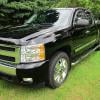
I have a 2011 Chevrolet Silverado 2500hd 4x4. It has developed a dragging brake issue.  I have changed all 4 calipers,  brake pads,all brake hoses,master cylinder, and hydro boost, flushed with new fluid. It shows no check engine or Abs lights or codes. I can drive it between 10 to 20 miles and you can start to feel the brakes applying till it locks up. Then I get out and pop the brake line and relieve  the pressure  then we're  fine for awhile till it starts all over again. I've  taken a temperature gun to the calipers when its locking up and the front can be up to 180 degrees and the back up to 150 degrees, or it can be the back hotter then the front. I've  taken it to a dealer and they have scanned it and with no codes they are saying it has to be a mechanical issue, but I have changed all the mechanicals except the hard brake lines. I am starting to think it's the Abs module or pump,  but with no lights or codes I hate to put another 1000in this gamble. Any advice or help would be much appreciated.  Thank you!

Posted (edited)

It's only locked up once and was the rear. Once I feel the brakes start dragging,  I pull over and open the bleeder valve on the caliper  and it's  ready to go.  As your going down the road you can feel  the breaks start dragging. 

Edited by Purplejchild
Posted

You had contaminated fluid prob from hydro boost going bad leaked into the master.
Anyways when oil gets into the brake fluid it causes this issue.
So when you started replacing parts you didn’t replace them all at the same time so the master cylinder got contaminated again.
Replace master cylinder again, but be SURE you’ve flushed out everything before putting another one in.


Sent from my iPhone using Tapatalk

Posted

If the fluid was contaminated enough to cause something to fail, such as a seal to swell up or something like that, just flushing in new fluid (which you indicated you had already done) isn't going to fix those bits, you have to find and replace them.

Posted
If the fluid was contaminated enough to cause something to fail, such as a seal to swell up or something like that, just flushing in new fluid (which you indicated you had already done) isn't going to fix those bits, you have to find and replace them.

^ what he said
Replace the master again.


Sent from my iPhone using Tapatalk
Posted

Let me ask you this.  The hydro boost wasn't leaking when I replaced it. It was dry inside. The reason  I replaced it was, after driving  the truck about 15 miles and the brakes  just start to drag the brake paddle would  might  a high pitch squeak then after I release  the pressure in the brake line the squeak would go away but then redevelop when the brakes start to drag again.  Now after replacing they just start to drag with no squeaking. 

Posted

One guy was telling me he thinks it might be the abs module.  Since it not effecting the same wheel it bounces around one time it might be the back dragging  and the next time it's the front. He recommends pulling all 3 abs fuses and driving around and slowly putting in each one back in till I can narrow it down to the right system. Any thoughts on this or do you think it's still in the master cylinder?

Posted

Typically if oil gets in the master cylinder (most common way for oil to get in master is someone topping the brake fluid up and using the wrong fluid) the seal on the cap will swell up.  BTW, avoid topping off the brake fluid reservoir, there is more than enough brake fluid in the master to account for pad wear.  Its not like it gets used up.


You say you open a bleeder, which one, and is it always the same one?  There are two circuits in the brake system, if you only open one bleeder, and it is always the same one, then you have narrowed it down to just half the brake system. 


Since you have already replaced the master cylinder, that should have taken care of a plugged compensating port in the master.  This port allows brake fluid to "leak" back into the master cylinder as the fluid expands when driving on the highway (long instances of no brake application).  If that port gets blocked, pressure will build up in the disc brake system, eventually applying the brakes enough to stop the vehicle.  That port can also get blocked by an incorrectly adjusted brake pin that goes between the brake pedal and master cylinder.  But, if the master was not removed, or no one had touched the brakes prior to this happening the first time, it will not be that pin misadjusted.  Touching the brake pedal while driving(aka riding the brakes) will also block that port.


Personally I have no idea if the ABS can cause any of this, I "retired" before ABS became common.

Posted

I usually open the drivers front and when I do the pressure is relieved and the truck rolls foward a bit

Posted

Contaminated hydroboost systems aren’t common but they do happen.
I’ve also heard abs modules staying ‘on’ and holding brakes.
Also,
Double check pushrod length/adjustment, make sure there’s free play in the pedal, if the rod is too long, or adjusted too far in, it’ll hold the pistons inside the master beyond the compensator ports and never let pressure bleed off after applying brakes

Create an account or sign in to comment

You need to be a member in order to leave a comment

Create an account

Sign up for a new account in our community. It's easy!

Register a new account

Sign in

Already have an account? Sign in here.

Sign In Now
  • Latest Articles

  • Posts

    • Sounds like converting will be a bigger endeavor than I was thinking. This truck doesn't have 2Hi like the Suburban did. The Tahoe has 4Hi and 4Lo and a button to turn of traction control.   From what I understand the Stabilitrak uses open diff in the front and rear. When wheel speed is not the same the stabilitrak uses the ABS system to slowdown the spinning wheel(s) to transfer power to the slower non-spinning wheel(s). I thought the transfer case was open too. Being able to transfer power either more to front or rear depending on wheel spin. Maybe I miss understood some information with you saying and power transfer is 50-50. Thanks
    • My brother has a 2007 Avalanche with afm 5.3. It`s got 176,000 miles. Runs like a clock. Never been apart. Co worker has a 2010 Tahoe with afm 5.3. 230,000 miles. Never been apart. Runs like a clock. So, even though cyl deac is a weak spot, they can go the distance.   BUT, these engines had the oil changed regularly, AND had 5w30 as spec. I wonder if they would have lasted this far on 0w20? I`ll bet not.
    • I certainly could be wrong but I hear of pickups far newer than that 2007 cutoff which may not be going to the wrecker but are having engine work done and be that a reman engine or new engine or trying to repair the existing engine. Some of it would be design issues as per the cylinder deactivation system that GM has and one of those lifters wiping out the cam and the question of oil changes moving the needle or not on that whole mess, or in the case of Ford pickup engines that have the long timing chains and wearing them out and the roller followers and phasers and some of that certainly goes back to oil change intervals. But in those various cases the truck has all sorts of life left in it and so the unfortunate owner and may be original owner or used market owner that is pouring money into repairs so the truck is not seeing the salvage yard yet but damage is happening by infrequent oil changes. A friends son had bought a 2018 I think it is half ton GM and it had some sort of extended or used dealer warranty on it and of course the lifter issue bites and its rattling and so the dealer had to swallow the bill and was at least 7000.00 and I think they only replaced what they felt they had to replace so yeah, I can see that being a ticking time bomb in the not too distant future. Would frequent oil changes cure all these engineering "marvels", probably not but some engine designs have shown that they do much better if the oil is changed a lot more often then if the manufacturer service claims are followed. New trucks cost so much that there is an incentive to keep the existing truck on the road by repairing. 
    • get a good code reader, and find out what problems the truck has noticed by reading codes. cheap ones can only get basic engine codes, you may want to get one that can get codes from all the computers in your truck.
    • This is sort of my point, salvage yards aren't overflowing with all these 'poorly' maintained trucks - excellent/good/servicable condition otherwise, salvaged only as a result of a bad engine from poor oil change regiment.    In my area, there are no 2007 to newer gm trucks/suvs in any salvage yards. A few are in the 'recyclers' with very obvious reasons for being there - wrecked.
  • GM-Trucks.com Clubs

  • Popular Contributors

×
×
  • Create New...