Jump to content

Recommended Posts

Posted

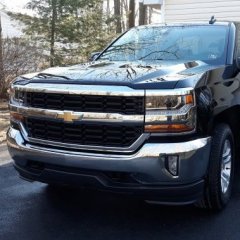
2019 Silverado LD (Legacy body), 4x4, 5.3L 


There's a new Wawa by me that sells ethanol free gas. I don't recall the octane, but I think its 88. It's 53 cents more a gallon compared to 87 octane regular E10. 


What are everyone's thoughts on using this in my 5.3L? Pluses? minuses? I've read that it won't hurt my engine.

It's said that it might even produce slightly better gas mileage.

I basically more concerned with the moisture attraction that ethanol is known for. I don't drive as much as I used to. My truck is 3 years old and only has 16,000+ miles on the clock. 

Posted (edited)

Most ethanol free gasoline where I live (NC) is a "high test" grade...92-93 not 88. Any ethanol free gas is fine to run in your truck. BMW dealership here actually recommends it for their cars. 

Edited by rav3
Posted

@rav3 Thanks for the quuck reply.

When you say most ethanol gas where you live is high test, did mean to say most ethanol FREE is high test? Or no? 

Because we have ethanol in most of our gas. 87, 89, 93.

It's very rare to see ethanol free here in Pennsylvania. 


Now that it's available, I will definitely be using ethanol free in my boat this coming season. It has a GM 4.3L V6 from 2003.

Posted

88 octane is E15, so up to 15% ethanol.


Around here the ethanol free fuels are 91 octane or race fuel, 100-110 octane. All of the stations with 92 and 93 are still up to 10%.


There are no pluses or minuses if you ask me. I've run everything in my vehicles (87, 88, E30 and E85) and never had any troubles if the vehicle sat for longer periods of time. My truck has been sitting with the same tank of fuel since December and I'm pretty sure I just used regular 87 octane. I've moved it in and out of the garage several times and I have no worries when I start driving it again next month.

Posted

Here in Ohio the ethanol free gas is 90 octane. 88 is 15% ethanol here with a warning label to only use in flex fuel vehicles. 

Posted

Yes..my bad. I ment ethanol free. I corrected it above. Thanks for the catch.

I use the ethanol free gas in all my mowers, string trimmers, leaf blowers, etc.

After I retired, I drove for our local bmw dealership and we were instructed to put the high test ethanol free in all the bimmers.

  • Like 1
Posted

Thanks for the great replies. 


I'm gonna have to go there and see what the octane is. I might have been mistaken that it was 88. From what you guys are saying, it's more likely higher. 


I'm seriously thinking about using it in my 5.3L Silverado. It's only 53 cents more a gallon. 


The handle for the ethanol free is blue and it's next to the green diesel handle on the left side of the pump.

The normal ethanol handles (87, 89, 93 octane) are on the right side of the pump.

  • Like 1
Posted

Here in my area all 91 octane is ethanol free, Citgo, Shell, Holiday etc.  87 and 89 are Ethanol blends. The only premium with ethanol is Mobil and its 93 octane.  So if you are using 93 octane is most likely ethanol blended.  Near Lake Superior and very few boaters will buy fuel with ethanol content. 

  • Like 1
Posted
11 hours ago, poconojoe said:

2019 Silverado LD (Legacy body), 4x4, 5.3L 


There's a new Wawa by me that sells ethanol free gas. I don't recall the octane, but I think its 88. It's 53 cents more a gallon compared to 87 octane regular E10. 


What are everyone's thoughts on using this in my 5.3L? Pluses? minuses? I've read that it won't hurt my engine.

It's said that it might even produce slightly better gas mileage.

I basically more concerned with the moisture attraction that ethanol is known for. I don't drive as much as I used to. My truck is 3 years old and only has 16,000+ miles on the clock. 

I have a 2001 Acura that I drive once a month. It’s been that way for about 18 years we’ve owned it. It usually get gas once a year. My 02 avalanche usually gets about 7K miles a year. I never had a problem with gas. I had a 93 Chevy truck that usually got 5K miles a year. Before that I usually had at least one collector vehicle that usually got driven less than that. Never had a problem with gas. Sometimes I remember to put stabill in not always.

  • Like 1
Posted

Gas mileage difference is better than you think.  In most cases the cost savings between the E85 and higher ethanol blends end up being a wash due to the poor gas mileage of the higher ethanol.  53 cents is a rather large margin to make up though.

Posted
11 hours ago, poconojoe said:

2019 Silverado LD (Legacy body), 4x4, 5.3L 


 ............ethanol free gas..................................What are everyone's thoughts on using this in my 5.3L? Pluses? minuses?


Mathematically on carbon/hydrogen balance there is a 3.4% difference in mpg between E-0 and E-10 favoring alcohol free. 


However due to ECU tuning and engine specifics and the fact that most do not track accurately enough to make the distinction. It isn't likely one would notice the difference. 


It's been quite some time now that all vehicles sold in North America are E-15 capable and newest information I have would indicate that for a few years now even E-20 can be supported on non-flex fuel vehicles without damaging a thing.


Isopropanol and Grain Alcohol do absorb water. Isopropanol is what is used in over-the-counter gasoline dryers. Gasoline does not absorb water but absorbs both alcohol and alcohol/water. Ergo, any water that the system absorbs is held in solution and passed through harmlessly. All that said, we no longer have vehicles with open vented fuel systems where this is even an issue. Nearly all water then comes from the gasoline itself, it collects in storage and processing. 


Alcohol in gasoline is advantageous to both emissions' reduction and deposit formation reduction and easing the loads placed on engine oils. 


FYI, E-0 fuel is useful in lawn equipment where some carburetor parts are made from materials that dissolve in alcohol over time and are left with fuel in the system between uses.  

  • Like 3
Posted

I agree with Karnut. Gas has never been a problem for me. 

  • Like 2
Posted (edited)

Around here the ethanol free gas is typically 90-91 octane. I use it in my yard equipment, riding lawn mower, chainsaw, leaf blower, snow blower etc. I had some of those items stored for a year while we built this house a few years back and it cost me a couple of carb rebuilds since I didnt have them full of Ethanol free when I put them away.

As far as a modern truck I think its a waste of money to run Ethanol free. They are designed for tolerance to Ethanol whereas lawn equipment never really was, its gotten better but I still wont take the chance. The cheapest Ethanol free is about $1.00 gallon higher than std gasoline. 

When we traveled to Iowa a couple of years ago I noticed the Ethanol free was widely available (more than here) and only about .40 cents more than regular. I thought that was odd being in the middle of corn country (not that MI doesn't have some corn)

Edited by 64BAwagon
  • Like 2
Posted

I always use a stabilizer for motors that are going to sit, usually Seafoam. It's the most cost effective. Regular doses of a fuel system cleaner for carbed motors is also part of my routine.

I also buy Top Tier gas. 

  • Like 1
Posted

I went battery on my weed eater 22 years ago. Then my extended hedge trimming. All the same brand so the battery exchanges. My 30 year old chainsaw is on premixed from Home Depot. There’s three year old gas in it now. And I used it recently to cut a limb. That’s going battery next. I usually change riding mowers every 10 years. My brother has my last two. He doesn’t mind working on them. I’m checking out battery power on that. Only because of the noise, no other reason. My wife for the last 10 years has said just get a yard service. That buys me a ton of leverage on yard equipment, doing it myself. 

  • Like 1

Create an account or sign in to comment

You need to be a member in order to leave a comment

Create an account

Sign up for a new account in our community. It's easy!

Register a new account

Sign in

Already have an account? Sign in here.

Sign In Now
  • Recently Browsing   0 members

    • No registered users viewing this page.
  • Forum Statistics

    250.4k
    Total Topics
    2.7m
    Total Posts
  • Member Statistics

    342,760
    Total Members
    8,960
    Most Online
    MASONV88888888
    Newest Member
    MASONV88888888
    Joined
  • Who's Online   0 Members, 0 Anonymous, 1,693 Guests (See full list)

    • There are no registered users currently online
  • Latest Articles

  • Posts

    • I’m definitely interested to hear the end result here. 
    • My 2025 Silverado 1500 had to receive a brand-new engine (long block) under warranty last month at only around 16,500 miles. Before the replacement, the truck repeatedly displayed "Engine Oil Level Low" warnings, even though the Oil Life Monitor still showed around 50% remaining after about 6,000 miles since my last oil change. After seeing the warning several times, I checked the dipstick with the engine cold, and the oil level was completely normal. The next day, the message escalated to "Add Engine Oil." At first, I assumed it was just a faulty oil level sensor, so I brought the truck to the dealership. After inspecting the engine, they found internal cylinder wall scoring and ultimately replaced the entire long block under warranty. Before this happened, I was planning to install a 4-inch lift and suspension upgrade on my truck. After needing a new engine at just 16,500 miles, I honestly don't see the point anymore. I also contacted GM to ask whether my vehicle qualified for a buyback, but I was informed that it does not at this time. Anyway, this experience has left me with serious concerns about the long-term reliability of this engine. I sincerely hope NHTSA expands the current investigation or recall to include 2025 model and performs a thorough inspection of affected vehicles. My biggest concern is that these engines may fail shortly after the powertrain warranty expires. If GM truly stands behind this engine, then at the very least, please consider extending the powertrain warranty to 10 years for affected owners. That would go a long way toward restoring customer confidence.
    • Without exception but then I'm the odd duck, right? I know what goes into that test, how it is calculated and thus how to beat it. But EPA values are often not beaten by the general public and the government has in past years adjusted the means and methods to come to those values to more closely approximate "Joe Average".    The only real trick to beating that EPA average is don't drive like "Joe Average".    It's the same method you used to profit from "Economic Migration" and in doing so beat the 'stats'. But you, like me, are not "Joe Average".     The thing you don't seem to grasp is this "Purchasing Power Index" isn't forward looking. It doesn't predict what it going to be but looks backward and states what it was. They are not telling us what the THINK, they are telling us what they MEASURED. Example:    Wife says "I'm going to lose 40 pounds by Christmas". May she does, maybe she doesn't but the doctors office who weighed her when she made that statement and again at Christmas only REPORTS what the RESULT was. You and I can banter about what was possible and what aunt Tilly did till the cows come home but the result is the result. Arguing otherwise is.....irrational. That's all I'm saying. This isn't about:      What you are calling a 'Statistic' is a RESULT not a CALCUATION and as a result the RULE. Like gravity as a rule, it can not be broken. 
    • Just wanted to say thank you for posting this. Years later, your thread is still helping Silverado owners.   I bought my 2025 Silverado 1500 in January 2025, and I've had what feels like the exact same rattle since day one. After reading your findings, I believe my truck has the same issue with the cable carrier contacting the rear sliding window. To be honest, I had pretty much given up on pursuing the issue. It wasn't until I recently drove another brand's pickup that I realized just how quiet their cabin was—and how noisy mine has been all along. On my truck, the rattle happens on almost any paved road, gets even worse on rougher pavement, and I can even hear it during braking and acceleration.   I actually referenced your thread when submitting my case to GM, hoping they'll recognize this as a recurring issue instead of treating it as an isolated incident. The reason I reached out to GM first is because my dealership told me they would need to keep the truck for at least two days just to diagnose the problem. I was concerned that even after two days, they still might not be able to identify the source of the rattle before giving the truck back to me. I had also asked a few dealerships about this issue during previous service visits, but none of them seemed to know what was causing it or had a solution. That's why I decided to contact GM directly first, hoping they might already have an official repair procedure or guidance for this issue.   I also hope GM eventually comes up with an official fix for this problem. I have a feeling there are many Silverado owners experiencing the same rattle, but most either choose to live with it or simply don't know what the cause is.   Really appreciate you taking the time to document your diagnosis. Your post is still making a difference years later.
    • I have 2 choices. 
  • GM-Trucks.com Clubs

  • Popular Contributors

×
×
  • Create New...