Jump to content

Recommended Posts

Posted

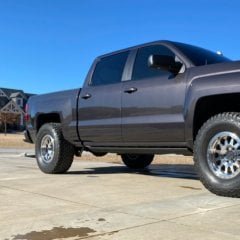
Those are even better looking up close - I like that they powder coated the lug nut areas black - those wheels combined with the fox coilovers look badass...GM should be offering those and they would get some serious activity on them....hmmm, i wonder what black lug nuts would look like....


Hmmm interesting proposition... I dunno how that would look. I'm working on my engine cover right now, maybe that would be something else to possibly look into. And ya I've kinda wondered why GM hasn't had any black and machined "off-road esque " looking factory wheels yet given that everyone and their mom buys black and machined after market wheels

Posted

whats the specs on this ARK? Looks great and the same wheel I have

procomp lift w/35 12.50 nitto mt


Sent from my iPhone using Tapatalk

Posted

2016 Silverado 1500 4x4 Crew Cab Texas Addition.

5.3

3.42

6in Pro Comp lift

35x12.50x20 Nitro Trail Grabbers

post-159060-0-66104200-1465354843_thumb.jpg

post-159060-0-66104200-1465354843_thumb.jpg

post-159060-0-66104200-1465354843_thumb.jpg

post-159060-0-66104200-1465354843_thumb.jpg

Posted

2016 Silverado 1500 4x4 Crew Cab Texas Addition.

5.3

3.42

6in Pro Comp lift

35x12.50x20 Nitro Trail Grabbers

Are you going to paint match the fenders flares?


Sent from my SAMSUNG-SM-G930A using Tapatalk

Posted

2016 Silverado 1500 4x4 Crew Cab Texas Addition.

5.3

3.42

6in Pro Comp lift

35x12.50x20 Nitro Trail Grabbers

Man you cut the shit out of that air dam lol. Did you regear?

  • Like 1
Posted

No regear yet. Probably Tune 1st then look at 4.10's.

Getting about 16mpg and would be satisfied if I could tweak up to 18. Only about 2300 miles on it so maybe after a few more miles the mpg will go up a bit.

Posted (edited)

No regear yet. Probably Tune 1st then look at 4.10's.

Getting about 16mpg and would be satisfied if I could tweak up to 18. Only about 2300 miles on it so maybe after a few more miles the mpg will go up a bit.

Ya I hear ya brotha. I got 3,200 on mine. I'm getting the same mpg. Also thinking about re gearing to 4.10's. I'm waiting for a programmer so I'll see if that makes enough of a difference to hold me over and put off re gearing for awhile. Edited by Abearclaw
Posted

Thanks I really appreciate the compliment man. I'm glad I kept the factory 20's on there for sure. I just got them stripped powder coated black and then remachined the face with a brushed effect and clear coated. Cost me like $600 for all four. In my opinion, I don't think you'll be happy for more than about a day with 305's. I debated keeping my 305/55r20 toyo at2 extremes that I ran with my level when I got the lift and I'm really glad I went to 35's. I don't know what power train you have but I'm gonna assume the most common (5.3L w/ 6 speed and 3.42's) is what I have and power loss is pretty minimal. I was expecting more power loss honestly but it's not bad. I'm not running a tuner yet because there are only a couple out right now for the 2016's so as soon as more choices like Edge comes out I'll pick one up. I'm only running an AFE intake which I love that adds some power and killer engine growl when some gas is applied.


I like 35's. I was just going to stick with 305's for #1, reduce power loss a little bit but still get that wider tire look I like. #2... $$$ Cost $$$. I'll probably end up with 305's before the lift anyway. Looks like stock tires have probably 5-6k miles left on them and me and the family just bought 20 acres of land and getting ready to build a new house....so the lift will have to wait unfortunately. So, I'll probably still have the 305's when I get the 4", so I'll probably have a few miles to assess if I like that or want to step up to 35's. I would have thought 35's would kill the power in these things. And yes I have 5.3 with 3.42's.


Thanks for your response. Your truck definitely set my 4" lift desire in stone.

  • Like 1
Posted


I like 35's. I was just going to stick with 305's for #1, reduce power loss a little bit but still get that wider tire look I like. #2... $$$ Cost $$$. I'll probably end up with 305's before the lift anyway. Looks like stock tires have probably 5-6k miles left on them and me and the family just bought 20 acres of land and getting ready to build a new house....so the lift will have to wait unfortunately. So, I'll probably still have the 305's when I get the 4", so I'll probably have a few miles to assess if I like that or want to step up to 35's. I would have thought 35's would kill the power in these things. And yes I have 5.3 with 3.42's.


Thanks for your response. Your truck definitely set my 4" lift desire in stone.

Well sounds like you've got a well thought out plan. Congrats on the big purchase, look forward to seeing your truck done in the future!


Sent from my iPhone using Tapatalk

Posted (edited)

New 2016 Summit White LTZ Z71.


Current Mods:

20% Tint

GM Black Bowties

Factory 22s w/Black Inserts

BakFlip G2 Bed Cover

LED Bed Lighting

Amp Research Power Steps

Z71 Side Emblems


Coming Soon:

GM Borla Exhaust

2" RC level

285/50/22 Nitto G2


427a7d2c368ae6e3caea641b7381dc82.jpg

e359cd1b7d3f608f9a6271513d0e989e.jpg


Sent from my iPhone using Tapatalk

Edited by zrlee
  • Like 1
  • 2 weeks later...
Posted

2014 Silverado Double Cab Z71


9" Mcgaughys

35x12.50 Toyos

22x12 American Force Blades


4.10 gears.


Hidden 42" light bar behind grill.

Led Cubes in Fogs


e8e377a3efd5cd18e91463a409d04ded.jpg

5535be57147771f406e48bfd04e8698d.jpg


Sent from my iPhone using Tapatalk

  • Like 1
Posted

2014 Silverado Double Cab Z71


You know there is a hook on your gas tank door so your gas cap doesnt have to hang on your fender.

  • Like 1

Create an account or sign in to comment

You need to be a member in order to leave a comment

Create an account

Sign up for a new account in our community. It's easy!

Register a new account

Sign in

Already have an account? Sign in here.

Sign In Now
  • Recently Browsing   0 members

    • No registered users viewing this page.
  • Forum Statistics

    250.4k
    Total Topics
    2.7m
    Total Posts
  • Member Statistics

    342,825
    Total Members
    8,960
    Most Online
    phillja
    Newest Member
    phillja
    Joined
  • Who's Online   5 Members, 1 Anonymous, 807 Guests (See full list)


  • Latest Articles

  • Posts

    • If we're talking futures, yes, it's speculation.   The spot price of a delivered barrel is elevated now compared to before the conflict. And that is related more to current supply/demand.
    • SPECULATION on the wars effect raised prices. AI is maximizing the profit. Refining is vertically integrated. 
    • It's the Middle East conflict that raised prices, not AI. But nice distraction.
    • Lauren Fix Is AI quietly deciding what you pay at the gas pump? How the algorithm picks drivers' pockets.   Every time tensions flare somewhere in the world, gasoline prices seem to jump overnight. Drivers expect it. The news blames geopolitics, oil traders blame uncertainty, and politicians blame each other. But here's the question almost nobody is asking: If computers can raise prices within hours, why do they suddenly become so patient when it's time to lower them? Americans have lived with this frustration for decades. The price of crude oil climbs, and gas stations respond almost immediately. Crude oil falls sharply, and suddenly we're told to be patient. Refiners need time. Distributors need time. Retailers need time. Somehow, that urgency only seems to work in one direction. Regulators have already gone after algorithmic pricing in apartment rentals, and they're looking at hotel rooms, airline tickets, and online retail. Now a new California lawsuit and a federal push to investigate gasoline pricing suggest there may be another piece of the story that deserves far more attention. It isn't simply about oil markets anymore. It's about artificial intelligence, algorithms, and whether software designed to maximize profits is quietly changing how fuel prices are set across America.   If that sounds like something out of a science fiction movie, think again. Kalibrating the market? Kalibrate is a real pricing platform. The company markets its software as an advanced pricing solution that analyzes competitor prices, wholesale costs, local demand, traffic patterns, and countless other variables before recommending the "optimal" price at the pump. By the company's own marketing, it serves many of America's largest fuel retailers and convenience store chains. Retailers use it because it promises to increase profit margins while staying competitive. There is nothing inherently illegal about any of this. Every major industry now runs on data analytics. The concern begins when pricing software stops simply reacting to the market and starts shaping it. On June 22, three California drivers filed a federal class-action lawsuit in Sacramento — and they didn't just sue the software company. They sued the gas stations. Kalibrate is the lead defendant, but so are Marathon, BP, Circle K, 7-Eleven, Speedway, Walmart, Sam's Club, and Albertsons. According to the complaint, Marathon alone runs more than 1,000 ARCO stations in California and has been letting Kalibrate set prices at them since 2020. Circle K, plaintiffs claim, has more than 400 stations on the software. Albertsons, they allege, has been using it since at least 2009. The complaint alleges that Kalibrate allowed competing retailers to share competitively sensitive information and receive pricing recommendations that discouraged aggressive competition. It describes a "restoration" feature that plaintiffs say lets nearly all the stations in a market raise prices at the same time. It also quotes Kalibrate's marketing, which according to the complaint tells operators that even in the face of "falling oil prices ... it's critical to avoid a race to the bottom," and warns that cutting your price to win customers "could be making a change that triggers a downward spiral." The plaintiffs call the platform the "central nervous system for a conspiracy to extinguish retail price competition among gas stations." Price pumping What does that cost you? Research cited in the complaint found that stations switching to this kind of software raise prices by about 6 cents a gallon on average — and by as much as 30 cents where most of the stations in an area are running it. Plaintiffs point to a real-world example too: They allege that when one California Albertsons turned Kalibrate on, its pump price climbed 3 to 4 cents within days. That sounds small. It isn't. By the complaint's math, a single penny on the statewide average drains $134 million a year from California drivers' wallets. Kalibrate says it disagrees with the allegations, calls its technology lawful, and intends to defend itself. The retail chains have not yet answered the complaint. No court has ruled on any of it. But what happens when thousands of competing businesses begin relying on the same algorithm to determine prices? Price fixing has been illegal in California for more than a century, and the plaintiffs are suing under that old law. What's new is a statute that took effect on January 1 — AB 325, the Preventing Algorithmic Collusion Act — which says plainly that you cannot escape a price-fixing charge by routing the conspiracy through software. Using pricing software is still perfectly legal, but using it to coordinate with your competitors is not. AB 325 makes it unlawful to use or distribute a "common pricing algorithm" — software that uses competitor data to recommend, align, or stabilize prices — as part of an agreement to restrain trade. Whatever you think of Sacramento, it closed that loophole first, and this case is the first real test of it. The A-word Washington is applying pressure of its own — though it is worth being precise about what kind. On July 3, the Department of Justice and the Federal Trade Commission sent every state attorney general a letter urging them to investigate whether antitrust violations or price gouging are keeping gas prices artificially high. "Recent volatility in crude oil prices does not suspend either the antitrust laws or state consumer protection laws," they wrote, "and it does not authorize companies to manipulate retail prices or collude with their competitors." The letter followed President Trump's complaint, posted to Truth Social on June 23, that falling crude prices weren't reaching drivers. But read that letter closely and you'll notice something. It never mentions algorithms. Not once. The federal government is going after gas prices with the same tools it has always used, while the argument about the software is being made by three drivers and their lawyers in a Sacramento courtroom. Nobody in Washington has said the word yet. And whether any of these investigations turns up illegal conduct remains to be seen. Anyone who has driven for more than a few years knows the pattern. Prices spike within days of a geopolitical event, then drift down at a painfully slow pace. Economists even have a name for it: the "rockets and feathers" effect, and they have studied it for decades. Researchers point to several reasons, including inventory replacement costs, consumer behavior, and local competition. None of those explanations necessarily involve illegal activity.   Dirty work   But artificial intelligence introduces an entirely new variable. Unlike traditional pricing models, today's software can monitor competitors continuously, process enormous amounts of market data instantly, and recommend price changes faster than any human pricing manager ever could. If dozens or even hundreds of competing retailers rely on similar recommendations generated from comparable market data, the practical result may be less price competition — without anyone ever picking up the phone to coordinate prices. That possibility isn't unique to gasoline. Regulators have already gone after algorithmic pricing in apartment rentals, and they're looking at hotel rooms, airline tickets, and online retail. The Justice Department sued RealPage over the software landlords used to set rents and settled the case last November. The concern in every case is the same: that algorithms may accomplish indirectly what competitors have long been prohibited from doing directly. It's worth being precise about what that settlement did and didn't say. RealPage paid no penalty, and the government made no finding that it broke the law. What the DOJ objected to was the use of nonpublic information from competing landlords — not the software itself. Using an algorithm to price your product isn't illegal. Feeding it your competitors' private numbers is where the trouble starts. That distinction is going to decide the gas station case too. Technology moves faster than regulation. Thin margins This debate also exposes another misconception. When Americans get angry about gas prices, they aim that anger at the oil companies. In reality, what you pay at the pump includes crude oil costs, refining expenses, transportation, taxes, distribution, and retail pricing. Gas stations generally operate on thin per-gallon margins — the National Association of Convenience Stores puts the net at roughly a dime a gallon once credit card fees and operating costs come out — while state taxes and regulatory costs can dramatically affect what you pay locally, particularly in a state like California. If gasoline prices are rising because of global supply disruptions, consumers may not like it, but they can understand it. Markets move. Wars affect energy. Hurricanes interrupt refining. But if pricing software is reducing competition by encouraging retailers to move together instead of competing aggressively for customers, consumers deserve answers. Artificial intelligence is quietly becoming the invisible middleman in countless financial decisions Americans make every day — insurance rates, airline tickets, hotel rooms, online prices, and now what you pay every time you pull up to the pump. Most consumers never know an algorithm was involved; they simply assume that's what the market decided. Algorithms don't care whether you're commuting to work, driving your kids to school, or trying to keep your small business afloat. They don't understand household budgets or family vacations. They optimize. That's what they were built to do. The question was never whether artificial intelligence can set prices more efficiently. It's whether we've quietly allowed machines to redefine what competition means. Because if software can determine the price of something as essential as gasoline today, what will it be deciding tomorrow?   https://www.theblaze.com/lifestyle/is-ai-quietly-deciding-what-you-pay-at-the-gas-pump  
    • All valid.   But.  How many people really do this?  Its few and far between.  Most just drop it into D and go.  
  • GM-Trucks.com Clubs

  • Popular Contributors

×
×
  • Create New...