Jump to content

2016 Silverado Alignment Question (BFG KO2)


Recommended Posts

Posted

Good morning guys, can you guys check my alignment specs and tell me if there is anything of concern with them? My truck drives straight and under heavy braking, it is still straight, however it seems like the truck is "jarring" (for a lack of a better term) whenever i hit bumps on the road or whenever there is uneven surface, my steering wheel kind of softens up a bit and i have to put more effort and attention to get it back on track.


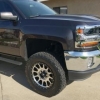
Sorry if my explanation is a little off, current setup: RC 2" level (only gave me a 1.5" level/lift) and installed some BFG KO2 275/70/17's.


Prior to this setup, I had a 2014 with RC 2.5" kit and 255/75/17 Goodyear Duaratracs.


Could my alignment be off? Do you think it has something to do with the front sway bar endlinks possibly misaligned when I installed the RC 2" level? Could it just be the stiffness of the new tires (BFG KO2) or could it possibly be a tire/wheel balance issue?


Do you think I should take the truck back to Firestone and have them re-align it and have them check the tires too while i'm at it or should I just man the **** up and accept that the BFG's don't ride as soft as the Goodyear Duaratracs?


Any advice would be awesome!


post-125159-0-63146300-1460649579_thumb.jpg

post-125159-0-63146300-1460649579_thumb.jpg

post-125159-0-63146300-1460649579_thumb.jpg

post-125159-0-63146300-1460649579_thumb.jpg

Posted

heavier tires like the KO2's are gonna follow the road more noticeably than the duratracs.


I notice it too with my KO2's

Posted

heavier tires like the KO2's are gonna follow the road more noticeably than the duratracs.


I notice it too with my KO2's

Ok cool, I was just concerned that it might have been something bigger, alignment or tire balance issue, the tires handle so much better than the stock tires and traction was awesome in the rain (the very little rain Socal gets) and are quieter compared to the Duratracs.

Posted

^ How do they handle better than stock? Taller lugs leads to more play/deformation. Heavier tire affects many handling aspects as well as the usual accelerating and braking. The larger voids between the lugs leads to less contact area to the road. I know when we switched from our stock tires on the colorado to AT2 General Grabber load range C I could feel the change in turn in response and braking (or lack there of) compared to stock. An AT tire vs a street tire should do the opposite. Even a stiffer sidewall load range E going taller would offset the stiffness and lose handling aspects. Now foul weather traction is different and they all have some leeway in terms of rubber compound.


The jarring is the E load tires. What load rating were the Duratracs? A heavy E tire will ride rougher, especially over broken pavement or small rough bumps.


Tyler

Posted

You have positive camber on the RF and negative camber on the LF which can cause the sensation you are feeling. Add to it the bigger tires and that could be the issue. The camber alignment specs before were pretty dang good, not sure why they messed with those. The only thing the leveling kit did was toe it in so I would have thought they could have just toed it back out with the tie rods and been done. Did they check that rear end as well? If so that rear end is angled to the right (check the RR toe out and the LR toe in) would make the rear axle on the truck want to go right. The after looks worse to me than the before there too.

Posted

You have positive camber on the RF and negative camber on the LF which can cause the sensation you are feeling. Add to it the bigger tires and that could be the issue. The camber alignment specs before were pretty dang good, not sure why they messed with those. The only thing the leveling kit did was toe it in so I would have thought they could have just toed it back out with the tie rods and been done. Did they check that rear end as well? If so that rear end is angled to the right (check the RR toe out and the LR toe in) would make the rear axle on the truck want to go right. The after looks worse to me than the before there too.

Yes I had them do full alignment with the new tires. Going to take it back tomorrow to have them redo the alignment, i'll offer your recommendation to them. Sucks how they just let it go like that :(

Posted

^ How do they handle better than stock?

Tires grip more to the road than the previous tires, I can take turns much faster and the rear end feels planted.

Posted

Yes I had them do full alignment with the new tires. Going to take it back tomorrow to have them redo the alignment, i'll offer your recommendation to them. Sucks how they just let it go like that :(


All of their settings are within the specs. Explain the feeling you are having and they should be able to tweak the alignment a little and take that feeling out. I did a RC leveling kit on mine. Then took to the dealer to align and the first time I drove it, it felt like the steering was overly sensitive. I had to take it back and with my explanation, the mechanic knew exactly what to do to take that feel out. It is much better now, but could use a little more adjustment as mine tends to feel that way when windy. Since yours drives straight, I would try your best to explain the bounce feeling. One other thing to consider is that steering geometry is very sensitive. Bump steer is when the toe changes as the front suspension moves up and down. Ideally you want zero bump. When you change ride heights it changes the angle of the steering components and that effects bump steer. I have not noticed the RC leveling kit having this affect on my truck but I am on stock tire sizes as well. Bump is not something alignment shops tend to check. It is something we check on dirt track race cars.

Posted

Fixed! New alignment worked, will upload new alignment sheet soon. Thanks everyone

Posted

Glad they got it fixed. Looks like they took some of the right steer out and a little less toe overall. I would have expected the Actual numbers on your first sheet to have been closer to the Before numbers on your second sheet though. Also note the specified range is a little different for caster between the RPO RBZ the first time and then QBL the second. The top is cut off on the second so I cant see what tire size that is. What tires fo ou have on your truck? Is yours 4x4?

Posted

Glad they got it fixed. Looks like they took some of the right steer out and a little less toe overall. I would have expected the Actual numbers on your first sheet to have been closer to the Before numbers on your second sheet though. Also note the specified range is a little different for caster between the RPO RBZ the first time and then QBL the second. The top is cut off on the second so I cant see what tire size that is. What tires fo ou have on your truck? Is yours 4x4?

Tires are 275/70/17, i also noticed it was a little weird that they listed my truck differently on the first sheet.

Archived

This topic is now archived and is closed to further replies.

  • Recently Browsing   0 members

    • No registered users viewing this page.
  • Forum Statistics

    250.4k
    Total Topics
    2.7m
    Total Posts
  • Member Statistics

    342,840
    Total Members
    8,960
    Most Online
    appletrav
    Newest Member
    appletrav
    Joined
  • Who's Online   1 Member, 0 Anonymous, 501 Guests (See full list)

  • Latest Articles

  • Posts

    • This is a 1/2 ton thing ONLY.  All HDs 2020-2026 have the two speed transfer case, with Autotrac as an option.     1/2 tons 2019-2026, regular 4x4s come with a single speed case (no 4LO!), and trucks with Z71 ordered, or all Trail Boss trucks come with the 2 speed case.  2 speed case is also an option on WT, and is also standard on High Country.  
    • 2013 5.3 still to this day calls for the PF48 filter.  Which as a 15psi bypass pressure.     There is a TSB, 17-NA-157 that talks about the PF-63 and PF-64 filters which have a higher bypass rating of 22psi.    TSB HERE - temp.xml   "Beginning in 2012, the oil pumps began to regulate main gallery feedback instead of pump out pressure. This means that the oil pump now does not begin to regulate until pressure is built up to the main gallery. This change reduces the amount of time it takes to provide oil to the engine bearing and lifters during extreme cold start conditions.  Main gallery feedback oil pump control systems are present on the following engine families which use Spin-on oil filters: Small Gas Engine (SGE), Large Gas Engine (LGE), High Feature (HFV6) Gen2 and Small Block Gen5 gasoline engines. These engines with the main gallery feedback oil pump control systems are factory built with an ACDelco® oil filters"   It also calls out what engines use those filters.  The gen 4 small blocks were not on that list (LMG, LC9, L9H, L92, L94, L20, L96).  Gen 5 small blocks use the higher pressure filter.          That all said...   Your 7045 Napa filter is the PF63 equivalent, with 22psi bypass.  You are already using the higher bypass pressure filter.  You CAN keep using it, you don't technically have to use it though.  
    • Do you know WHY the filter relief setting was increased to 22 psig?    When the new system goes into the second stage the pump volume ramps up considerably. It was found that the 15 psi filter bypass setting put the filter in bypass on a warm engine when the second stage was activated. Raising the filter bypass setting forced the filter to do what it designed to do. Filter. Preventing debris from circulating during high load, high rpm operation.    So next question is how did GM find this out? VLOM/lifter failures and a deep dive by Melling Corp.    Last question. Is it required? Look at it like this; a motor may be equipped with a rev limiter. But it only works if the set point in reached. That 22 psig setting only matters if the pressure differential across the filter media exceeds 15 psig during normal warm operation. Second stage kicks in around 3000-3500 rpm.    I can't answer your question because I don't know you and how you use the truck. But I think there is enough information here to let you decide for yourself. 😉
    • Probably not their first rodeo, so it should go as planned most likely.  Typically the service manager or tech doing the swap will put some seat time to shake it down after they get it all put back together.  We usually put 50-100mi before we hand them back so if something happens, its not after you get it.  A coolant leaks, oil leaks, a ground left off or loose, vibration, etc.     The new engines so far have been good?  There's been a couple that have popped out there again (the replacement engine) but most have been okay.  
  • GM-Trucks.com Clubs

  • Popular Contributors

×
×
  • Create New...