
-
Recently Browsing 0 members
- No registered users viewing this page.
-
Forum Statistics
250.5k
Total Topics2.7m
Total Posts -
Member Statistics
342,964
Total Members8,960
Most Online
-
Who's Online 10 Members, 0 Anonymous, 1,254 Guests (See full list)
-
Latest Articles
-
Posts
-
By anthony2558 · Posted
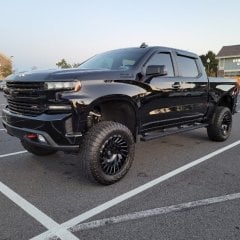
Would this be normal or a worn CV Shaft? 51K miles 3.5" lift? Boots are intact and no visible leaks showing. Attached is a the video I took. Thanks https://youtu.be/ZnW7PPRmjJY?feature=shared -
 If everything checks out at the MAF, then the MAF is BAD, new or not. You don't need a signal generator to troubleshoot this. PCM needs ALL powers and ALL grounds able to light a halogen headlight bulb - if it can light the bulb bright, then the wiring is good enough to run the PCM. Best thing you can do for yourself is spend some time here: scannerdanner.com - Check out all his YouTube videos on similar issues. If you decide to subscribe it's the best bang-for-buck ratio in the automotive world, hands-down. He's got TONS of free vids on YouTube, too.
 -

-

By contrabombarde · Posted
Yes, I used my multimeter to probe all of the wires at the MAF, both with the sensor connected, sensor disconnected, key on engine off, key on engine running, etc etc etc. I probed all of the wires again at the PCM, at the connectors, etc. All voltages are what they should be according to the service manual/wiring diagrams. All grounds are good, less than 20 millivolts from the battery negative under load. Both at the connector of the MAF, at the PCM connector etc. I know this throws a pretty big wrench into things, but this truck was acting up before the swap. I don't have very much information, if any on what was causing it, but if you cleared all of the dtcs it would do the same thing where it would crank, fire, then die. And it would do the same thing a dozen or so times, and eventually it would start and run, but the difference is that it would run and actually be drivable. Whereas now if you can drive it at all, it goes into reduced power mode almost immediately, and even then it's not running correctly. When you come to a stop at a light it stumbles down to for 500 RPM before catching itself and returning to the smooth idle. And if you go more than about 50% throttle then it immediately goes back to doing the misfire thing. Like I said, I know that throws a wrench into things, and unfortunately I was not able to pull any data or anything like that before I did this work, so I don't have much to go on. I'm trying to not fixate on one particular thing as the cause of the problem, but it seems like all avenues are pointing me towards the PCM. Like I said I have tested the wiring extensively (see above), and during cranking the sensor does produce seemingly legitimate values at least according to my multimeter, but as soon as the engine fires those values quickly descend into gibberish. I've tried it with multiple different known working sensors, I have done literally every test I can think of multiple times on the wiring (probing the signals, probing the pins with the sensors unplugged, probing the pins at the PCM, voltage drop, voltage drop under load, continuity, ohms, and double-checking everything against the wiring diagrams/ proper values in the service data.) Another thing that pushes me towards a possible PCM failure is, I have noticed in troubleshooting a little bit taking a break and coming back, that when I leave the truck to sit for a while and cool off, it starts and runs smoothly when I first start it up. However once it warms up. It starts having problems. For example, when I went out to the truck this morning after it had been sitting overnight, I was actually able to drive it down the block. And then once I got on the throttle a Little bit after going about a thousand ft, it started misfiring again. I pulled it back into the driveway, shut it down, and started it back up. It idled smoothly. As soon as I touched the throttle it did the misfire thing again. From then on as soon as I started it it would misfire. I shut the truck off and went to go get a coffee and do a bit more research. When I came back out I started the truck up and it immediately went into the smooth idle. After a couple of minutes of playing around with it, it would not idle smoothly anymore. Let it sit a couple of hours, rinse and repeat. This makes me think with temperature change something is going wrong inside the PCM. I have the PCM out of the 2007 donor vehicle and I'm thinking of getting a one-day subscription to the ACDelco programming service to try and program that and see if it helps. Like I said, I'm really trying to not fixate myself on one potential cause, but it seems everything is pointing me towards PCM failure. I would really like to try to confirm that, but unfortunately I don't have an oscilloscope or a signal generator to do the GM service procedure where you feed 5 khz into the signal pin. -
Ahh, sorry about that - I got some bad info. Newdude is correct. That's what I get for working 13 hours straight ... on my "vacation", lol. Should've checked the files I had instead of the internet. Anyway ... this is GREAT news, since this would've been an absolute friggin nightmare to get working. I don't think the lack of VVT is causing this - you've got another issue. Wiring, I'm betting. I'm telling you right now, your computer isn't bad. If it worked before the swap, it's working now. You need to do some more (better) diagnostics and figure out exactly what you're missing. Did you test every wire directly at the MAF? Have 5V reference? Ground? If you're reading ZERO g/s, your Hz isn't much use - it's going to be the wrong value anyway. The MAF is not working, and you need to find out WHY. I got this off the net, so VERIFY first: Pin A: Black (BLK) wire, Circuit 552, serves as the Sensor Return (Ground). Pin B: Tan (TAN) wire, Circuit 472, carries the Intake Air Temperature (IAT) signal. Pin C: Yellow (YEL) wire, Circuit 492, is the primary MAF Sensor Signal output to the PCM. Pin D: Pink (PNK) wire, Circuit 339 or 539, provides Ignition 1 Voltage (Power). Pin E: Tan/Black wire, Circuit 552 or similar, often associated with the Intake Air Temperature ground or signal return. Global-A list: https://postimg.cc/KKJnQC85
-
-
GM-Trucks.com Clubs
-

Black Truck Club
Open Club · 613 members
-

White Truck Club
Open Club · 381 members
-

Canadian Owners Club
Open Club · 282 members
-

Red Truck Club
Open Club · 158 members
-

diesel 3.0
Open Club · 281 members
-

Texas Owner's Group
Open Club · 371 members
-

NorthSky Blue Club
Open Club · 118 members
-

Midwest Owner's Group
Open Club · 213 members
-

2015 Custom Sport Club
Open Club · 5 members
-

GM Snow Plowing Club HD
Closed Club · 14 members
-
-
Popular Contributors
-


.thumb.JPG.2c573de60d3a3a4407c7d92298db46dd.JPG)


Recommended Posts
Archived
This topic is now archived and is closed to further replies.