Jump to content

Recommended Posts

Posted (edited)

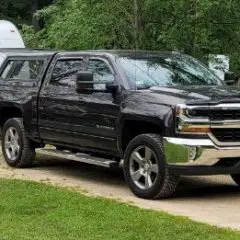
Like title says, I finally got around to doing the transmission thermostat delete. It was a very interesting adventure. Not real difficult but it would have helped if I had 3 hands plus the proper tool. Getting the housing off was pretty straightforward. A 13mm socket removed the housing and luckily I have the brace holding the transmission cooling lines in so it was just a 10mm bolt to remove. Very little transmission fluid drained out just like others had mentioned. But the biggest issue I ran into was that stupid snap ring. I knew I had a set of snap ring pliers so I figured I was good to go. Unfortunately, my set only expands snap rings and doesn't compress them. And I didn't discover this until I had the housing in my vice. Doh! But a little creativity with a set of pliers and the snap ring pliers were able to compress that snap ring. The cap was stuck on so with a little wiggling, I got it to come off. Out came the pill, then the spring, flipped the pill, put spring into cap and quickly popped the cap back in. So far so good I was thinking.


Next came getting snap ring back on. This is where a third set of hands would have come in handy. So I push down on the cap to fully seat it then with the snap ring pliers holding the snap ring, I used my pliers to squeeze the snap ring pliers to compress the snap ring. Again, so far, I'm getting it done. Now trying to hold cap down with one hand and squeezing pliers with other, I'm trying to finally the snap ring back in place. Then it happened... The pliers slipped a bit and next thing I know, the snap ring is now air borne, whizzing past my head and across the garage! Now if you've seen my garage, it is absolutely stuffed hodge podged with my sons toys, assorted boxes and chairs, a camping trailer, etc... and it's hard to even see the floor. (That will be handled in coming months as I organize everything)

Needless to say, I am now pissed. Of course I picked July 4th to do this project when just about everything is now closed for the holiday.


So now I have to go searching for this stupid snap ring. luckily, I did happen to see the flight path but didn't see exactly where it landed. So I'm slowly pulling out all the stuff from the garage, shaking it in the hopes that the snap ring falls out but no dice. I keep moving further into the mound of junk and now my driveway is starting to fill up. Now I'm about ready to give up but I know I'm screwed. I'm the only one here and I would need the Silverado to run out and get a replacement but can't drive it with the trans thermostat housing removed and where would I even be able to go anyway. So I gave it one last look. After about another 10 mins, I happen to look under my son's water table that only a 1/2 hour ago was buried and there it is! The flying snap ring has been found!


So I go for one more try. Carefully I push down on cap, then holding the pliers compressing the snap ring pliers, I get the snap ring back in position and slowly release. Ok, success, the snap ring is back in somewhat. It's not even all the way around and then looking at the forum again, I learn that there is a flat side and a rounded side to the snap ring. At this point, I don't really care. It's in and I don't think it's going to come out anytime soon. I put that bad boy back on for now so I can at least be able to drive again.


I did call up the local Oreillys and found out that they are open today until 7 and they have the proper snap ring pliers in stock. I'm going to run up there in a bit and get them. I will let the truck cool down a bit and then pull the trans thermostat housing out again and make sure the snap ring is installed properly.


So the moral of the story is make sure you have the proper tools before starting a project like this on a national holiday. Happy 4th of July!!!

Edited by mikeyk101
  • Like 2
Posted

I see you have a vise. Sit the housing in sideways with a small short socket over the nub on the cap and use the vise as your third hand 😉  A wood working clamp will work as well. 

  • Like 2
Posted
41 minutes ago, Grumpy Bear said:

I see you have a vise. Sit the housing in sideways with a small short socket over the nub on the cap and use the vise as your third hand 😉  A wood working clamp will work as well. 

See, I knew there had to be a trick to it. Thank you!

  • Like 2
Posted

So I made my way up to the local Oreillys earlier and left about $20 lighter. They had a decent pair of snap ring pliers so I snagged them. I let the truck cool down for a bit and dived back in. It was a lot quicker getting the housing off this time and these new snap ring pliers got the snap ring off very easily. Turns out I did put the snap ring on backwards. And by having the right tools, 2 hands worked out just fine. After flipping the snap ring over so flat side went in first, the new tool held the snap ring perfectly. I pushed the cap in first then used a pair of needle nosed pliers to keep it down while I inserted the snap ring. It went mostly in. One more push down on cap and pushing on edge of snap ring, it snapped right into place.


This time I paid a little closer attention to the snap ring. I noticed that the snap ring is narrower near the holes and fatter around back side. When putting it on the first time, I had just assumed that it had the same thickness all around so it didn't look quite right. But all is right in the world for me tonight! Now I am looking forward to cooler trans temps especially when towing my camper...

  • Like 1
  • 2 weeks later...
Posted

So I don't actually drive a lot. Sometimes the truck gets parked for a week between trips. One thing I noticed after the mod while driving about 60 miles or so. Outside temps were around 95 and I got stuck in stop and go traffic on highway for maybe 20 miles or so. The temp on the trans went up to around 183 at highest. After traffic started moving, it finally started to drop but still stayed in the upper 160⁰- lower 170⁰ range. I did the reverse trip today. Outside temps were mid 70's. Traffic was pretty much wide open on highway. This time it still got to 173⁰ but this was cooler than last trip. 


I see guys reporting avg trans temps after mod of 130ish to 140ish. I'm confused why mine is running higher. It still hasn't hit 190 or higher like in the past though. The one thing that comes to mind is blocked air flow from the front causing the higher temps. I have on more than one trip ended up with a front end just plastered with bugs. This makes me think that the AC condenser and/or radiator fins may be a bit clogged.


After getting to my destination, I did peek into the grille to check. I could see quite a few bugs up against the fins. I took my hose and put the nozzle on jet and tried to spray down as much as I could to try and break loose the debris. It does look better but I really can't tell if the fins are crudded up. What would be the best way to inspect and then clear out any crud from there? I know that usually it's best if you can blow or flush from behind but I really can't see any way of doing that. I'm guessing that maybe removing the grille might be a better way to get it cleaned but not really sure how to take the grill off easily. I guess I could do a search on YouTube. So does anyone have thoughts on this? Does the clogged fins sound like it may be the issue?

Posted (edited)

I wouldn't think so. The fins are still releasing heat, and you'll still have airflow... How many bugs are we talking? A good coating? Or the kind of coating that says you should have bug killer stenciled on the side of your truck.


Maybe you found the downside to the delete?

Edited by M1ck3y
  • Like 1
Posted (edited)

In the summer heat like this, which has been often in the 90's here. Once I get it hot, like 170+ if I hit traffic it rarely cools off back below 155-160 degrees. Once it's heat soaked it kinda won't go away.


But if I don't stop and I'm moving at 60-70mph it peaks around 150 degrees and stays there.

Edited by CamGTP
  • Like 2
Posted

Ok, I will just pay attention to it for a little while. At least it stays below 190⁰. 

Posted

Iv followed  this from the beginning and wonder. Seems that the thermostat is for warming up the fluid faster. The fluid still goes through the radiator and is cooled. The water temperature is set higher than the transmission temperature. I realize some vehicles have an additional coolers to keep from over heating. That usually vehicles with towing packages. Some people may put in lower stats to lower coolant temperature. I imagine that may interfere with emissions and possibly cylinder deactivation. I remember way back with my 98 Ford diesel. You couldn’t get full power until it was warmed up. That’s why my curiosity is peaked. 

Posted
3 hours ago, KARNUT said:

Iv followed  this from the beginning and wonder. Seems that the thermostat is for warming up the fluid faster. The fluid still goes through the radiator and is cooled. The water temperature is set higher than the transmission temperature. I realize some vehicles have an additional coolers to keep from over heating. That usually vehicles with towing packages. Some people may put in lower stats to lower coolant temperature. I imagine that may interfere with emissions and possibly cylinder deactivation. I remember way back with my 98 Ford diesel. You couldn’t get full power until it was warmed up. That’s why my curiosity is peaked. 

I know on mine, I have the Range AFM disabler so it runs on all 8 all the time. I also have the "towing" package with the 3.42 rear and auto locking rear but I don't have the OEM brake controller. 


One thing I did notice (but may have just been my imagination or I just never paid attention) it did seem to take a longer before the water temp gauge went to the center 210⁰. It seems like it would warm up pretty quick in the past but seemed to stay just left of center a bit longer. It did finally end up on 210⁰ and stayed there. When I was towing my trailer through the grades in Arkansas and Missouri prior to the trans thermostat mod, both the water temp rose above the 210⁰ but not to the point of overheating and trans temp at times went to 220⁰ and had a hard time getting back down. On flat terrain, it would still rise especially when going through some of the smaller towns but stayed closed to 200⁰ +/-. I will be taking a camping trip next week and will finally get a chance to see how it does now.

  • Like 2
Posted (edited)

In the stock setup the transmission fluid is heated by the work that is put into it. The thermostat does not have a minimum flow bypass, just an internal short circuit. When you flip the pill fluid runs through the cooler/radiator from start up. Combustion is the overwhelming heat source so as it heats the coolant, it also heats the transmission fluid. The transmission fluid is heated much quicker than it would with normal work but it peaks at a lower temperature. So in the beginning the transmission cooler is a heater...UNTILL...the transmission fluid temperature exceeds the water temperature at which point it becomes a cooler.  The second law of thermodynamics says that heat flows naturally from an object at a higher temperature to an object at a lower temperature, and heat doesn't flow in the opposite direction of its own accord.


In "normal" everyday driving there is more radiator capacity than needed so the transmission runs cooler than it will with the thermostat active. When towing however that thermostat will remain fully open by about 210 F and from there no difference will be seen between the two ASSUMMING the load applied is at the maximum rejection rate of the radiator.


You may get a degree per fractional degree drop in transmission fluid temperature per degree of water temperature with a lower water thermostat. You will get it without a load applied. 


If you need more cooling than that then an ancillary cooler and perhaps a fan will be needed to hold transmission bulk oil temperatures below 180 F. 


This has zero effect on AFM operation FWIW. Once the transmission fluid is above 104 F there is no difference in operation for any giving place in the temperature map. I run a 170 F stat in place of the 207 F stat without a single noticeable difference in fuel usage. All I get is a cooler transmission and much happier power train. In the winter it actually runs warmer than with the stat for the first 100 miles then cooler afterwards but never under 104 F even on the coldest days of Northern Illinois winters. It can never get too cold. When the fluid temperature drops below the water outlet temperature it's a heater again. 


Edited by Grumpy Bear
  • Like 2
  • Thanks 1
  • 7 months later...
Posted

I deleted my transmission thermostat on my 2014 sierra. It keeps getting hot still. My transmission lines going into the radiator are getting super hot to the touch .what should I check what can I do. This issue started after I ran my truck with a bad alternator for awhile 

Create an account or sign in to comment

You need to be a member in order to leave a comment

Create an account

Sign up for a new account in our community. It's easy!

Register a new account

Sign in

Already have an account? Sign in here.

Sign In Now
  • Latest Articles

  • Posts

    • tl; dr I've now reached the 6th floor of hell. I'm chronicling my journey for my morning readers.   Pulling the top of the intake apart was moderately easy but it involved a lot of parts, connections, and minutae. I was preparing for the new fuel lines to arrive ("nut and bolt kit" it's called). The fuel line connections are notched and held in place by the manifold and a metal plate with a T27 screw.   It's on the back of the intake, under the firewall, with little clearance, and two hard metal fuel lines in the way. I was using Franken-tools (weird combinations of 1/4 inch ratchet with/without an extension, with a bit holder for my T27) to get in there. One of my sockets and bits fell off and has yet to emerge on the floor. I lost a second setup and that's when I almost started throwing tools. But that was the point at which I had gotten traction on the Torx head, and it promptly stripped. No more traction.   I started humming "1-877-kars-4-kids" because I was about at that point. You know what? I'm $1500 into this thing and I can make it disappear just as quickly. This isn't fun anymore. I had spent a lot of time already "tidying" around the engine bay: Fixing all the "someone's been here before!" BS. The truck has been exclusively dealer- and shop- serviced and I'm reminded of why I never let other people work on my cars unless absolutely necessary.   Speaking of dealer service. This truck has a 1" stack of records going back to 1995. I put them all in an excel spreadsheet, date/mileage/description.   The CPI spider has been replaced 4 times in 85k miles. The EGR? Another 4. Multiple, multiple O2 sensors. One Cat. 4? Sets of plugs and wires, and I swear half the stack is diagnosis paperwork for "misfire, runs rough, extended crank, dies at stoplights".   GM was producing some proper crap back then. And it was still well within the era of brittle/crappy plastic. (Windows 95 was released the same month this truck was sold new, we HAD the technology!!)   There (was) a plastic shroud around the evaporator core and HVAC fan in the engine bay. I noticed a chunk of it missing so I poked at it some more and it literally shattered. Touched it some more and pieces were crumbling off. Had a good laugh. Clearly whatever plastic garbage they were using had broken down over 30 years and was literally turning to dust. That was a good half hour of using a shop vac to remove the rest of it.   Back to it.   I was going to give up for the evening but then decided I'm already level 10 pissed off at the stripped screw: G* D* it, give me my tools back -- and my JOY. We'll do this the hard way: The whole intake is coming off.   Blazer won Round II. After finally finding and accessing the 12 intake bolts and using a pry bar to unseat it from the heads, it popped loose in an explosion of gunk and grime raining down into open ports. Awesome.   6 times I reminded myself: Be careful of the temperature sender on the front of the intake.   YEAH, I forgot again and snapped it clean off in the removal. Add another $20 to the ever-growing list of new parts this thing is consuming.   The shame is, long before removing the intake, I had changed the oil in prep for Tuesday's momentous fuel line replacement that was going to be the magic fix and I'd have a running Blazer to tool around in this next weekend. The intake removal, including raining gunk, also gushed dirty coolant all over the valley. Of course it did. Welp, there goes another $35.   I now need an intake gasket set, bolt set, coolant temp sensor, another 5 quarts of oil, some RTV. Don't worry, I've already got 3 new jugs of Dexcool and a thermostat waiting. I'll fill it with clean water first to get it running, dump it, and then add the Dex later on in case... well, let's not go there. I'm only tearing this down once, next time the truck is going on Marketplace for FREE.   Oh, and I'm going to need vacuum hose for all the stupid connections placed at the rear of the engine which have since disintegrated. Come on, GM....tell me you don't do that anymore?   Oh, and the ears on the distributor where the cap screws down are both cracked. I mean, why not put a new distributor in it too. You get a distributor, YOU get a distributor, Everyone gets a new distributor!   This truck isn't out of the woods yet...I'm already questioning how much more time I'm willing to sink in.
    • NewDude, thank you for the suggestions!    I did follow up and the dealer indicates he has an open CX case and is working with DPAC (Dealer Parts Assistance Center).   Per the dealer, GM has had a quality spill and is not providing an update for when a replacement engine will be available.
    • That's interesting.   There was a factory wire-hole in the back, top of the rear cab, which had a wire for the third brakelight assembly running through it, as well as several holes (10 of them I believe) for all of the studs coming off of the 3rd brakelight assembly itself.   I sealed all of those holes with RTV/silicone as well.   I found it kind of odd, that none of those holes, were sealed with any kind of sealant by the factory - if there was any there, it wasn't very much.   That said, I've been out in heavy rain and have ran the truck through high-pressure car-washes a few times now and she has been 100% water-tight to this point.   I feel very confident in the repair, we'll see how it holds up.
    • I bought a used 2022 2500hd with 6.6L in February. In March took a 2200 mile trip towing our 6500 lb trailer. Changed the oil day before leaving and when we were arriving at our 1st destination, low oil light came on (roughly 1000 miles) it was 2 qts low. Now it towed like a dream, no issue there, and we did go through the mountains of TN, but still, 2 qts! Luckily I did purchase an extended warranty. Brought it to the dealership in April, oil change and consumption test. Brought it back last week, 1300 miles, no towing, and no oil showing on the dipstick. GM is reccomending a new engine (cheaper than them rebuilding), we'll see if the warranty company comes through. 
    • T3's and Ibuprofen. I do have a cryotherapy unit (ice machine) and a lift chair that will allow me to raise my legs above my heart.  There are topicals that I can use once the wound is fully healed.  
  • GM-Trucks.com Clubs

  • Popular Contributors

×
×
  • Create New...