Jump to content

L83 5.3L Flex fuel conversion with Dyno sheets. Followed with tune and more dyno sheets.


Recommended Posts

Posted (edited)

EDIT: Ethanol made +20WHP and 35 FT-LBS of torque. Dyno sheets a little down in the comments. 


Hi Everyone, 


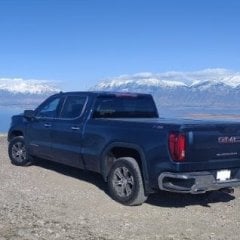
First post here. I just sold my 06 Duramax to come back to the 5.3 world. This past Saturday I picked up a 15' Denali crew cab with the 5.3. I was so excited, it had everything I wanted. When I went to fill up Sunday, I noticed that there was no yellow fuel cap, so that lead to some serious googling and then I found out that in 15' FFV was a $100 option. The window sticker said 5.3L Flex Fuel, so naturally I was pissed. I called them up Monday morning and explained my situation. 20 minutes later I received a call and they offered to take the truck back, or give me $1k. I told them make it $1150 so I can convert it myself, since they wouldn't. They paid up the next day!


So what I gather is that the FFV option is some stickers, a yellow gas cap, ethanol content sensor and a tiny tweak to the ECM. 


I will be following these two guides. I already have the parts on hand, I ordered them the other day. 


https://www.youtube.com/watch?v=ezb58gNGJRk&list=WL&index=7&t=343s


https://www.youtube.com/watch?v=O_WeWK06zWM


Today I had the truck dyno'd and it made 299HP and 307FT LBS, 297HP and 312FT LBS, 296HP and 312FT LBS in 3 consecutive pulls. I attached the dyno sheets.


I'm stubborn and my friends think there is no gains to be had, I argue they are wrong and GM claims about 25 hp and 30 FT lbs by switching fuel alone. So after the conversion and making sure I have clean E85 in the tank, im taking a trip back to the dyno and ill update then!


Edit: tuning will be done with HP tuners and I also purchased a dragy for this experiment. The truck runs a 15.7 1/4 mile right now. 

2015 CHEVROLET K15 SILVERADO 4WD 1.pdf 2015 CHEVROLET K15 SILVERADO 4WD 2.pdf 2015 CHEVROLET K15 SILVERADO 4WD.pdf

Edited by Alec Kerchner
  • Like 2
Posted

The third dyno I will. The dynos I posted today are bone stock. Fram air filter, full exhaust, 87 octane. Brand new maf, 45 miles on it. 100k on the truck. Probably original plugs. 

Posted

So you'll only be enabling the E85 in the tune and running it as if it was a factory option right. For the next test anyway.


When it comes to tuning and changes. I'd suggest an air fuel ratio of 12.5ish for pump gas ( I run 89 octane) and then 12.8-12.9 on E85. The highest content I can find in Minnesota so far as been 72-75% which is fine. It really makes no difference above 60-65% alcohol content when it's pump fuel. That Ignite racing E85 is a different ball game though.

  • Like 3
Posted
13 minutes ago, CamGTP said:

So you'll only be enabling the E85 in the tune and running it as if it was a factory option right. For the next test anyway.


When it comes to tuning and changes. I'd suggest an air fuel ratio of 12.5ish for pump gas ( I run 89 octane) and then 12.8-12.9 on E85. The highest content I can find in Minnesota so far as been 72-75% which is fine. It really makes no difference above 60-65% alcohol content when it's pump fuel. That Ignite racing E85 is a different ball game though.

Correct. Next test will be as if it were factory. No other adjustments. I'm in northern IL and have 2 ethanol plants local to me. We have 1 station that's VERY consistently 80-87%. My cousin has 2 drums of vp e98. I considered that, but I want real world results that will apply to most people. 


My very limited understanding is the GM tuning doesn't apply the most aggressive timing table until the content sensor sees greater than 80% ethanol. 

  • Thanks 1
Posted (edited)

There are only two main timing tables. A high octane timing and a low octane. The high octane table is always used no matter what. It will revert to the low octane table when a knock event happens. The knock learn factor will help the computer interpolate between the two tables to pick the best timing number based on the current KLF. For example if in one particular cell the timing is 25 degrees in the high octane and 17 degrees in the low octane and the KLF is at 0.50 (50%) it will interpolate to 21 degrees of advance.


There are spark adders for Gas and Alcohol that will add in timing based on RPM and commanded EQ ratio.


You are right that at 80% the multiplier for alcohol is 1.00. At 50% is .40. So figure at 70% it's darn close to .85 on the multiplier and that might be .5 to 1 degree of timing. Not exactly a big difference on a stock engine. I run roughly 25-27 degrees of timing at full throttle with E70. I've tried higher and lower and it's about the same when I watch my torque data in my logs so I kept it there.

Edited by CamGTP
  • Like 3
  • Thanks 2
Posted
17 minutes ago, CamGTP said:

There are only two main timing tables. A high octane timing and a low octane. The high octane table is always used no matter what. It will revert to the low octane table when a knock even happens. The knock learn factor will help the computer interpolate between the two tables to pick the best timing number based on the current KLF. For example if in one particular cell the timing is 25 degrees in the high octane and 17 degrees in the low octane and the KLF is at 0.50 (50%) it will interpolate to 21 degrees of advance.


There are spark adders for Gas and Alcohol that will add in timing based on RPM and commanded EQ ratio.


You are right that at 80% the multiplier for alcohol is 1.00. At 50% is .40. So figure at 70% it's darn close to .85 on the multiplier and that might be .5 to 1 degree of timing. Not exactly a big difference on a stock engine. I run roughly 25-27 degrees of timing at full throttle with E70. I've tried higher and lower and it's about the same when I watch my torque data in my logs so I kept it there.

I really appreciate you breaking down how that actually works with the percentages, between the two table! 

  • Like 1
Posted

Here are two screen shots from a 2015 Silverado file.


The high octane table and the flex fuel spark adder table. The numbers in the flex fuel table should be what it would add if the multiplier was at 1.00.


Being NA still the I think the cylinder airmass at full throttle is going be around .70 to .78ish depending on ambient temps, intake temps etc etc. So you can look there in the pictures to get a rough idea of what your timing kinda looks like. Obviously other factors like intake temps, coolant temps, VVT will add or remove timing based on how those tables are setup.


2021-09-16.png

2021-09-16 (1).png

  • Like 3
  • Confused 2
Posted
2 hours ago, Alec Kerchner said:

Today I had the truck dyno'd and it made 299HP and 307FT LBS, 297HP and 312FT LBS, 296HP and 312FT LBS in 3 consecutive pulls. I attached the dyno sheets.


I'm stubborn and my friends think there is no gains to be had, I argue they are wrong and GM claims about 25 hp and 30 FT lbs by switching fuel alone.

You are right, they are not.  My Gen IV 5.3 makes 307 RWHP through the traps in the 1/4 mile with only a BlackBear tune for 93 octane.  It was at 73% alcohol content that night.


i think I learned from Cam, that even though my E85 tables are untouched, they are still tweaked because the gas tables were by BlackBear.

  • Like 2
Posted (edited)

I CANNOT EXPLAIN HOW EXCITED I AM!


Okay, in all seriousness, i will let the two attached sheets speak for themselves. +19.75WHP and 34.63FT-LBS of torque on fuel alone. No other adjustments or modifications were made. I however had to add the sensor a different way, using compression fittings as the way in the video did not work. 


Edit, this was on 77% ethanol. Pump was on 87 octane. 

2015 CHEVROLET K15 SILVERADO 4WD 4.pdf 2015 CHEVROLET K15 SILVERADO 4WD com.pdf

Edited by Alec Kerchner
  • Like 1
  • Thanks 1
Posted

Except you would think theirs is at the crank and with 80% ethanol. The stock calibration has the max ethanol percent at 80, so I assume they even underrated it!

Create an account or sign in to comment

You need to be a member in order to leave a comment

Create an account

Sign up for a new account in our community. It's easy!

Register a new account

Sign in

Already have an account? Sign in here.

Sign In Now

  • Latest Articles

  • Posts

    • Congratulations Isttype, on your gmc. Really like my 2024 2500hd sle doublecab now with 85,500 miles.  I checked the oil today at 4800 miles since last oil change and barely reading on the stick.  I don't care if GM says it's Acceptable adding a quart every 2000 miles because that is 100% BS, It is not a 1966 Harley Shovelhead! Sounds like it's setting up a future failure like I had with my 1500 6.2l. Other than oil consumption problems, I really like the 6.6l gas and 10 speed is really nice.  Towed a light 4000 pound trailer last week and averaged 14 mpg.  I was pretty impressive that a 7300 pound gas truck did 14mpg towing, Later-
    • Long Term Cold Cycle Limited Testing   Back to the 1990's and XOM's million mile test. Since then there have been others and there will be more. Schaeffer's, AMSOIL to name two. Of these Schaeffer's is the stand alone which I will explain in a bit later.    http://papers.sae.org/600190/:   http://papers.sae.org/850215/:   Up to 75% of  engine wear occurs on cold starts. These two links (above) provide the technical reasons for engine wear. In a nut shell, and by a large margin, cylinder wear is what takes out most motors and even with a pre-oiling system that part of the engine is dry enough on cold starts and cold warm up to pierce Stribeck.   So when you put a motor, or a car, on a dyno for a million miles stopping only for oil changes, (yes fuel is uninterrupted) or break down maintenance, you are depriving the test of the most important part of it's wear cycle. Yes a million is then a pretty easy walk even for a mineral oil under those conditions.    How about cleanliness during the long test cycles? Same thing. Varnishes that stick rings and insulate parts are laid down by repetitive 'heat cycles'. It's the cool down the precipitates the varnishes. These long runs also hinder acidic attack caused by cold start richness and less than optimal cold start ring sealing. They hinder water formation and enhance breathing of the crankcase; the petri dish of acid formation, the first step in sludge formation, amalgamation and precipitation. These motors are also monitored and controlled for water and oil temperatures to within the "normal operating range".      https://www.swri.org/sites/default/files/sequence-iiih-test.pdf Note the test sequence in some boutique oils literature for testing, API IIIH, is not the standard used for the ILSAC G7 testing. Does that mean it is irrelevant? No, not as used. As used as a 'visual guide' it makes it's point. The G7 weighted piston deposit minimum is lower.      Back to Schaeffer's. That was a cyclical test of an engine in fleet service and not a dyno mule and if you saw the video it was not mirror clean but wear was low.    There are oils like BioSyn and other 'Renewable" source oils that taught cleanliness and have proven themselves in fleet testing. Havoline an other example.    The newest ILSAC G-7 test prioritize cleanliness, LSPI mitigation and fuel economy OVER WEAR. In comparison Porsche C30 Specification Verses ILSAC G-7 Specification below:      Some will balk that this graph isn't apples to apples and I will challenge that in that this graph represent the SPECIFICATION and not the any One Oil Performance.   It is absolutely possible to minimize wear, maximize cleanliness and mitigate LSPI etc., It just isn't cheap and currently I see none that are not walking toward profit over performance.     
    • I don't think you will need a split, separate product, etc., the OBD port should be able to deliver everything you need. Since your device would be plugged into it all the time, it wouldn't miss anything.    Hardware in this case will be the easiest part of your project - ELM 327 devices will already deliver all the data you need. Reporting/software is where your advantage/marketability is.
    • I do too. I’ll never be stuck again 😂
    • It has happened to me a few times. I carry a jumpstart-tire inflator with me.
  • GM-Trucks.com Clubs

  • Popular Contributors

×
×
  • Create New...