
Noise from under driver's seat upon opening door?

-
Recently Browsing 0 members
- No registered users viewing this page.
-
Forum Statistics
250.5k
Total Topics2.7m
Total Posts -
Member Statistics
342,873
Total Members8,960
Most Online
-
Who's Online 2 Members, 0 Anonymous, 505 Guests (See full list)
-
Latest Articles
-
Posts
-
 I put one in my 21 sierra. Seems to work good so far
 -
-
 If you would read instead of trying to flex your big bad fox body. I wasn't talking about larger injectors was talking about going from a single shot nozzle to multi hole nozzle. Which it's common knowledge that they provides better idle quality and better throttle response due to the better atomization. But hey if were whipping dicks out I noticed a huge difference in thottle response when I switched out my factory single hole injectors on my 88 fox body
 -
 While it may be true that multi hole injectors atomize the fuel better, it ain't going to make a difference on your stock truck. I have USCAR EV6 50lb/hr injectors in my turbo 6.0 foxbody with stock cam/valvetrain, I didn't notice a smoother idle or overall driving with just the larger injectors. Even if they put out 26lb/hr at 4 bar pressure like you need, all of the other data won't be the same as the GM data. The offset vs volts, short pulse adder, min pulse width and flow rate data all need to match the injectors installed, no way all of that stuff would be the same.
 -
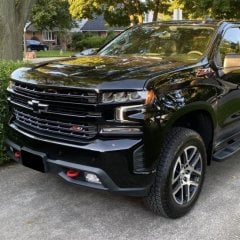 A few days ago, I've test drove a 2026 AT4 with the 3.0L diesel and was impressed at how quick it moves due to the insane 495 ft-lbs of torque, and hardly heard any engine noise. Earlier today, I traded in my 2020 6.2L TB for it. I pickup my new ride later this week. This is my first diesel powered vehicle and I look forward to the experience of owning one.
-
-
GM-Trucks.com Clubs
-

Black Truck Club
Open Club · 612 members
-

White Truck Club
Open Club · 380 members
-

Canadian Owners Club
Open Club · 282 members
-

Red Truck Club
Open Club · 157 members
-

diesel 3.0
Open Club · 281 members
-

Texas Owner's Group
Open Club · 371 members
-

NorthSky Blue Club
Open Club · 118 members
-

Midwest Owner's Group
Open Club · 213 members
-

2015 Custom Sport Club
Open Club · 5 members
-

GM Snow Plowing Club HD
Closed Club · 14 members
-
-
Popular Contributors
-
1
.thumb.JPG.2c573de60d3a3a4407c7d92298db46dd.JPG)
-
2

-
3

-
4

-
5
-
-

Recommended Posts
Archived
This topic is now archived and is closed to further replies.