Jump to content

Recommended Posts

Posted
5 hours ago, OnTheReel said:


The other good news is, it was easy to put in, I have no CEL and it looks pretty cool. I will do some performance testing with my meter after it has had time to learn and after the rain goes away. I have about 10 baseline 0-60 runs so if I can match weather conditions, I should be able to check with some accuracy...if it helps, hurts or stays the same. Guessing it won’t make much difference but never know. 


Very interested to see how the performance testing goes! 

Posted
On 10/5/2019 at 10:16 PM, brendon444 said:


Very interested to see how the performance testing goes! 

Okay, so here’s where we are at. I’ve tried very hard to match conditions, but unfortunately even in the heat of the day, my comparison runs were done in 68 degree weather versus 70 degrees for my “before” runs. I would have to say “close enough“ as the impact air temperature has on horsepower is only about 1% for every 10 degrees change. There is also always going to be slight pressure and humidity differences between tests, but I think this is as close as possible to scientific and certainly better than “well it feels faster!”


Best 6 runs “before intake”, only mod was the GM performance catback: Top 0-60 run was 5.71, average across the top 6 in this config was 5.76.


After intake, and about 150 miles learning by the time of testing...best was 5.46! And average across 6 runs was 5.57, almost 2 tenths quicker than “before”.


The 5.46 0-60 seemed like a freak of nature, I’ve never had it hook up and pull so hard from a stop. It was a legitimate run (not down hill, no funny business), but I couldn’t match it again and probably never will.


All testing was done in auto 4x4, just mashing the gas from a stop. Measured with a Dragy performance meter which has been proven to be very accurate. And as you can see, very consistent here in the records.


7C347FC3-6565-4F4D-8FDF-7E83AEAB4660.thumb.jpeg.671d0d042e2f775dbee153833c34779a.jpeg


Taking a closer look at an “average“ run before (5.75s), and an “average“ run after (5.57s ran this exact time twice) probably gives the best picture of the real difference. I would say one could expect to consistently drop a tenth to 60, and two tenths not out of the question.


CA8DA6B0-DC53-4EEC-B0E1-8CBE4B0BCF9D.thumb.jpeg.e8df0da4d0aa9fd8ebc89ca716135301.jpeg

7022445D-9036-45A6-AEAF-CAFBB1B73524.thumb.jpeg.926c05e87d010b95d57edd4724693493.jpeg


I had a lot of fun doing this test and didn’t really know what to expect. I would have been happy with anything but a loss, so the small improvement was just fine for me. Of course I’m left pounding my head on what could be if these things were tunable. ?‍♂️

  • Like 1
Posted

Awesome information. 


Anyone have any rule of thumb for losing 2 tenths with a 5500lbs truck to hp comparisons. 

Ex. 15 whp result in 1 tenth. 


Either way awesome gains

Posted
38 minutes ago, brendon444 said:

With the k2's people were saving tenths shifting from 4x4 back to 2wd after launch also. 


Read the new  ford limited and raptors run 5.2 0-60.   450hp/510ftlbs 

Yeah, I’ve done some runs like that in the past (to no benefit) but not during these tests, I didn’t want to change the method from what I used before the Roto-Fab. For a 0-60 run, hitting 2WD makes little, if any difference because it’s pretty much over before the transfer case even shifts.


Couldn’t really find much on calculations for power increase on 0-60 times. Everything is for the 1/4 mile.


Car & Driver got 5.1 out of the Limited and 5.4 out of a HC 6.2. C&D’s numbers are always really really low and not necessarily reflective of real life from what I’ve seen. Not sure if they use some kind of correction factor or what. But with 3.42s, cat back and the intake, I only once *almost* matched their High Country which was on 3.23s and stock everything...


On the complete opposite end of the spectrum, Motor Trend got horrible times out of similar trucks...about 6 seconds for the Limited, 6.6 for an LTZ 6.2, and 6.9 for an AT4 6.2 with the performance package. Must have been a hot day because those numbers all seem nearly a second too high.

Posted
22 hours ago, OnTheReel said:

Okay, so here’s where we are at. I’ve tried very hard to match conditions, but unfortunately even in the heat of the day, my comparison runs were done in 68 degree weather versus 70 degrees for my “before” runs. I would have to say “close enough“ as the impact air temperature has on horsepower is only about 1% for every 10 degrees change. There is also always going to be slight pressure and humidity differences between tests, but I think this is as close as possible to scientific and certainly better than “well it feels faster!”


Best 6 runs “before intake”, only mod was the GM performance catback: Top 0-60 run was 5.71, average across the top 6 in this config was 5.76.


After intake, and about 150 miles learning by the time of testing...best was 5.46! And average across 6 runs was 5.57, almost 2 tenths quicker than “before”.


The 5.46 0-60 seemed like a freak of nature, I’ve never had it hook up and pull so hard from a stop. It was a legitimate run (not down hill, no funny business), but I couldn’t match it again and probably never will.


All testing was done in auto 4x4, just mashing the gas from a stop. Measured with a Dragy performance meter which has been proven to be very accurate. And as you can see, very consistent here in the records.


7C347FC3-6565-4F4D-8FDF-7E83AEAB4660.thumb.jpeg.671d0d042e2f775dbee153833c34779a.jpeg


Taking a closer look at an “average“ run before (5.75s), and an “average“ run after (5.57s ran this exact time twice) probably gives the best picture of the real difference. I would say one could expect to consistently drop a tenth to 60, and two tenths not out of the question.


CA8DA6B0-DC53-4EEC-B0E1-8CBE4B0BCF9D.thumb.jpeg.e8df0da4d0aa9fd8ebc89ca716135301.jpeg

7022445D-9036-45A6-AEAF-CAFBB1B73524.thumb.jpeg.926c05e87d010b95d57edd4724693493.jpeg


I had a lot of fun doing this test and didn’t really know what to expect. I would have been happy with anything but a loss, so the small improvement was just fine for me. Of course I’m left pounding my head on what could be if these things were tunable. ?‍♂️

awesome info, thans man!  I have mine, just havent had time to get it installed.  Hopefully in the next few days!

  • Like 1
Posted
On 10/5/2019 at 5:20 PM, OnTheReel said:

83A68C30-28FD-4426-8D2B-4444F62ABEC6.thumb.jpeg.d5ca2f549e4f3bd278cd97856a8be58a.jpeg


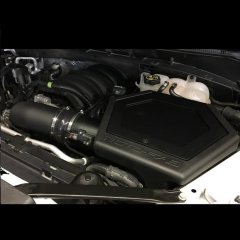
Had a tight window before rain, but I managed to get it installed here this afternoon. Took about an hour, maybe a tiny bit more if you add in my OCD cleaning stuff, unboxing and memorizing the instructions.


Put about 35 miles on it so far in varying speeds/ conditions as a test, and trying to get it to relearn. Sound difference is good, not over the top but noticeable above 50% throttle. Nice roar at WOT. I have the loud GM catback so really not a huge difference to me. On a stock truck it would be more noticeable. When in DFM, it doesn’t have the super annoying “gulping” sound my Airraid MIT did on my 2016. So that’s good.


The other good news is, it was easy to put in, I have no CEL and it looks pretty cool. I will do some performance testing with my meter after it has had time to learn and after the rain goes away. I have about 10 baseline 0-60 runs so if I can match weather conditions, I should be able to check with some accuracy...if it helps, hurts or stays the same. Guessing it won’t make much difference but never know. 

Have you seen any improvements with MPG?

Posted
3 hours ago, rhamill1 said:

Have you seen any improvements with MPG?

Not really, at least not in city driving. Once I take some longer trips I’ll be able to make better comparisons.

Posted
On 10/7/2019 at 2:16 PM, OnTheReel said:

Okay, so here’s where we are at. I’ve tried very hard to match conditions, but unfortunately even in the heat of the day, my comparison runs were done in 68 degree weather versus 70 degrees for my “before” runs. I would have to say “close enough“ as the impact air temperature has on horsepower is only about 1% for every 10 degrees change. There is also always going to be slight pressure and humidity differences between tests, but I think this is as close as possible to scientific and certainly better than “well it feels faster!”


Best 6 runs “before intake”, only mod was the GM performance catback: Top 0-60 run was 5.71, average across the top 6 in this config was 5.76.


After intake, and about 150 miles learning by the time of testing...best was 5.46! And average across 6 runs was 5.57, almost 2 tenths quicker than “before”.


The 5.46 0-60 seemed like a freak of nature, I’ve never had it hook up and pull so hard from a stop. It was a legitimate run (not down hill, no funny business), but I couldn’t match it again and probably never will.


All testing was done in auto 4x4, just mashing the gas from a stop. Measured with a Dragy performance meter which has been proven to be very accurate. And as you can see, very consistent here in the records.


7C347FC3-6565-4F4D-8FDF-7E83AEAB4660.thumb.jpeg.671d0d042e2f775dbee153833c34779a.jpeg


Taking a closer look at an “average“ run before (5.75s), and an “average“ run after (5.57s ran this exact time twice) probably gives the best picture of the real difference. I would say one could expect to consistently drop a tenth to 60, and two tenths not out of the question.


CA8DA6B0-DC53-4EEC-B0E1-8CBE4B0BCF9D.thumb.jpeg.e8df0da4d0aa9fd8ebc89ca716135301.jpeg

7022445D-9036-45A6-AEAF-CAFBB1B73524.thumb.jpeg.926c05e87d010b95d57edd4724693493.jpeg


I had a lot of fun doing this test and didn’t really know what to expect. I would have been happy with anything but a loss, so the small improvement was just fine for me. Of course I’m left pounding my head on what could be if these things were tunable. ?‍♂️

Awesome results! Thanks for sharing. 

Posted

6896ca1a0acf78f8273f4350a963bd93.jpg

Had a helper not very photogenic

507d2b259a793a14121b5935789a5e1c.jpg

6a809866d3be5f7240fb259a7b095aba.jpg

Only messed one thing up. Page 4 item #20 was extra at the end. A little of a PITA to install after the box is in [emoji35]


Ryan B.

Posted
On 10/16/2019 at 6:14 PM, RyanbabZ71 said:

6896ca1a0acf78f8273f4350a963bd93.jpg

Had a helper not very photogenic

507d2b259a793a14121b5935789a5e1c.jpg

6a809866d3be5f7240fb259a7b095aba.jpg

Only messed one thing up. Page 4 item #20 was extra at the end. A little of a PITA to install after the box is in emoji35.png


Ryan B.

Curious to hear your review on this....

  • 2 weeks later...
Posted
On 10/16/2019 at 4:14 PM, RyanbabZ71 said:

6896ca1a0acf78f8273f4350a963bd93.jpg

Had a helper not very photogenic

507d2b259a793a14121b5935789a5e1c.jpg

6a809866d3be5f7240fb259a7b095aba.jpg

Only messed one thing up. Page 4 item #20 was extra at the end. A little of a PITA to install after the box is in emoji35.png


Ryan B.

Ryan,


Looking forward to hearing your feedback on this system!

  • 3 months later...

Create an account or sign in to comment

You need to be a member in order to leave a comment

Create an account

Sign up for a new account in our community. It's easy!

Register a new account

Sign in

Already have an account? Sign in here.

Sign In Now

  • Latest Articles

  • Posts

    • Are you playing Slide Down endlessly but your score is still low? Are you constantly crashing into obstacles as the game speed increases? Don't worry, this article will share 5 invaluable tips to help you master the race and impress your friends. Golden Rules 1. Look one step further. The mistake of 90% of new players is only staring at their character. The secret of experts is to look towards the top of the screen (where the slide is about to appear). This gives your brain an extra 0.5 - 1 second to process the situation and determine the direction of movement before the obstacle approaches. 2. Use gentle movements; don't swipe too hard. Slide Down is very sensitive. Moving your finger too forcefully or with excessive amplitude will cause your character to be thrown off course or crash into a wall. Practise moving your finger with small, decisive, and precise movements. 3. Don't be greedy for gold in dangerous locations. Gold coins are tempting for buying skins, but life is more important. If you see a gold coin right on the edge of a cliff or next to a spike trap, ignore it. Our goal is a High Score, and your score only increases if you survive. 4. Make the most of Power-ups. During the slide, you'll encounter items like Magnets (attract gold) or Shields (temporary invincibility). Never miss them! Especially the Shield, it's your "get out of jail free card" to help you get through those deadly fast sections. 5. Stay calm when speed peaks. When your score exceeds 500 or 1000, the game speed will be very fast. At this point, don't try to think logically; let your natural reflexes work. Take deep breaths and don't panic. Apply these 5 tips to your next game, and your leaderboard will surely improve dramatically. Good luck climbing the Slide Down leaderboard!
    • If you use compressed air regularly, one problem you cannot ignore is moisture. Water in the air line can cause rust, unstable air pressure, poor tool performance, and even damage to sensitive equipment. That is why I highly recommend using a desiccant air dryer. A desiccant air dryer is designed to remove moisture from compressed air by using drying materials such as activated alumina or molecular sieve. Compared with basic water separators, it can achieve much lower dew points, making it especially useful for applications that require dry and stable air. For workshops, painting systems, pneumatic tools, CNC machines, laser cutting equipment, and industrial production lines, a desiccant air dryer can make a big difference. It helps protect equipment, improve air quality, reduce maintenance costs, and extend the service life of the whole compressed air system. Another advantage is reliability. Many desiccant air dryers are built for continuous operation and can maintain stable drying performance even in demanding environments. For users who care about long-term efficiency and equipment protection, this is a smart investment. When choosing a desiccant air dryer, I suggest paying attention to air flow capacity, working pressure, dew point performance, regeneration method, and maintenance requirements. A good model should match your compressor system and actual air consumption. Overall, if moisture is causing problems in your compressed air system, a desiccant air dryer is definitely worth considering. It is practical, efficient, and highly useful for anyone who needs clean, dry, and reliable compressed air.
    • My brand new 2007 Silverado's wax frame was rust from end to end partway through it's SECOND winter here in MA. That stuff is completely useless.    
    • I went another direction after losing a trailer tire, thanks to not being able to access air at ANY of the 5 gas stations and garages I stopped at prior, with a Toyota Tacoma onboard, 50 miles from the Canadian border. They were either out of order, access was blocked, or the hose a few feet too short and I couldn't get any closer without risking damage to someone's property.   https://postimg.cc/gallery/X5QJ55w
    • I took a 12 second video on my iphone but the file is too big to upload. I will have to figure out how to extract the audio or just do another start with an audio recording. 
  • GM-Trucks.com Clubs

  • Popular Contributors

×
×
  • Create New...