Jump to content

Recommended Posts

Posted

So I’m having the same problem. Ordered set of rims and tires off custom offset. Getting the service force monitor system. I bought the relearn tool to do it myself and having no luck. They said they use Uni-Sensor branded TPMS


anybody know what tool I should try next 

  • 11 months later...
Posted

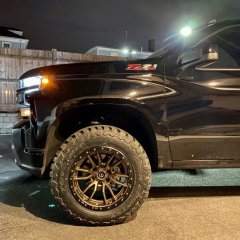
Digging this thread up from the dead. Long story short. Installed a leveling kit on my 2019 Trail Boss and new wheels and tires. Bought a new set of TPMS sensor to make install easier. The factory sensors in my truck are 433mhz and that is what I replaced them with. Bought the learn tool and get them programmed just fine for about 10 miles then one sensor (usually the left/rear) will go blank. I work at an Mercedes-Benz dealership and some of the techs here think it is because of the leveling kit and different wheel/tire size. I went with 17" wheels and 315/70- 17 tires. I don't think it's the physical relation to the TPMS module myself. 


Any ideas?


Posted
11 hours ago, redwngr said:

Perhaps a sensor with a bad battery?

Maybe. Odd thing happened last night. They were all working when I left work and right around the 10 mile mark the "Service TPMS" message came up. When I checked them, the two rear sensors were blank. Never happened with two before. I think I am going to just start all over with a fresh set and see how that works. 

Posted
On 3/17/2021 at 10:48 AM, Leeland111 said:

Maybe. Odd thing happened last night. They were all working when I left work and right around the 10 mile mark the "Service TPMS" message came up. When I checked them, the two rear sensors were blank. Never happened with two before. I think I am going to just start all over with a fresh set and see how that works. 

 Did installing new set of sensors end up working for you?  I had the dealer install new tires for mine back in January and have been dealing with intermittent TPMS messages ever since.  The dealer just replaced the TPMS but it's still happening.  They can't seem to figure it out.  It sounds like I might just need to get my own new TPMS sensor set and have a different dealer try installing them.  

Posted
On 3/24/2021 at 1:12 PM, AT4inKC said:

 Did installing new set of sensors end up working for you?  I had the dealer install new tires for mine back in January and have been dealing with intermittent TPMS messages ever since.  The dealer just replaced the TPMS but it's still happening.  They can't seem to figure it out.  It sounds like I might just need to get my own new TPMS sensor set and have a different dealer try installing them.  

I haven't gotten around to it yet. It's so odd. Seems like when I go above 70 MPH is when it (typically the left rear) gets unlinked. 


Posted

I was able to track down the root cause of the issue.  It looks like it was my Viofo A129 dash cam that was interfering with the TPMS receiver signal.  There's another thread on this site that goes into details about this interference and a proposed solution that I'll have to try out.  


  • Like 1
Posted
1 hour ago, AT4inKC said:

I was able to track down the root cause of the issue.  It looks like it was my Viofo A129 dash cam that was interfering with the TPMS receiver signal.  There's another thread on this site that goes into details about this interference and a proposed solution that I'll have to try out.  


Well, I don't have a dashcam, so I guess I'm still fugged. 

  • 2 years later...
Posted

I put 2024 3500HD Denali wheels and tires (2 miles takeoffs) on my  2020 3500 HD Denali, and my tpi system won't read them. Tire shop said they were different frequency and won't connect, I have to unmount them and put new sensors that my 2020 was compatible. Truth or fiction, and is there a workaround?

Posted
On 3/1/2024 at 9:27 PM, Pierpont said:

I put 2024 3500HD Denali wheels and tires (2 miles takeoffs) on my  2020 3500 HD Denali, and my tpi system won't read them. Tire shop said they were different frequency and won't connect, I have to unmount them and put new sensors that my 2020 was compatible. Truth or fiction, and is there a workaround?


Yes, they changed sensor frequency and I know on the 1500's they also made them so they self-register with the 22.5 refresh. I swear GM just likes to mess with people. They keep switching between 315mhz and 433mhz every few years. There are aftermarket sensors that are dual frequency.

  • 10 months later...
Posted

I am having a similar very frustrating issue.  I have a 2021 ZR2.  I did a 5 tire rotation and had Discount Tire add a TPMS sensor to the spare.  They told me their tool will not reset it. Now the left rear tire shows no reading for pressure.  The other three are fine and sense changes.  So I put it in learn mode, let 10+ lbs of air out of the RF, pump it back up, but horn never beeps.  I have driven at high speeds for many miles. So I buy the reset tool.  Not the cheap $8 one.  I buy the ATEQ VT15 for like $60.  I put it truck in learn mode.  I start at left front.  It has a good sensor, but it will not respond to the reset tool.  Tired all four tires.  No response.  Stuck. I used my Topdon full scan tool and it saw no problems with the TPMS system.

Posted (edited)
23 hours ago, qazimotors said:

I am having a similar very frustrating issue.  I have a 2021 ZR2.  I did a 5 tire rotation and had Discount Tire add a TPMS sensor to the spare.  They told me their tool will not reset it. Now the left rear tire shows no reading for pressure.  The other three are fine and sense changes.  So I put it in learn mode, let 10+ lbs of air out of the RF, pump it back up, but horn never beeps.  I have driven at high speeds for many miles. So I buy the reset tool.  Not the cheap $8 one.  I buy the ATEQ VT15 for like $60.  I put it truck in learn mode.  I start at left front.  It has a good sensor, but it will not respond to the reset tool.  Tired all four tires.  No response.  Stuck. I used my Topdon full scan tool and it saw no problems with the TPMS system.

Is the old spare (tire with added sensor) the one having issues? Some TPMS sensors need to be activated on the bench before being installed and the tire mounted. After it's activated you can use a tool to set the location. I bought a sensor at NAPA and the told me it was a self activated sensor (drive above 40mph to activate). it wasn't. I got them to take it back with some heated conversation with the manager. It's also possible it not the correct frequency for your truck.


Edit -> The 10psi thing hasn't worked for years.

Edited by Jay P
Posted (edited)

They may have given you the sensor for the refresh trucks. 


Sensors (oem) in a set of rims I had for winter wheels on my '21, would not work on the '23 -- so new sensors installed.


I realize this doesn't mean the new sensors won't work with the pre-refresh trucks -- but since what is installed isn't working that might be the issued.


Had it done at my GM dealer.

They have aftermarket 'will work with many vehicles' sensors they like to use.

We checked and found out the GM ones for the refresh truck were cheaper than the aftermarket that they had. 

Yes, the parts person I was working with was surprised too.

Edited by redwngr

Create an account or sign in to comment

You need to be a member in order to leave a comment

Create an account

Sign up for a new account in our community. It's easy!

Register a new account

Sign in

Already have an account? Sign in here.

Sign In Now
  • Latest Articles

  • Posts

    • Welcome back! No, it definitely doesn't pass the sniff test. Even "ceasefire" needs an alternative definition these days.    $5.29 at Kroger today
    • That makes sense, and I think you are describing the real product problem. Capturing data is the easy part. If the owner or technician has to manually dig through five minutes of millisecond-level logs, the product has already failed. The device would be at the ECM harness, not at the OBD port, so I agree that data retrieval and event marking need to be thought through carefully. The way I am thinking about the architecture is: The recorder itself should not depend on a phone, app, Bluetooth, Wi-Fi, or cloud connection to capture the event. It should always keep a local rolling buffer and lock the event locally. A button, phone app, or small cabin device would only act as an event marker. If the driver feels a stumble and presses the button 10–30 seconds later, the pre-buffer has to already contain the useful data. For data retrieval, the practical options would be a sealed service USB lead, Wi-Fi download, or a phone/cabin companion device. I would not expect the owner to remove the ECM-side module or work with raw files directly. The cloud or AI side would be for interpretation, not for capturing the event. The truck may have no connection when the issue happens, so the evidence has to be saved locally first. After that, cloud processing could help decode the data, compare it against baselines, and generate a readable report. For the first version, I would keep the automatic triggers conservative and objective: driver event marker bus-off error passive voltage drop / brownout device reset FIFO or queue overflow a normally periodic message disappearing side-to-side communication mismatch, if the topology supports that For “learning normal,” I agree with your point, but I would not want to overclaim it as automatic root-cause diagnosis at first. A realistic first step would be learned baseline comparison for that specific vehicle and operating condition. For example, a value would only be compared against similar conditions: RPM range load / MAP throttle position gear / vehicle speed coolant and oil temperature battery voltage AFM/DFM state, if decoded and validated Then the report could flag things like: this periodic message disappeared compared with its normal timing this value deviated from this vehicle’s normal range under similar conditions the same abnormal pattern repeated after the same type of event the anomaly occurred together with voltage, oil-pressure, misfire, or communication changes But I would still call that “abnormal pattern detected,” not “replace this part,” unless there is enough validated repair data behind it. So the intended product would not be “here is a huge log.” It would need to be an event package: what triggered the capture how much pre/post data was preserved what changed before and after the event whether the device itself reset, overflowed, or saw a bus error selected graphs around the event raw data only as supporting evidence From your perspective, what would make this kind of report useful instead of just another datalog? For example: What are the top 5 parameters or events you would want highlighted first? Would you trust a learned baseline for that specific vehicle, or would you prefer fixed thresholds? How much false-positive flagging would be acceptable before you stopped looking at the reports? What would a one-page report need to show for an independent shop to take it seriously? For misfire, AFM/DFM, oil pressure, or U-code complaints, what would you want the tool to flag automatically?
    • 2024 Silverado 2500 HD LTZ grille no camera Parts list   84603331 84913656 84913657 84913654 84913655 84911567 84911568 85646092 85646093 85797921 85797922   11570637  x10-15   grille/bumper bolts 11546500  x10      grille clips 11571006  x10      push/retainer clips 11546454  x6       nut retainers 11611609  x6       M5 bolts 11610700  x6       molding/trim retainers
    • And use RA's 5% discount code if you buy from them.  google for the code, one is always available.
    • Just don't turn the steering wheel as much?
  • GM-Trucks.com Clubs

  • Popular Contributors

×
×
  • Create New...