
2016 2500 Denali with Rust, less than a month off assembly line

-
Recently Browsing 0 members
- No registered users viewing this page.
-
Forum Statistics
250.4k
Total Topics2.7m
Total Posts -
Member Statistics
342,791
Total Members8,960
Most Online
-
Who's Online 8 Members, 1 Anonymous, 4,202 Guests (See full list)
-
Latest Articles
-
Posts
-
 Gloss black would look better, but I'd paint match the grill before ditching the chrome bumpers.
 -
 Mine has done that since new. The colder the worse.
 -
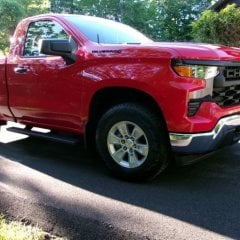 Yeah, that's my understanding. The newer trucks are 433Mhz vs the older 315Mhz TPMS. Putting these wheels on is costing me a small fortune, but so far, I'm still OK with it. Next week the chrome bumpers are scheduled to be replaced with flat black ones. That would complete what the dealer still owes me.
 -
.thumb.JPG.2c573de60d3a3a4407c7d92298db46dd.JPG)
By Grumpy Bear · Posted
Open the doors for a few minutes to let out the heat. When you start up crack the windows until the air from the vents in cooler. Purge the heat held in the ducts from the dash acting as an insulator. Run the recirc once the windows are up. Pennies make a dollar. Use all the tricks. Even if you have tint, in an area like yours use those reflective sun screens. Educate yourself. Use your Fluke and an thermocouple on interior temps. Hang it from the mirror. See how even the angle you park at has an impact. -
 The people say they are not needed generally say that because they say its mostly not oil the can has in it. Reading various threads, you'll see people say that the can heats and cools causing condensation. They say that even though there is some oil in the liquid you pour out, it's not enough to amount to anything. I used to run cans on my engines and I would pour out about a half a quarts worth of liquid during the OIC. However, I did not loose half a quart of oil during the same time frame. With that in mind, I stopped using them and said screw it. Right or wrong, that is the way I went. Even if there is only a small amount, a can will help keep it out of the engine. Its not going to hurt anything to run it unless you forget to dump it. Will it make a difference long term, who knows.
-
-
GM-Trucks.com Clubs
-

Black Truck Club
Open Club · 612 members
-

White Truck Club
Open Club · 380 members
-

Canadian Owners Club
Open Club · 282 members
-

Red Truck Club
Open Club · 156 members
-

diesel 3.0
Open Club · 279 members
-

Texas Owner's Group
Open Club · 371 members
-

NorthSky Blue Club
Open Club · 118 members
-

Midwest Owner's Group
Open Club · 212 members
-

2015 Custom Sport Club
Open Club · 5 members
-

GM Snow Plowing Club HD
Closed Club · 14 members
-
-
Popular Contributors
-



Recommended Posts
Archived
This topic is now archived and is closed to further replies.