Jump to content

Fuel question


Erintc29

Recommended Posts

Posted

Has anyone had problems running BP gas in GM vehicles?  A coworker of mine is adamant that you can't put BP gas in a GM because it will plug the fuel injectors.  I've never heard this from any other source and it seems like even if it were once true, either BP or GM would fix it.  I've never had any trouble with BP either in my old Silverado or current Sierra.  I was also curious if anyone has had long term problems using flex fuel.  Just looking for other peoples experiences.  Hope everyone has a good day.

PS- For clarification I was asking about e85.

Posted

I've never heard of that, more than likely it's an isolated incident. If that were true I would think BP would be nonexistent in the United States. 


If YOU have had good luck with BP I would trust YOUR experience first and foremost.


Flex Fuel as in E85, or the usual E10 found at most pumps?

Posted

I never use BP anymore but when I did, I never had any problems. Lots of BP stations closed after Deepwater Horizon but at the time they were known to have some good 93 octane.

Posted

BP is on the list of Top Tier fuels which is what GM recommends.  It sounds like they might have gotten some bad fuel, especially if it was from a small older station that might not have a high turn over.  I have never had any issues running BP in any of our vehicles.


As for flex fuel.  I have been running it in my 2002 Silverado for over two years without any issues.  I mix it at a 50/50 mix with 93 and some times even higher ratio. Love the throttle response and smell of the exhaust.   Also my 2002 isn't  a flex fuel vehicle.

Posted

Never had a problem with BP. I've also never seen a BP, Shell, Mobil or Marathon selling E85. Only get it at independent stations around here. The big guys refine oil. Not into selling 85% alcohol. 

Posted
On 2/17/2019 at 7:23 PM, Erintc29 said:

Has anyone had problems running BP gas in GM vehicles?  A coworker of mine is adamant that you can't put BP gas in a GM because it will plug the fuel injectors.  I've never heard this from any other source and it seems like even if it were once true, either BP or GM would fix it.  I've never had any trouble with BP either in my old Silverado or current Sierra.  I was also curious if anyone has had long term problems using flex fuel.  Just looking for other peoples experiences.  Hope everyone has a good day.

PS- For clarification I was asking about e85.

Your coworker is a moron. If your truck is flex fuel capable then there won’t be any long term negative effects. You can’t let E85 sit for to long like gas. If your truck is going to sit for any length of time then I’d run a stabilizer for ethanol in it or run some gas through it. 

My ctsv runs E85 exclusively but it’s my weekend car so I run Lucas ethanol treatment in it every tank and once every couple of months I’ll run a tank of 93 through it to kinda wash everything out. But don’t worry you’ll be fine

On 2/18/2019 at 3:03 AM, Black02Silverado said:

BP is on the list of Top Tier fuels which is what GM recommends.  It sounds like they might have gotten some bad fuel, especially if it was from a small older station that might not have a high turn over.  I have never had any issues running BP in any of our vehicles.


As for flex fuel.  I have been running it in my 2002 Silverado for over two years without any issues.  I mix it at a 50/50 mix with 93 and some times even higher ratio. Love the throttle response and smell of the exhaust.   Also my 2002 isn't  a flex fuel vehicle.

If your truck is not flex fuel capable then you are receiving no benefit from the ethanol except maybe some money savings because E is cheaper than gas.  But then again your hurting your fuel mileage so the savings is pretty much a wash. The throttle improvement is merely in your head. 

Posted

If your truck is E-85 capable a 14 and newer 5.3 E-85 gives additional HP. The throttle response is noticeable.


Sent from my iPad using Tapatalk

Posted
51 minutes ago, Jacoby said:


If your truck is not flex fuel capable then you are receiving no benefit from the ethanol except maybe some money savings because E is cheaper than gas.  But then again your hurting your fuel mileage so the savings is pretty much a wash. The throttle improvement is merely in your head. 

To me I'm benefiting from running E85 in a few ways.  Burns cleaner, to me is a bonus.  It shows in my used oil analysis so my oil stays cleaner longer. Major benefit if you ask me. The cost is not a wash when E85 is a dollar cheaper and my cost per mile is  better than running just running 93. 


I would think that a clean burning fuel and a clean combustion chamber would be a benefit.  As for throttle response, yeah I can see where that is in my head, but at least it seems like it to me.  Do what makes you feel good, it all makes for a better life if you're happy.

Posted
3 hours ago, Black02Silverado said:

To me I'm benefiting from running E85 in a few ways.  Burns cleaner, to me is a bonus.  It shows in my used oil analysis so my oil stays cleaner longer. Major benefit if you ask me. The cost is not a wash when E85 is a dollar cheaper and my cost per mile is  better than running just running 93. 


I would think that a clean burning fuel and a clean combustion chamber would be a benefit.  As for throttle response, yeah I can see where that is in my head, but at least it seems like it to me.  Do what makes you feel good, it all makes for a better life if you're happy.

Since you're an environmentalist I wont argue the fact that it burns cleaner as I agree with you that it does.  As far as cost that's debatable simply depending on where one lives.  As far as youre oil staying cleaner longer I question that.  Ethanol dissolves oil and it is widely known around many automotive circles that when running E85 exclusively or even a 50/50 mixture like you run that ethanol kills the lubricity of oil a LOT faster than gasoline and oil change intervals should be shortened.  I would be curious to see one of these oil change analysis's you have and see how high the metals are.  But with the age of your truck I suspect it would be hard to differentiate wear from age versus wear from diluted oil. 


Either way you keep doing you and all will be fine with the world 

Posted
18 minutes ago, Jacoby said:

Since you're an environmentalist I wont argue the fact that it burns cleaner as I agree with you that it does.  As far as cost that's debatable simply depending on where one lives.  As far as youre oil staying cleaner longer I question that.  Ethanol dissolves oil and it is widely known around many automotive circles that when running E85 exclusively or even a 50/50 mixture like you run that ethanol kills the lubricity of oil a LOT faster than gasoline and oil change intervals should be shortened.  I would be curious to see one of these oil change analysis's you have and see how high the metals are.  But with the age of your truck I suspect it would be hard to differentiate wear from age versus wear from diluted oil. 


Either way you keep doing you and all will be fine with the world 

Does it break down 100% synthetic, Full synthetic, blended synthetic/conventional and conventional oils all the same?

Posted
16 minutes ago, SS502 said:

Does it break down 100% synthetic, Full synthetic, blended synthetic/conventional and conventional oils all the same?

Yes all of the them.  Todays synthetics API-SN or better are designed to be used with Ethanol fuels (they even say that on the bottle, I wonder why???) But they'll still break down faster than if you were running gasoline exclusively. 


Straight from Mobil1 website when asked if compatible with Ethanol

"Mobil 1™ oils are compatible with most fuels; however, excess fuel dilution may require more frequent changes and used oil analysis for quality monitoring."


If you plan to run E85 full time I'd stick to 3000 mile oil changes even with a top tier synthetic oil.  No more than 5000 miles for sure.  A Blackstone analysis is always a good thing to get periodically just to know how things are going.  With that said though Id bet money that if you did an oil analysis running gas for 3000 miles then ran E85 for 3k miles on fresh oil the wear metals would come back higher. 

Posted
2 minutes ago, Jacoby said:

Yes all of the them.  Todays synthetics API-SN or better are designed to be used with Ethanol fuels (they even say that on the bottle, I wonder why???) But they'll still break down faster than if you were running gasoline exclusively. 


Straight from Mobil1 website

"Mobil 1™ oils are compatible with most fuels; however, excess fuel dilution may require more frequent changes and used oil analysis for quality monitoring."


If you plan to run E85 full time I'd stick to 3000 mile oil changes even with a top tier synthetic oil.  No more than 5000 miles for sure.  A Blackstone analysis is always a good thing to get periodically just to know how things are going.  With that said though Id bet money that if you did an oil analysis running gas for 3000 miles then ran E85 for 3k miles on fresh oil the wear metals would come back higher. 

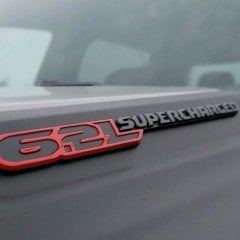
Thanks, E85 is pretty much non-existent here, closest one is about 160 miles away although I have not checked Alabama. My 6.2 is not set-up for flex fuel but I may do the upgrade down the road. 

Archived

This topic is now archived and is closed to further replies.

  • Latest Articles

  • Posts

    • Did the KYBs keep it the same height in the front? I was concerned that pre-assembled assembly would raise it up an inch to standard non-z60 height.. I guess which it would make the rake 1 inch instead of 2 inches.
    • Thank you for keeping the train on the tracks and for a thoughtful engagement. I enjoyed the reflection on a previous stance to refine and improve your position. I like that inquisitive flexibility about you Atlas.    No the process isn't sterile. Hundreds, perhaps thousands of miles of piping, vessels, pumps. Chevron, the people I worked for, were keenly aware that there is a market for what is known as their "ISOCLEAN" line of lubricants. These are lubricants that are the same as those sold bulk that are further processed by filtration to a level your particular application demands. They will filter and package and provide lab documentation as required. Do not kid yourself. Every gallon of oil that goes into a Chevron Turbine, reciprocating compressor, generator is prefiltered and tested before being charged. Lest wise it was when I was there in the plants I worked in.    There are requirements set by manufactures for the cleanliness of the oils used in their equipment. OTR such as CUMMINS has standards shared with customers on this. Commercial interest selling to Ma and Pa do, but don't share that information. Not even upon request but internally, they do exist.    The GM study sited, (Graph from Machinery Lubrication in previous post) only shows "relative" importance.  I find that fascinating. By constructing the graph like this they admit there are dozens of factors in engine life and via scientific method determined the effect of 'relative cleanliness' on engine life not in miles but in 'FACTORS'. This allows a certain amount of reverse engineering does it not?   They even provided some touchstones. Beta 75 as a reference point. Wonderful stuff!!   Smaller blenders CAN and some DO take the time and effort to do better than a refinery or large bulk blender, like Warren Oil, in improving the "in the can" cleanliness. No I don't have a list but testing could generate that information.    Again, but one of several levers we can pull to improve engine life. The simplest is keeping a clean work station while doing your own oil changes.     
    • Thank you. I'll give it a try 
    • I just spent the last 45K miles doing samples every oil change over more than a full year to get the data for seasons and break-in to broke in.    I found the same thing to be true. Something was always teetering on done or had stepped off the cliff long before the OLM was DOA. In fact, I found about a thousand mile difference between summer and winter. That is during the winter half the OLM was STILL too long. Even the severe schedule was to long in the winter.   Now having done the work I can say I was NOT DISAPOINTED. I saw nothing I didn't already know. Nothing my father hadn't already demonstrated in his 2K OCI's pushing dated iron on dated oils and weak filters to mileages well beyond 300K.   Building on his work through use of Lab testing it wasn't hard to find the correlation between 'sight/feel/odor, the things dad relied on, and test results. Use of current viscosity stable chemistries & filters has pushed that marker for my motors out to 3K summer, 4K winter.    So the early lies were 3K on conventional oil and the lie upon the lie was 7K+. turns out to be off by a factor of two.    So... it is true that modern chemistry has doubled the useful oil life. But the base milage that came from was off by double. It's how good lies work. Partly true, sometimes mostly true so that your meter isn't set off. It also means that non-shear-stable shelf oils are only now as good as the old oils were in their best case scenario.    So the question now is how do we improve on that? Thus the question into cleanliness among the other items listed in the post quoted below.    If this bores you, feel free not to participate.       
    • Is it though?  Like LTZ, not a high take rate.  Current Sierra has AT4, Denali and Elevation as its main bread winners.  Each trim accounting for 25-35% of sales for Sierra.  SLT makes up about 10-15% at best.        Like others have predicted here for GMC, it will be:   - Pro (equal to WT Chevy)   - Elevation (replaces SLE and SLT)   - AT4 (and X)   - Denali (and Ultimate).  
  • GM-Trucks.com Clubs

  • Popular Contributors

×
×
  • Create New...