
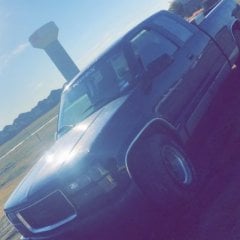
Rough Idle and engine sputtering
-
Similar Content
-
lighting A Clean 40" Light Bar Setup for the 2022+ Silverado 1500
By mandrautomotive,
- m&r lightbars
- off road lights
- (and 3 more)
- 0 replies
- 40 views
-
- 5 replies
- 3,915 views
-
Radio 97 gmc k3500 factory radio wiring for aftermarket
By Jandel 1313,
- Extra wires
- Serial data
- (and 4 more)
- 5 replies
- 1,138 views
-
- 6 replies
- 1,432 views
-
- 0 replies
- 908 views
-
-
Recently Browsing 0 members
- No registered users viewing this page.
-
Forum Statistics
250.5k
Total Topics2.7m
Total Posts -
Member Statistics
342,972
Total Members8,960
Most Online
-
Who's Online 6 Members, 0 Anonymous, 1,433 Guests (See full list)




-
Latest Articles
-
Posts
-
 Maybe I was just too unlucky, but I had nothing but bad luck with Bridgestones. Out of 3 sets, they all started losing a lot of air when they got down to about 1/2 tread life, and at that point also wet traction suffered more than it should have. Also, the only tire I ever had in my 60 years of driving that had a side wall blow out was a Bridgestone. I'm currently running Goodyear Wrangler Workhorse AT and am very happy with them.
 -
 maybe when the trip is over, check all the other joints in the front end, like all the ball joints, tie rods, pitman & idler arms, etc...
 -

By Carlos Eduardo Silva · Posted
Thks, and actually it was my bad, because here in this post there is someone showing the correct wire position as well. My bad... But thank you a lot with the help as well. I was able to find and buy a 10 channel VPM that came from a sister silverado of mine. The same year, same mode, same trim, same everything. 2022 Silverado 1500 LTD LTZ (pre-refresh). I also found to buy just the bottom mirror part that has the cameras, so way cheap than the full mirror. + a used front camera. I did test everything together, cameras, cables and the VPM.... everything worked EXCEPT my original Bed camera and the backup grid lines. I think the reason is because now I need to do the VPM reprogram. I sent a msg White Automotive & Media Service to confirm that it is the problem and that they can do it service for me case. Once I get it 100% done I will post here result.... -
 I used to work on those 4.6, 2V engines. They are tough.
 -
 Nice! I wish I had something to put them on. Someday when the engine craps out in our '86 Grand Marquis I guess. My truck is diesel, so won't need one for that. The Merc is at 315k miles right now with zero signs of slowing down! I'm more of an Edelbrock guy, though. I like super-simple.
-
-
GM-Trucks.com Clubs
-

Black Truck Club
Open Club · 613 members
-

White Truck Club
Open Club · 381 members
-

Canadian Owners Club
Open Club · 282 members
-

Red Truck Club
Open Club · 158 members
-

diesel 3.0
Open Club · 281 members
-

Texas Owner's Group
Open Club · 371 members
-

NorthSky Blue Club
Open Club · 118 members
-

Midwest Owner's Group
Open Club · 213 members
-

2015 Custom Sport Club
Open Club · 5 members
-

GM Snow Plowing Club HD
Closed Club · 14 members
-
-
Popular Contributors
-
.thumb.JPG.2c573de60d3a3a4407c7d92298db46dd.JPG)


Recommended Posts
Create an account or sign in to comment
You need to be a member in order to leave a comment
Create an account
Sign up for a new account in our community. It's easy!
Register a new accountSign in
Already have an account? Sign in here.
Sign In Now