Jump to content

Highway miles when buying new


Recommended Posts

Posted

Finally found the truck I've been looking for at the right price, and heading down to Laura GMC in St. Louis this week. This is about a 300 mile one way trip. Is there any reason to be concerned about turning around and driving 300 highway miles on a brand new vehicle? I can have is shipped if needed, but wondering if this many extended highway miles right off the dealer lot is anything to be concerned about? Does the engine need any sort of break around town break in period before going on a long highway trip? Any particular speed to keep it under? It will be the 6.2.


  • Replies 52
  • Created
  • Last Reply
Posted

My opinion is for you to vary the speed/ rpm, (drop a few gears etc) to do it.... High rpm and low and every where in between. ( Kind of like driving in town)

don't just set the cruise control for 300 miles

Posted

Well I think I just answered my own question. Downloaded a Owners Manual and it says:


The vehicle does not need an elaborate break-in. But it will perform better in the long run if you follow these guidelines:

  1. Keep the vehicle speed at 88km/h (55mph) or less for the first 805km (500mi).
  2. Do not drive at any one constant speed, fast or slow, for the first 805km (500mi). Do not make full-throttle starts. Avoid downshifting to brake or slow the vehicle.

Now I obviously don't want to go against what the owners manual says but particularly the first one, doesn't that seem a bit excessive to not drive over 55 for the first 500 miles? Heck how do you even get a full test drive that way... Looking for opinions. Would you drive the 300 highway miles, have it shipped, or look for two lane roads where speeds can be kept to 55 with some varying of speed going through towns, etc..?

Posted

I didn't even know there was a break in procedure.. I bet most don't, I think you'll be fine and, not drive over 55 for the first 500 miles LMAO!!! Good luck with that advice being followed GM....

Posted

Finally found the truck I've been looking for at the right price, and heading down to Laura GMC in St. Louis this week. This is about a 300 mile one way trip. Is there any reason to be concerned about turning around and driving 300 highway miles on a brand new vehicle? I can have is shipped if needed, but wondering if this many extended highway miles right off the dealer lot is anything to be concerned about? Does the engine need any sort of break around town break in period before going on a long highway trip? Any particular speed to keep it under? It will be the 6.2.


I've been watching Dennis Dillon and Laura GMC. Seems discounts are around 12k off 2017. I see they had a few 2018's but were listed at full price.


I wonder what month is the best time to buy? Sept, Oct, Nov, Dec? New 2019 redesign rumored to be announced Detroit auto show Jan 13th, 2018... by then I'm sure inventory selection will be much less.


I wouldn't worry about keeping 55 or under. I would vary speed and rpm. Many have drove much further in brand new trucks. Hell, I looked at a new truck that had nearly 500 miles (dealer transfer) and I'm sure those weren't under 55. Most likely some young kid hauled @$$ transferring to another dealer.

Posted

I've been watching Dennis Dillon and Laura GMC. Seems discounts are around 12k off 2017. I see they had a few 2018's but were listed at full price.


I wonder what month is the best time to buy? Sept, Oct, Nov, Dec? New 2019 redesign rumored to be announced Detroit auto show Jan 13th, 2018... by then I'm sure inventory selection will be much less.


I wouldn't worry about keeping 55 or under. I would vary speed and rpm. Many have drove much further in brand new trucks. Hell, I looked at a new truck that had nearly 500 miles (dealer transfer) and I'm sure those weren't under 55. Most likely some young kid hauled @$$ transferring to another dealer.


You should be thanking the kid for properly seating the rings!

Posted

Get in and drive it. Drive it like a a normal person, not a teenager that just got his license. I bought 3 trucks long distances from my house. The closest was 120 miles. The others were 450 and 600 miles. All are still doing well. The 450 mile purchase came from San Francisco to L.A. and has well past 300,000. All on Mobil 1 since first oil change.


That 55 mph recommended break in limit has been around from at least the 1950s. I think it's lost its value. Your engine is turning slower at 70 mph than some old cars turned at 55.

Posted

I have had 300+ miles on both the last 2qty brand new vehicles. I can only hope somebody laid into my 5.3 properly before I took ownership. I have driven many brand new vehicles off dealer lot and immediately put onto the highway and cruise control for 6-8hrs straight and gas! They were obviously company fleet vehicles and everyone one handled in same manner.....Never a problem with em?

Posted

LOL. I've heard about the "lay rubber out of the dealer lot and drive it like you stole it mentality for breakin. Some people swear buy it. Or swear at it if something breaks lol

Posted

When I bought mine last October it bearly had 50 miles and it was already heading through the Grapevine going home. Mine didn't get the 500 mile breakin period.


Sent from my SAMSUNG-SM-N920A using Tapatalk

Posted

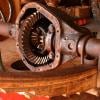
I am looking at your name and am wondering if this is a test? Loading up and seating the rings is important and not over reving the motor are important. Varing the speed up and down and a little in town driving with downshifting will work before you hit the highway. But the biggest thing most forget is the rear differential. Everyone always worries about the motor and forgets that they are breaking in the trans, the brakes, and the rear diff. If you look into the proper break in procedure for a new rear differential that is where the issue comes in. Done wrong it can develop a whine. This happens to alot of corvette guys who just jump in and hit the highway. A car is more of a capsule than a truck with an open bed (so more noticable) so some guys may not notice they have a whiney rear. The procedure invovles tempering the rear. Which means heat cycles and cool downs. 25 miles at a lower speed, cool down about an hour, 50 miles at a higher speed, then cool down again. Then there is a recommended flush after more miles. Then its good to go. Now not many people do this for a new car, but thats why many do alot of in town local driving and stop and go for break in. It accomplishes bedding in the brakes, seating the rings, and heat cycling the rear. Running down the highway with zero miles is not optimal.

I had this same dilemma picking up my corvette two states away. I got in early, picked it up and did 50 miles in that area at low speeds with alot of stop and go. Seated the rings accelerating correctly. Bedded the brakes. Did some more miles at highway speed then pulled in and had a long lunch to cool down the diff. Then hit the highway for 150 miles home, and stopped again for an hour. Then did my run home with a tempered rear. My rear is very quiet with no issues 6 years now. I also drop my diff fluid at 3000 miles because there is no filter and alot of meshing going on. So if you ever had a new rear diff put in a car, believe me they give you specific directions to follow and a flush.

If you just drive it home nothing will blow up. It may whine though, and if that matters to you, look into proper rear diff break in.

Posted

Wow I’ve had many new vehicles and never knew the break in procedures thank you for the info


Sent from my iPhone using Tapatalk

Posted

I am looking at your name and am wondering if this is a test? Loading up and seating the rings is important and not over reving the motor are important. Varing the speed up and down and a little in town driving with downshifting will work before you hit the highway. But the biggest thing most forget is the rear differential. Everyone always worries about the motor and forgets that they are breaking in the trans, the brakes, and the rear diff. If you look into the proper break in procedure for a new rear differential that is where the issue comes in. Done wrong it can develop a whine. This happens to alot of corvette guys who just jump in and hit the highway. A car is more of a capsule than a truck with an open bed (so more noticable) so some guys may not notice they have a whiney rear. The procedure invovles tempering the rear. Which means heat cycles and cool downs. 25 miles at a lower speed, cool down about an hour, 50 miles at a higher speed, then cool down again. Then there is a recommended flush after more miles. Then its good to go. Now not many people do this for a new car, but thats why many do alot of in town local driving and stop and go for break in. It accomplishes bedding in the brakes, seating the rings, and heat cycling the rear. Running down the highway with zero miles is not optimal.

I had this same dilemma picking up my corvette two states away. I got in early, picked it up and did 50 miles in that area at low speeds with alot of stop and go. Seated the rings accelerating correctly. Bedded the brakes. Did some more miles at highway speed then pulled in and had a long lunch to cool down the diff. Then hit the highway for 150 miles home, and stopped again for an hour. Then did my run home with a tempered rear. My rear is very quiet with no issues 6 years now. I also drop my diff fluid at 3000 miles because there is no filter and alot of meshing going on. So if you ever had a new rear diff put in a car, believe me they give you specific directions to follow and a flush.

If you just drive it home nothing will blow up. It may whine though, and if that matters to you, look into proper rear diff break in.

Umm, no.


Not to be blunt, but there is nothing that you can do to 'temper' or 'heat treat' the rear end, during any type of driving. Those gears have already had that done, thru special heat and/or chemical processes, when they were made, so that they are hard and tough enough to do the job. Driving doesn't create enough heat to come anywhere near the parameters required for any changes to take place.

The only way you could change anything in that regard is to drain the gear oil and then run at high speeds til things start self-destructing. That's obviously not the goal.

Heat cycling things is an old wives tale that somebody invented a long time ago and many people still buy into, without thought. It was a silly theory and nothing more. That theory became obsolete over 30 years ago, as it blatantly ignores modern materials, manufacturing and metallurgy.

If people are getting a whine out of a rear diff, it's because the diff wasn't setup properly to begin with, or there was a manufacturing defect in one or more of the parts, or the design of the gear teeth themselves will create a whine. There is no other reason.


To get the best long term performance, there is only one proper way to break in a new vehicle- get it warmed up, then start bunch of hard acceleration cycles, up thru the gears, then back off, down thru the gears, with lots of engine braking. Lather, rise & repeat, for about 20 minutes or so. This is a dyno and scientifically proven process.

Everything else is just coffee klatch bull****

Posted

Plenty of people have bought vehicles brand new and driven them on the highway right away with no issues including myself...buy it, drive it, enjoy it...dont take a whiff of that new car smell and let chicken little ruin the moment.

Archived

This topic is now archived and is closed to further replies.

  • Latest Articles

  • Posts

    • It is possible to add your own 12v outlet to your truck.  Check out this video:   I verified via GM Upfitters that pin 31 is the same on the 1500 trucks.  The wire is GM part number 84779405.   You can get the GM 12v outlet from Amazon  https://www.amazon.com/Genuine-Accessory-Receptacle-25774623-13549530/dp/B0F1H9YRGF EWAY 12 Volt Power Adapter for GM   https://www.amazon.com/EWAY-Chevrolet-Silverado-Cigarette-Ignition/dp/B0915RRW6Q/ref=sr_1_1?   I just haven't figured out a good place to put the 12v outlet in my truck.   Some people are getting USB-C to 12V adapters  https://www.amazon.com/WYMECT-Cigarette-Lighter-Socket-Adapter/dp/B0F87WNQKB/ref=sr_1_1_sspa? Not sure if they provide the correct amperage that a device like a tire inflator would need.  
    • Thanks; I looked there a few minutes, and I think I can find something. I really never looked there, as I thought it was stuff like PTO/aftermarket bodies/accessories like snow plows.
    • This is a 1/2 ton thing ONLY.  All HDs 2020-2026 have the two speed transfer case, with Autotrac as an option.     1/2 tons 2019-2026, regular 4x4s come with a single speed case (no 4LO!), and trucks with Z71 ordered, or all Trail Boss trucks come with the 2 speed case.  2 speed case is also an option on WT, and is also standard on High Country.  
    • 2013 5.3 still to this day calls for the PF48 filter.  Which as a 15psi bypass pressure.     There is a TSB, 17-NA-157 that talks about the PF-63 and PF-64 filters which have a higher bypass rating of 22psi.    TSB HERE - temp.xml   "Beginning in 2012, the oil pumps began to regulate main gallery feedback instead of pump out pressure. This means that the oil pump now does not begin to regulate until pressure is built up to the main gallery. This change reduces the amount of time it takes to provide oil to the engine bearing and lifters during extreme cold start conditions.  Main gallery feedback oil pump control systems are present on the following engine families which use Spin-on oil filters: Small Gas Engine (SGE), Large Gas Engine (LGE), High Feature (HFV6) Gen2 and Small Block Gen5 gasoline engines. These engines with the main gallery feedback oil pump control systems are factory built with an ACDelco® oil filters"   It also calls out what engines use those filters.  The gen 4 small blocks were not on that list (LMG, LC9, L9H, L92, L94, L20, L96).  Gen 5 small blocks use the higher pressure filter.          That all said...   Your 7045 Napa filter is the PF63 equivalent, with 22psi bypass.  You are already using the higher bypass pressure filter.  You CAN keep using it, you don't technically have to use it though.  
    • Do you know WHY the filter relief setting was increased to 22 psig?    When the new system goes into the second stage the pump volume ramps up considerably. It was found that the 15 psi filter bypass setting put the filter in bypass on a warm engine when the second stage was activated. Raising the filter bypass setting forced the filter to do what it designed to do. Filter. Preventing debris from circulating during high load, high rpm operation.    So next question is how did GM find this out? VLOM/lifter failures and a deep dive by Melling Corp.    Last question. Is it required? Look at it like this; a motor may be equipped with a rev limiter. But it only works if the set point in reached. That 22 psig setting only matters if the pressure differential across the filter media exceeds 15 psig during normal warm operation. Second stage kicks in around 3000-3500 rpm.    I can't answer your question because I don't know you and how you use the truck. But I think there is enough information here to let you decide for yourself. 😉
  • GM-Trucks.com Clubs

  • Popular Contributors

×
×
  • Create New...