
-
Recently Browsing 0 members
- No registered users viewing this page.
-
Forum Statistics
250.5k
Total Topics2.7m
Total Posts -
Member Statistics
342,987
Total Members8,960
Most Online
-
Who's Online 5 Members, 0 Anonymous, 684 Guests (See full list)
-
Latest Articles
-
Posts
-
By Jus Cruisin · Posted
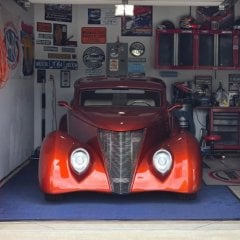
I had a new engine installed with under 5,000 miles. It shut off coming around a residential street corner and wouldn't restart. Dealer indicated it seized. New one has been fine since with 10,000 miles on the replaced engine. Annoying but I was given a loaner for the 5 weeks it was down. I won't go with the 6.2l gasser so it's 3.0l again. I love the economy and it tows my enclosed car trailer just fine. -
By calgator73 · Posted
Coming back from towing a car to my daughter in Nashville truck started making a screaming noise from underneath. Pulled over placed in park and sure enough whining noise from underneath. Dropped at the dealer fearing new tranny or another front pump/cover replacement. Service writer said it sounded like the tranny too... Well $300, new idler and a belt all is good. Pop the hood and give a listen. lol Now I'm telling dealers I'm no longer interested in a new truck. -
 HD uses the 6.6 gas. Oil consumption while heavy working is considered normal. 1 quart per 100 gallons of fuel is the normal rate above 8600lbs GVWR. If more than that, it is considered excessive. They will have to perform an oil consumption test using the guidelines in TSB 03-06-01-023J. Information on Engine Oil Consumption Guidelines All engines require oil to lubricate and protect the load bearing and internal moving parts from wear including cylinder walls, pistons, and piston rings. When a piston moves down its cylinder, a thin film of oil is left on the cylinder wall. During the combustion process, part of this oil layer is consumed. As a result, varying rates of oil consumption are accepted as normal in all engines. Oil Consumption Oil usage has a direct relationship with the amount of fuel used. The harder an engine works, the more fuel and oil it will use. Therefore, oil usage as a factor of fuel usage is a more accurate indicator of acceptable oil consumption levels than vehicle mileage for vehicles at or above 8600 GVW. The accepted rate of oil consumption for gasoline engines in vehicles at or above 8600 GVW is 1 liter (1 qt) within 400 liters (100 gallons) of fuel used. This rate only applies to vehicles under warranty, maintained in accordance with the appropriate maintenance schedule, driven at legal speeds and within design intent of the vehicle. Many factors can affect an owner's concern with oil consumption. Driving habits and vehicle maintenance vary from owner to owner. Thoroughly evaluate each case before deciding whether the vehicle in question has abnormal engine oil consumption. Gasket and External Leaks Inspect the oil pans, engine covers, and the engine oil cooler for leakage. Inspect for oil leakage into the engine coolant. Improper Reading of the Oil Level Indicator (Dipstick) The vehicle must be parked on a level surface to obtain accurate oil level readings. Verify that the dipstick tube is fully seated in the block. When checking the oil level, make sure the dipstick is wiped clean before taking an oil level reading and fully depress the dipstick until the shoulder bottoms out on the dipstick tube. The dipstick should be the proper part number for the engine/vehicle that is being checked. Not Waiting Long Enough After Running Engine to Check Oil Level The vehicle should be allowed to sit for at least 15 minutes, after the engine has been shut off, before taking an oil level reading to assure the oil has had enough time to drain back into the crankcase. In order to ensure accurate results, the temperature of the oil should be close to the same temperature as the last time the oil level was checked. Improper Oil Fill After an Oil Change Following an oil change, verify that the proper amount and type of oil was put in the engine and that the oil level on the dipstick is not above the full mark or below the add marks. Refer to the Owner's Manual or Service Manual for information on recommended oil quantity, viscosity, and quality. High Speed or High RPM Driving Continuous driving at high speeds/high RPMs may increase oil consumption. Because this may not always be an everyday occurrence, it is hard to determine exactly how much the oil economy will be affected. Towing or Heavy Usage Towing a trailer or hauling additional weight will increase oil consumption. Large frontal area trailers will further increase the work required from the engine, especially at highway speeds, and thus increases the rate of oil consumption. PTO Operation Operation of a PTO will increase fuel and oil usage, as the PTO driven accessory uses engine power to operate. Crankcase Ventilation System Verify that the positive crankcase ventilation (PCV) system is operating properly. Blockages, restrictions, or damage to the PCV system can result in increased oil use. Oil Dilution from Condensation On vehicles that are usually driven short distances, less than 8 km (5 mi), especially in colder weather, condensation generated from cold engine operation may not get hot enough to evaporate out of the oil. When this occurs, the dipstick may indicate that the oil level is over-full. Subsequent driving on a trip of sufficient length to enable normal engine operating temperature for 30 minutes or more, in order to vaporize excess moisture, may give the customer the impression of excessive oil consumption. Engine Temperature If an engine is run at overheated temperatures (see Owner's Manual or Service Manual) for more than brief periods, oil will oxidize at a faster than normal rate. In addition, gaskets may distort, piston rings may stick, and excessive wear may result. Verify that all cooling system components are in proper working order. Engine Wear Piston scuffing, excessive piston-to-wall clearance, tapered or out of round cylinders, worn, damaged or improperly installed valve guides, seals and piston rings will all cause an increase in oil consumption. Measurement of Oil Consumption Engines require a period of time to BREAK IN so that moving parts are properly seated. Therefore, oil economy should not be tested until the vehicle has accumulated at least 6400 km (4000 mi). An exception would be allowed only if an engine is reported to be using more than 0.946 liter (1 qt) in 1600 km (1000 mi). Verify that the engine has no external leaks. Repair as necessary. Verify that the engine is at normal operating temperature (see Owner's Manual or Service Manual). Park the vehicle on a level surface. Wait at least 15 minutes, after the engine is shut off, before checking the oil level to make sure that most of the oil has had time to drain back into the crankcase. Check the oil level and record the vehicle mileage, date, and exact oil level on the form included in this bulletin. Next ensure the oil level is at, but not above, the full mark on the dipstick. add oil if necessary. Also ensure the proper viscosity and quality oil are being used as recommended in the Owner Manual Ask the customer once they have consumed 100 gallons of fuel schedule an appointment and return to the dealer for inspection. If the final evaluation shows that the engine uses more than 0.946 liter (1 qt) in 379 liters (100 gallons) of fuel used, follow the published symptom diagnostics as described in the appropriate Service Manual. If the oil consumption test shows that the engine uses less than 0.946 liter (1 qt) in 379 liters (100 gallons) of fuel used, explain to the customer that their engine meets the guidelines for oil consumption.
 -
I have a 2024 Chevy Silverado 2500 with the 6.2 liter engine, Vin: 2GC4YME79R1273849, with 27,437 miles. Recently we took a trip from Candor, NY to Townsend, TN pulling our fifth wheel, when I got close to the Townsend, TN area The truck gave me a message of low oil. I checked the dip stick and found it was 2 quarts low. Today, August 27, 2026, I had the oil changed and the technician Found the truck was very low on oil. Is there a Recall for this? What is my recourse for this issue? Do I call the dealer where I bought it or any chevy dealer? Robert Strickland 292 Owego Road Candor, NY 13743 352-502-6588 [email protected]
-

By GMCustomerService · Posted
We understand the importance of understanding how your Sierra performs, @SoCal Angler. Our team would like to gather the proper details to assist you with your inquiry about your truck's automatic braking. When you have a moment, please visit: https://s.chevy.com/support-request and fill out the request form with pertinent details. This will ensure your request is routed correctly so we may take a further look. We will keep an eye out for your outreach.
-
-
GM-Trucks.com Clubs
-

Black Truck Club
Open Club · 613 members
-

White Truck Club
Open Club · 381 members
-

Canadian Owners Club
Open Club · 282 members
-

Red Truck Club
Open Club · 158 members
-

diesel 3.0
Open Club · 281 members
-

Texas Owner's Group
Open Club · 371 members
-

NorthSky Blue Club
Open Club · 118 members
-

Midwest Owner's Group
Open Club · 213 members
-

2015 Custom Sport Club
Open Club · 5 members
-

GM Snow Plowing Club HD
Closed Club · 14 members
-
-
Popular Contributors
-
.thumb.JPG.2c573de60d3a3a4407c7d92298db46dd.JPG)



Recommended Posts
Create an account or sign in to comment
You need to be a member in order to leave a comment
Create an account
Sign up for a new account in our community. It's easy!
Register a new accountSign in
Already have an account? Sign in here.
Sign In Now