Jump to content

Recommended Posts

Posted (edited)

So I've been researching extensively for the last couple months about levelling my 2014 Sierra. I was gonna use the popular RC levelling kit but happen to stumble upon the billy 5100 ride height adjustable shocks. Just when I'm gonna pull the trigger on them billy's, I discover the 6116 kit... For those of you who are unfamiliar with the 6112 kit. the kit come with a weaker spring and a 60mm tube body, so its quite a bit thicker than the 46mm 5100 shocks. and we all know bigger is always better( thats what she said! ). It is also ride height adjustable by using a snap ring like the 5100 series. Basically its the 5100 on crack and steroids at the same time.


With all the info above, I have a few questions I hope you party animals can help me with:


1. Would preloading your spring cause any suspension component to wear faster and eventually fail, particular the ball joint on the upper control arm?


2. Would the 5100 shocks last as long as the oem shocks under the same driving conditions?


3. Would a ~$700 price tag justified for the 6112 kit.


4. My truck is seriously underdamped with the oem shocks, would the 5100 correct that? What effect would the new shock have on my truck.


5. What did the fox say?

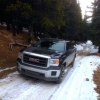
post-136081-0-94121000-1422246384_thumb.jpg

post-136081-0-81997200-1422246452_thumb.jpg

post-136081-0-94121000-1422246384_thumb.jpg

post-136081-0-81997200-1422246452_thumb.jpg

post-136081-0-94121000-1422246384_thumb.jpg

post-136081-0-81997200-1422246452_thumb.jpg

post-136081-0-94121000-1422246384_thumb.jpg

post-136081-0-81997200-1422246452_thumb.jpg

Edited by yanzhixiang
  • Like 2
Posted

First, the 6112 is not available for the gm truck yet.


1. Pre loading is not how a 5100 works. It just raises the spring perch. The truck raises along with the spring perch. The ball joint won't see any different load or angle with a 5100 shock, unlike a spacer kit.


2. Longer, many times longer.


3. Remains to be seen.not available yet


4. Yes, a 5100 will provide better ride and control.


5. He said "show me the money!"

  • Like 4
Posted

Raising/lowering the spring perch increases the spring pre-load. If the length of the shock body could be adjusted, changing ride height would not change spring pre-load.


I had never thought about the effect of spring pre-load on upper ball joint. My quick thinking is that spring pre-load by itself wouldn't affect upper ball-joint directly; unless the resulting lift or lowering pushed the operation range of ball-joint angle to the limit and beyond (too much lift or lowering).

Posted (edited)

Raising/lowering the spring perch increases the spring pre-load. If the length of the shock body could be adjusted, changing ride height would not change spring pre-load.


I had never thought about the effect of spring pre-load on upper ball joint. My quick thinking is that spring pre-load by itself wouldn't affect upper ball-joint directly; unless the resulting lift or lowering pushed the operation range of ball-joint angle to the limit and beyond (too much lift or lowering).


Your statement is true. But only when the coilover assembly is not installed or the suspension is fully extended.


When the truck weight is supported by the coilover assembly, the raising and lowering of the spring perch simply changes the height. The force on the spring is only coming from one source, the truck weight. There is no additional force from raising the spring perch. The only way to increase the force is to increase the weight of the truck on that wheel (or an acceleration (bump))


The balljoint angle is controlled by the Bilstein 5100 by limiting the overall extended length similarly to the OEM shock. When you move the spring perch up or down, it does not change the overall extended length of the coilover assembly. That's in the Bilstein catalog.

Edited by spurshot
Posted

That is correct. People commonly use that term, but that doesn't mean it's correct (much like referring to the coilovers as "struts"). The only thing preloading the spring when installed on the vehicle is the weight of the vehicle.

Posted


Your statement is true. But only when the coilover assembly is not installed or the suspension is fully extended.


When the truck weight is supported by the coilover assembly, the raising and lowering of the spring perch simply changes the height. The force on the spring is only coming from one source, the truck weight. There is no additional force from raising the spring perch. The only way to increase the force is to increase the weight of the truck on that wheel (or an acceleration (bump))


The balljoint angle is controlled by the Bilstein 5100 by limiting the overall extended length similarly to the OEM shock. When you move the spring perch up or down, it does not change the overall extended length of the coilover assembly. That's in the Bilstein catalog.

That's clears out a lot! Thanks!

Posted

Raising/lowering the spring perch increases the spring pre-load. If the length of the shock body could be adjusted, changing ride height would not change spring pre-load.


I had never thought about the effect of spring pre-load on upper ball joint. My quick thinking is that spring pre-load by itself wouldn't affect upper ball-joint directly; unless the resulting lift or lowering pushed the operation range of ball-joint angle to the limit and beyond (too much lift or lowering).

I was thinking the same thing, if the 5100 shock length is longer than the stock the preload would not change. However this seems unlikely because to compensate for the highest setting it would cause slack in the assembly when the snap ring is at the stock setting.

Posted

I'm hard-pressed to believe that the front springs are installed with zero pre-load; this situation may cause damage.


Adjusting spring perch would affect ride height but not in a linear way like a shock body with adjustable length.

Posted

The spring length with the weight of the truck on it is compressed several inches. Even the spring installed in the 5100 at the highest setting will compress under the weight of the truck until the spring reaches the same length and force as when it is installed at the lowest setting. It will have the same spring rate, no matter. You would have to change/alter the spring to change the spring rate. Pre-loading it in the extended shock a bit won't change the rate.

  • Like 3
Posted

Hey question here - i have a 14 silverado ltz z71 - i use it as a daily driver.... The Ranchos are nice but i was wondering if there were other shocks out there that would provide a really smooth ride.. ive read about the bilstein 5100 and from what people are saying these are a great improvement..


i would like to level my truck also - so i imagine that the bilsteins are the way to go but figured i would ask.

  • Like 1
Posted

Hey question here - i have a 14 silverado ltz z71 - i use it as a daily driver.... The Ranchos are nice but i was wondering if there were other shocks out there that would provide a really smooth ride.. ive read about the bilstein 5100 and from what people are saying these are a great improvement..


i would like to level my truck also - so i imagine that the bilsteins are the way to go but figured i would ask.

I installed the 5100's in place of the Rancho's along with a Zone 2" leveling kit for the front and left the front shock at the stock setting because I'd read that with the 5100 at the highest setting (1.86"), some were saying the ride was pretty stiff. I can say the ride with the Bilstein's over the Rancho's is far superior. It's still firm but not harsh. I have not tried other settings on the front. I thought about taking out the 2" leveling kit and raising the shock up to the highest setting, but I'm happy with the ride and not sure I wan to do the work anytime soon. I have no regrets buying the Bilstein's though. They went on a truck that had less than a 1,000 miles and for the better ride it was worth the money.

  • Like 1
  • Thanks 1
Posted

Hey question here - i have a 14 silverado ltz z71 - i use it as a daily driver.... The Ranchos are nice but i was wondering if there were other shocks out there that would provide a really smooth ride.. ive read about the bilstein 5100 and from what people are saying these are a great improvement..


i would like to level my truck also - so i imagine that the bilsteins are the way to go but figured i would ask.

Night and day difference, install them in the highest setting, much more controlled ride!

Posted

Thanks for the input guys - sounds like the Bilsteins are the way to go - a couple of my buddies are pushing me to go with the fox 2.0 shocks - a lot more money but they say its worth it, has anyone tried the fox shocks at all?


also my ultimate goal will be to throw a RC 3.5" lift on the truck in the summer - and i believe the kit comes with shocks, but I have no idea how good or bad they are??

  • 1 month later...
Posted

So I've been researching extensively for the last couple months about levelling my 2014 Sierra. I was gonna use the popular RC levelling kit but happen to stumble upon the billy 5100 ride height adjustable shocks. Just when I'm gonna pull the trigger on them billy's, I discover the 6116 kit... For those of you who are unfamiliar with the 6112 kit. the kit come with a weaker spring and a 60mm tube body, so its quite a bit thicker than the 46mm 5100 shocks. and we all know bigger is always better( thats what she said! ). It is also ride height adjustable by using a snap ring like the 5100 series. Basically its the 5100 on crack and steroids at the same time.


With all the info above, I have a few questions I hope you party animals can help me with:


1. Would preloading your spring cause any suspension component to wear faster and eventually fail, particular the ball joint on the upper control arm?


2. Would the 5100 shocks last as long as the oem shocks under the same driving conditions?


3. Would a ~$700 price tag justified for the 6112 kit.


4. My truck is seriously underdamped with the oem shocks, would the 5100 correct that? What effect would the new shock have on my truck.


5. What did the fox say?


The 6112 shocks were a nice improvement over the 5100s. Gives the big turck the shock it needs.


Check out how beefy they are.


Create an account or sign in to comment

You need to be a member in order to leave a comment

Create an account

Sign up for a new account in our community. It's easy!

Register a new account

Sign in

Already have an account? Sign in here.

Sign In Now
  • Recently Browsing   0 members

    • No registered users viewing this page.
  • Forum Statistics

    250.5k
    Total Topics
    2.7m
    Total Posts
  • Member Statistics

    342,978
    Total Members
    8,960
    Most Online
    rayredbone
    Newest Member
    rayredbone
    Joined
  • Who's Online   0 Members, 0 Anonymous, 506 Guests (See full list)

    • There are no registered users currently online

  • Latest Articles

  • Posts

    • Question @diyer2 on this line if you please. Are you saying the shudder is the system turning on and off at the frequency of the shudder? Guess I'm asking if you are saying you have seen it do this with the bi-direction scan tool in graph mode? If so have you been able to discern the 'trigger'. Something is telling to cycle rapidly.    My truck just started doing this recently. 197K on the clock. My response has been M5 anything under 55 mph. I treat it like a lugging stick shift. Gear down and let it spin a bit. Engauge M5, then tow mode and then M6 lets the trans stay in 5th but the AFM is active. Smooth like Skippy.    My thought was that as a machine ages the friction gets lower and as the system is load based, the lower friction would allow it to turn on at ever lower rpm until it reaches the lugging point. And yes I am ignorant of any minimum rpm requirement for the system. If you know that would be useful information.    As you know I run a Scan-Gauge II which allows me to watch the On/Off of the signal to the VLOM. While in the shudder mode I'm not seeing is cycle at that frequency or at all for that matter outside the triggers @newdude posted a few years back. Now is it possible that the refresh rate isn't fast enough to catch it? Maybe. It is why I asked my first question about graphing and trigging parameter.     As we have observed from members here the failure point is all over the map miles wise as you note yourself in your opening post. That by itself begs a few questions like fellows that comment on these lifters failing even after the system has been disabled. Long after. 😬   https://www.enginelabs.com/news/tech-tips-replacing-ls-active-fuel-management-lifters-with-melling/   The Gen5 lifters operate the same as the LS versions. In fact they are the same lifter.    https://www.enginelabs.com/tech-stories/sorting-out-gen-v-lt-lifter-failure-with-a-simple-valvetrain-fix/        
    • UPDATE 2: Steering wheel control backlights and control of the cluster can supposedly be achieved by adding a wire to pin 20 of the cluster and tapping it to pin 2 of the main clock spring harness. I'm going to give it a shot - will update  
    • GM Global A pickups 2019-2022 can do OTA programming for the radio.  GM VIP (GM Global B) can do OTAs for almost every module on board.  So a 2022.5 and newer pickup can do OTAs for recalls like the 2.7 fuel flow recall.  EVs get OTAs that improve one pedal driving, radio issues, HVAC issues, updated battery management software, etc.     So age of the vehicle/what GM electrical platform its on will alter what amount of updates can be pushed on OTAs.  
    • Thank You.   So far my new ride is making me look like a genius for going with the 3.0L, as my first fuel refill occurred over three weeks from when I took delivery.  This engine combination is very amazing.  So far no issues and had not done a regen yet.
    • I am curious as to how much fluid you put back in the transmission ( assuming you had replaced the filter to compare to my findings ) and then went through the process of warming up the trans before pulling the check plug to drain out the excess and if you measured how much came back out.    I just found it surprising that some claimed a certain amount less fluid being put in and then draining some back out. The attitude of the truck as per if the surface is level and how the trucks stance is would make quite a difference since the check plug is right at the front of the transmission. 
  • GM-Trucks.com Clubs

  • Popular Contributors

×
×
  • Create New...