
Factory Michelin tires - gonna suck in the snow?

-
Recently Browsing 0 members
- No registered users viewing this page.
-
Forum Statistics
250.4k
Total Topics2.7m
Total Posts -
Member Statistics
342,774
Total Members8,960
Most Online
-
Who's Online 8 Members, 0 Anonymous, 1,338 Guests (See full list)
-
Latest Articles
-
Posts
-
 It wouldn’t have happened if the government hadn’t mandated outrageous fuel mileage standards. It does very little for the consumer. It adds cost. Back during Covid there was a chip shortage. They gave a rebate for your truck if it didn’t have the chip to turn on cylinder deactivation. It was 50$ because at best you may see 1/2 a mile increase per gallon. Splitting hairs each fuel mileage trick wasn’t mandated. The government doesn’t do the engineering work and say use this until it’s already in use and they like it. The fuel mileage was mandated. And those add ons the results. There’s a mandate and they are the results.
 -
 It was never mandated. Ever. Automakers were incentivized to install it by getting CAFE credits to help with their vehicle fleet fuel economy scores. They were being handed money/CAFE credits to install it. Which is NOT a mandate. The current admin removed the incentives that were behind them installing it.
 -
Are you playing Slide Down endlessly but your score is still low? Are you constantly crashing into obstacles as the game speed increases? Don't worry, this article will share 5 invaluable tips to help you master the race and impress your friends. Golden Rules 1. Look one step further. The mistake of 90% of new players is only staring at their character. The secret of experts is to look towards the top of the screen (where the slide is about to appear). This gives your brain an extra 0.5 - 1 second to process the situation and determine the direction of movement before the obstacle approaches. 2. Use gentle movements; don't swipe too hard. Slide Down is very sensitive. Moving your finger too forcefully or with excessive amplitude will cause your character to be thrown off course or crash into a wall. Practise moving your finger with small, decisive, and precise movements. 3. Don't be greedy for gold in dangerous locations. Gold coins are tempting for buying skins, but life is more important. If you see a gold coin right on the edge of a cliff or next to a spike trap, ignore it. Our goal is a High Score, and your score only increases if you survive. 4. Make the most of Power-ups. During the slide, you'll encounter items like Magnets (attract gold) or Shields (temporary invincibility). Never miss them! Especially the Shield, it's your "get out of jail free card" to help you get through those deadly fast sections. 5. Stay calm when speed peaks. When your score exceeds 500 or 1000, the game speed will be very fast. At this point, don't try to think logically; let your natural reflexes work. Take deep breaths and don't panic. Apply these 5 tips to your next game, and your leaderboard will surely improve dramatically. Good luck climbing the Slide Down leaderboard!
-
 If you use compressed air regularly, one problem you cannot ignore is moisture. Water in the air line can cause rust, unstable air pressure, poor tool performance, and even damage to sensitive equipment. That is why I highly recommend using a desiccant air dryer. A desiccant air dryer is designed to remove moisture from compressed air by using drying materials such as activated alumina or molecular sieve. Compared with basic water separators, it can achieve much lower dew points, making it especially useful for applications that require dry and stable air. For workshops, painting systems, pneumatic tools, CNC machines, laser cutting equipment, and industrial production lines, a desiccant air dryer can make a big difference. It helps protect equipment, improve air quality, reduce maintenance costs, and extend the service life of the whole compressed air system. Another advantage is reliability. Many desiccant air dryers are built for continuous operation and can maintain stable drying performance even in demanding environments. For users who care about long-term efficiency and equipment protection, this is a smart investment. When choosing a desiccant air dryer, I suggest paying attention to air flow capacity, working pressure, dew point performance, regeneration method, and maintenance requirements. A good model should match your compressor system and actual air consumption. Overall, if moisture is causing problems in your compressed air system, a desiccant air dryer is definitely worth considering. It is practical, efficient, and highly useful for anyone who needs clean, dry, and reliable compressed air.
 -
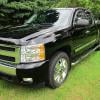 My brand new 2007 Silverado's wax frame was rust from end to end partway through it's SECOND winter here in MA. That stuff is completely useless.
-
-
GM-Trucks.com Clubs
-

Black Truck Club
Open Club · 612 members
-

White Truck Club
Open Club · 380 members
-

Canadian Owners Club
Open Club · 282 members
-

Red Truck Club
Open Club · 156 members
-

diesel 3.0
Open Club · 279 members
-

Texas Owner's Group
Open Club · 371 members
-

NorthSky Blue Club
Open Club · 118 members
-

Midwest Owner's Group
Open Club · 212 members
-

2015 Custom Sport Club
Open Club · 5 members
-

GM Snow Plowing Club HD
Closed Club · 14 members
-
-
Popular Contributors
-
.thumb.JPG.2c573de60d3a3a4407c7d92298db46dd.JPG)


Recommended Posts
Create an account or sign in to comment
You need to be a member in order to leave a comment
Create an account
Sign up for a new account in our community. It's easy!
Register a new accountSign in
Already have an account? Sign in here.
Sign In Now