Jump to content

Recommended Posts

Posted

I have not looked at mine but is that cutout where the stop hits normal?

Posted

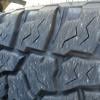
I've never see this type of wear before but also have never had an aluminum suspension. I've been in the material/mechanical/design field for quite some time and know that anything designed to have this type of wear is improper. I contacted Fabtech about the issue but they are telling me "it's normal". Hard to believe since as the truck has less than 10k miles. If it's worn this much now, what will it look like after 60k miles? Seems like a either a design flaw or a result of the original problem I started this post with. Still waiting to hear back from the dealer on how they are going to correct my steering issue and if this is a cause or result.

  • 1 month later...
Posted

Adam, have you made any more progress on this issue or ever get it figured out? I bought a 2014 Silverado Z-92 from a dealer 3 weeks ago and have the EXACT same issues you are having. The Z-92 was the ALC (American Luxury Coach) package and also has the 6" Fabtech lift and 35" MT ATZ's, truck had 12.5k miles on it and was owned by an older gentleman and is evident that it has never been abused or modified from how it was purchased. I am currently contacting the dealer to see if they can tell me anything, and sending them a link to this post so that they can see all of the valuable information you have shared and go from there. Would love to find out that you have fixed the problem and save me the hassle of going through what you have been through! Thanks

Posted

only1adam12,


Did you ever figure out what the issue is?? I think I am having the exact same issue.


I have a 2014 GMC with 6" Fabtech lift. I bought the truck used a couple months ago and noticed the wear on outer edges of tires. I had the guy get an alignment before I bought the truck and he did and said the alignment was pretty close but slightly out on toe. So I figured this was likely the problem and didn't give it a second thought. Since then, I've noticed that I get that same pattern of wear on the outside of tire where there are almost perpendicular scratches on the tread...and the wear even rolls down the edge of the tread a little on the outside...just like the picture you posted. I also noticed when turning sharp, I get that same pattern on the road where I'm only seeing the outer edge of tire tread mark...so the tire is riding on that outside edge in turns. I had alignment checked and they said it was right on factory specs. So it must be similar to what you are seeing...


I called Fabtech trying to figure out exactly which model of lift I have and they said it was a gen1 lift and they have a revised lift now which would be gen2. They said there was nothing wrong with the gen1 lift but that it ended up being closer to 7 or 7.5" lift on the 2014+ body styles. So they tweaked a gen2 version for 2014+ which is a true 6" lift.


A couple questions for you:


1. Have you found what is causing the problem yet? Any fixes?

2. Do you know if you have a gen1 or gen2 fabtech 6" lift?


The truck has about 19k miles right now and the previous owner had these put on from the beginning. I'm going to have the tires reversed so that hopefully I can start to even out the wear a little...but would really like to find a fix for the issue.

Posted

Justin,

That's quite funny that we both posted at almost the exact same time...haha.


Do you happen to know if you have a gen1 or gen2 lift? I had to call the dealer that initially installed my lift and get some of the part numbers and then call Fabtech for them to tell me which version of lift the part numbers matched up to.


I'm curious if this problem is limited to gen1 lifts or if it occurring on gen2 lifts as well.


If only on gen1, I fear that there were more issues involved (than simply the lift was a little taller and not a true 6" lift) with the lift kit for 2014+ trucks that made fabtech design a second gen. If that's the case, there may not be an easy fix.

If on both gen1 and gen2, then I'm hopeful that there could possibly be some type of tweak that could help??

Posted

I have gone back and forth with the dealership, fabTech, and Southern Comfort (who installed the lift) and still no resolution. I have a lot of friends in the mechanic field and they are scratching their heads as well. It seems to be an issue with either the 2014/2015 Silverados or the Fabtech lift design for these trucks. I have the Gen 1 lift which is the spacer on the bottom of the shock instead of a top coil spring spacer. My dad has the GMC rock ridge version (2015) and shows similar outer tire wear but not the excessive skid when turning. His truck is the Gen 2 Fabtech which makes me wonder if they know about a design flaw in the Gen 1's.


All-in-all, no solution. I have found that putting the front tire pressure up to about 50psi helps but causes the ride to be a little rougher than I would like. It looks like I'll be rotating these tires about every 5k-6k miles just to save some tread. I like the truck but worried that the tires won't last and it's going to be more of a headache than I care for especially after the cost of the truck. I see front suspension components wearing out a lot faster than normal but only time will tell.


I hate that others are having the same issue but glad I'm not the only one fighting the battle. If anyone finds a solution please let me know and I'll keep digging on my end.


I have gone back and forth with the dealership, fabTech, and Southern Comfort (who installed the lift) and still no resolution. I have a lot of friends in the mechanic field and they are scratching their heads as well. It seems to be an issue with either the 2014/2015 Silverados or the Fabtech lift design for these trucks. I have the Gen 1 lift which is the spacer on the bottom of the shock instead of a top coil spring spacer. My dad has the GMC rock ridge version (2015) and shows similar outer tire wear but not the excessive skid when turning. His truck is the Gen 2 Fabtech which makes me wonder if they know about a design flaw in the Gen 1's.


All-in-all, no solution. I have found that putting the front tire pressure up to about 50psi helps but causes the ride to be a little rougher than I would like. It looks like I'll be rotating these tires about every 5k-6k miles just to save some tread. I like the truck but worried that the tires won't last and it's going to be more of a headache than I care for especially after the cost of the truck. I see front suspension components wearing out a lot faster than normal but only time will tell.


I hate that others are having the same issue but glad I'm not the only one fighting the battle. If anyone finds a solution please let me know and I'll keep digging on my end.

Posted

Have you checked to confirm you have the correct spindles and tie rods installed? Ackerman is determined entirely by geometry, so if the tie rod and steering arm angles have not been compensated correctly for the lift there will be some deviation from the desired steering angle. Static alignment may be set the same, but as soon as the suspension moves you could see a difference.

Posted

I'm wondering if the fabtech spindle pads contact the stop early and physically limits one

Spindle angle. You could have a helper to slowly turn the steering, you watching until contact is made on the stop, then the steering turned to the lock while you watch for deflection of the steering components.

Posted

I would imagine Fabtech copied the geometry from the GM knuckle/spindle for the stop pad and all Ackermann geometry. But if there is any increase in the A-arm angle, like a leveling kit, the proximity of the A-arm stop would get progressively closer to the knuckle stop pad. If so, the opposite wheel may have more available freedom of angular travel and your steering linkage may be deflecting, allowing one wheel to turn further.

Posted

I would imagine Fabtech copied the geometry from the GM knuckle/spindle for the stop pad and all Ackermann geometry...


Yes, this is a reasonable assumption, but if the wrong parts are installed, or the right ones installed incorrectly, Fabtech's design intent goes out the window.

Posted


Yes, this is a reasonable assumption, but if the wrong parts are installed, or the right ones installed incorrectly, Fabtech's design intent goes out the window.


Certainly a reasonable generic assumption. Just sitting behind my little computer, I don't know how you could change the Ackermann ratio without binding something.


I have a set of King shocks that essentially acts like spacers (leveling kit) by simply extending the A-arms. I suspect my steering stops are affected as I described above as well.

Posted


Certainly a reasonable generic assumption. Just sitting behind my little computer, I don't know how you could change the Ackermann ratio without binding something.


I have a set of King shocks that essentially acts like spacers (leveling kit) by simply extending the A-arms. I suspect my steering stops are affected as I described above as well.


Among other things, if the length or angle of the steering arm (knuckle) is changed, you will change the Ackerman effect, and it need not cause binding, though it might. This is true in either plane. That is, raising or lowering the arm versus the rack, or changing its angle versus the centerline, could both impact the geometry.


The other thing that could be impacted by these modifications is bump steer (aka roll steer), but that is not really in play at low speed.

Posted

From what i understand about this particular lift is that the spindle is designed to keep the tie rods close to the same angle as factory by moving up the mount. The kit comes with new tie rod ends that are slightly longer and more robust to adjust any additional reach needed. My initial thoughts were that the bump stops were worn incorrectly causing the inside tire to bump and the outer tire still have room allowing components to flex and tire over-steer. This is what I found on both left and right sides and only the front bumps. The rear bumps have no wear at all. I was told by both Fabtech and several mechanics that this was normal but I have a hard time believing that something with this much wear at only 10k miles is normal. It also shows how the wear is inconsistent and rubs on the corner instead of the flat surface.


My thought is: If turned fully left, the inner (left) tire will stop at the bump on the rear of the a-arm. the outer (right) tire will stop at the bump on the front of the a-arm. So if the front a-arm bump is worn, even 1/8", the the steering/suspension components will flex until the bump is reached resulting in the miss-alignment and oversteer of the outer tire. Any thoughts on this?


Also, anyone else with the same problem have aluminum suspension or do we see this with both aluminum and steel?

post-152679-0-87683100-1456766737_thumb.jpg

post-152679-0-87683100-1456766737_thumb.jpg

post-152679-0-87683100-1456766737_thumb.jpg

post-152679-0-87683100-1456766737_thumb.jpg

Posted

First, I would confirm that you have the correct parts installed, at least the uprights (spindles). I understand that Fabtech designed the kit to compensate for the lift, but it is possible the geometry is off because of an error in the installation.


It would not be hard to confirm if you have Ackerman or not by checking for change in toe as you move from lock to lock. You should move toward toe out as you turn in each direction. If you cannot get an alignment shop to check this, you can always use the tried and true string alignment method. It may sound crude, but it was good enough for Carrol Smith and I have used it on race cars (mainly Formula Fords) many times.

Posted (edited)

All alignment shops will have graduated turn plates that you can easily measure the steering angle differential left to right side. You can either calculate the proper Ackermann angles or get a stock truck of the same length wheelbase to compare it to. The dealer should have turn plates and a selection of trucks to compare it to.


It's not apparent to me that larger or smaller tires would come into play. Anyone?

Edited by spurshot

Create an account or sign in to comment

You need to be a member in order to leave a comment

Create an account

Sign up for a new account in our community. It's easy!

Register a new account

Sign in

Already have an account? Sign in here.

Sign In Now

  • Latest Articles

  • Posts

    • I imagine the cold winters up here with repeated short runs in town every day for those that live and work in town and given what I have come to learn on this forum with DI engines having fuel dilution issues, and if they don't change the oil until it says to but keep driving it for a while, I bet all that is just lovely on those finicky lifters. 
    • I just did some reading and Stabilitrak is more than a what I had originally thought. It is more of a vehicle control system to help the driver in precarious situations. I thought it was only the AWD system. Now I know. So I changed the title for this thread to AWD conversion to Z71 
    • Sounds like converting will be a bigger endeavor than I was thinking. This truck doesn't have 2Hi like the Suburban did. The Tahoe has 4Hi and 4Lo and a button to turn of traction control.   From what I understand the Stabilitrak uses open diff in the front and rear. When wheel speed is not the same the stabilitrak uses the ABS system to slowdown the spinning wheel(s) to transfer power to the slower non-spinning wheel(s). I thought the transfer case was open too. Being able to transfer power either more to front or rear depending on wheel spin. Maybe I miss understood some information with you saying and power transfer is 50-50. Thanks
    • My brother has a 2007 Avalanche with afm 5.3. It`s got 176,000 miles. Runs like a clock. Never been apart. Co worker has a 2010 Tahoe with afm 5.3. 230,000 miles. Never been apart. Runs like a clock. So, even though cyl deac is a weak spot, they can go the distance.   BUT, these engines had the oil changed regularly, AND had 5w30 as spec. I wonder if they would have lasted this far on 0w20? I`ll bet not.
    • I certainly could be wrong but I hear of pickups far newer than that 2007 cutoff which may not be going to the wrecker but are having engine work done and be that a reman engine or new engine or trying to repair the existing engine. Some of it would be design issues as per the cylinder deactivation system that GM has and one of those lifters wiping out the cam and the question of oil changes moving the needle or not on that whole mess, or in the case of Ford pickup engines that have the long timing chains and wearing them out and the roller followers and phasers and some of that certainly goes back to oil change intervals. But in those various cases the truck has all sorts of life left in it and so the unfortunate owner and may be original owner or used market owner that is pouring money into repairs so the truck is not seeing the salvage yard yet but damage is happening by infrequent oil changes. A friends son had bought a 2018 I think it is half ton GM and it had some sort of extended or used dealer warranty on it and of course the lifter issue bites and its rattling and so the dealer had to swallow the bill and was at least 7000.00 and I think they only replaced what they felt they had to replace so yeah, I can see that being a ticking time bomb in the not too distant future. Would frequent oil changes cure all these engineering "marvels", probably not but some engine designs have shown that they do much better if the oil is changed a lot more often then if the manufacturer service claims are followed. New trucks cost so much that there is an incentive to keep the existing truck on the road by repairing. 
  • GM-Trucks.com Clubs

  • Popular Contributors

×
×
  • Create New...