
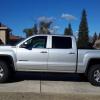
AFM affected by leveling kit or larger tires?
-
Similar Content
-
Another low mileage V8 falls to the AFM lifter defect...
By szalkerous,
- lifter failure
- afm
- (and 1 more)
- 8 replies
- 1,826 views
-
- 9 replies
- 4,192 views
-
- 0 replies
- 1,478 views
-
- 5 replies
- 10,017 views
-
provocative catch can video, correction or mask of primary issues
By customboss,
- vvt
- crankcase venting
- (and 19 more)
- 3 replies
- 2,394 views
-
-
Recently Browsing 0 members
- No registered users viewing this page.
-
Forum Statistics
250.4k
Total Topics2.7m
Total Posts -
Member Statistics
342,840
Total Members8,960
Most Online
-
Who's Online 2 Members, 0 Anonymous, 349 Guests (See full list)



-
Latest Articles
-
Posts
-
 This is a 1/2 ton thing ONLY. All HDs 2020-2026 have the two speed transfer case, with Autotrac as an option. 1/2 tons 2019-2026, regular 4x4s come with a single speed case (no 4LO!), and trucks with Z71 ordered, or all Trail Boss trucks come with the 2 speed case. 2 speed case is also an option on WT, and is also standard on High Country.
 -
2013 5.3 still to this day calls for the PF48 filter. Which as a 15psi bypass pressure. There is a TSB, 17-NA-157 that talks about the PF-63 and PF-64 filters which have a higher bypass rating of 22psi. TSB HERE - temp.xml "Beginning in 2012, the oil pumps began to regulate main gallery feedback instead of pump out pressure. This means that the oil pump now does not begin to regulate until pressure is built up to the main gallery. This change reduces the amount of time it takes to provide oil to the engine bearing and lifters during extreme cold start conditions. Main gallery feedback oil pump control systems are present on the following engine families which use Spin-on oil filters: Small Gas Engine (SGE), Large Gas Engine (LGE), High Feature (HFV6) Gen2 and Small Block Gen5 gasoline engines. These engines with the main gallery feedback oil pump control systems are factory built with an ACDelco® oil filters" It also calls out what engines use those filters. The gen 4 small blocks were not on that list (LMG, LC9, L9H, L92, L94, L20, L96). Gen 5 small blocks use the higher pressure filter. That all said... Your 7045 Napa filter is the PF63 equivalent, with 22psi bypass. You are already using the higher bypass pressure filter. You CAN keep using it, you don't technically have to use it though.
-
.thumb.JPG.2c573de60d3a3a4407c7d92298db46dd.JPG)
By Grumpy Bear · Posted
Do you know WHY the filter relief setting was increased to 22 psig? When the new system goes into the second stage the pump volume ramps up considerably. It was found that the 15 psi filter bypass setting put the filter in bypass on a warm engine when the second stage was activated. Raising the filter bypass setting forced the filter to do what it designed to do. Filter. Preventing debris from circulating during high load, high rpm operation. So next question is how did GM find this out? VLOM/lifter failures and a deep dive by Melling Corp. Last question. Is it required? Look at it like this; a motor may be equipped with a rev limiter. But it only works if the set point in reached. That 22 psig setting only matters if the pressure differential across the filter media exceeds 15 psig during normal warm operation. Second stage kicks in around 3000-3500 rpm. I can't answer your question because I don't know you and how you use the truck. But I think there is enough information here to let you decide for yourself. 😉 -

-
Probably not their first rodeo, so it should go as planned most likely. Typically the service manager or tech doing the swap will put some seat time to shake it down after they get it all put back together. We usually put 50-100mi before we hand them back so if something happens, its not after you get it. A coolant leaks, oil leaks, a ground left off or loose, vibration, etc. The new engines so far have been good? There's been a couple that have popped out there again (the replacement engine) but most have been okay.
-
-
GM-Trucks.com Clubs
-

Black Truck Club
Open Club · 612 members
-

White Truck Club
Open Club · 380 members
-

Canadian Owners Club
Open Club · 282 members
-

Red Truck Club
Open Club · 157 members
-

diesel 3.0
Open Club · 281 members
-

Texas Owner's Group
Open Club · 371 members
-

NorthSky Blue Club
Open Club · 118 members
-

Midwest Owner's Group
Open Club · 213 members
-

2015 Custom Sport Club
Open Club · 5 members
-

GM Snow Plowing Club HD
Closed Club · 14 members
-
-
Popular Contributors
-


Recommended Posts
Archived
This topic is now archived and is closed to further replies.