
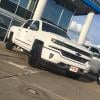
2016 SILVERADO ENGINE SQUEAK??
-
Similar Content
-
Issue 2003 Gmc Sierra 2500hd 4x4 6 inch Cognito lift issues
By Marshall Pay,
- lift
- ride height
- (and 9 more)
- 0 replies
- 503 views
-
- 4 replies
- 1,165 views
-
- 0 replies
- 928 views
-
- 6 replies
- 629 views
-
- 1 reply
- 1,852 views
-
-
Recently Browsing 0 members
- No registered users viewing this page.
-
Forum Statistics
250.5k
Total Topics2.7m
Total Posts -
Member Statistics
342,916
Total Members8,960
Most Online
-
Who's Online 9 Members, 0 Anonymous, 1,455 Guests (See full list)


-
Latest Articles
-
Posts
-
By BuckWallace · Posted
I wonder what I'm doing wrong whenever I hear people say they "don't even feel it back there" when towing 10k+ lbs. I could even feel my old 3,500lb travel trailer. Oh well. -

By Tyler Gibbs · Posted
https://yourcovers.com/differential-cover-gm-aam.html?srsltid=AfmBOopMmtZCwNGreF-v043TjP8j9oJLR8FBmiiVA4EXsk7z7baFMaqt -
 I just brought home a 2020 GMC 1500 Denali. She has 53K miles on her and I want to change out the fluids over the next few weeks. I see the diff covers don't have drain plugs. Any suggestions where I can pick up front and rear diff covers with drain plugs? Thanks, Bob
 -
 Well, the dealership got the compressor and installed it. Air at the vents seems nice and cold as it should be. The service manager said the repair has a two year warranty and unlimited mileage. Hopefully I don't have to use it. The dealership i went to was one where I bought my 2014 half ton silverado. In 10 years and 168k miles on the truck anything I needed done and two small recalls they were always very good to me. Not a huge dealer either. I think they treat people well because they want you to come back. I have dealt with a different dealer that was too big to care about an individual. Just my two cents.
 -

By Another JR · Posted
Hi All, I operate my 2021 3500 SLT most of the time with the tailgate off and in a crate because I have a slide-in camper. However, at least once a year, I take the camper off and put the tailgate back on. Recently I installed the tailgate, but had a hard time getting the connector bail to swing to the fully latched position. The connector seems to fully seat, and everything works, but the bail doesn’t swing to fully latched position. It swings almost there but stops and I am afraid to push it any harder. Does anyone have any advice on cleaning or lubrication or anything else I should be doing? i know how to properly operate the connector. During the time the tailgate and connector are off, i have a double plastic bag over the truck connector secured with rubber bands to keep it clean, but it still had some dust in it this time when I blew it out with compressed air. I didn’t want to spray it with anything other than air without doing some research. Thanks.
-
-
GM-Trucks.com Clubs
-

Black Truck Club
Open Club · 613 members
-

White Truck Club
Open Club · 380 members
-

Canadian Owners Club
Open Club · 282 members
-

Red Truck Club
Open Club · 158 members
-

diesel 3.0
Open Club · 281 members
-

Texas Owner's Group
Open Club · 371 members
-

NorthSky Blue Club
Open Club · 118 members
-

Midwest Owner's Group
Open Club · 213 members
-

2015 Custom Sport Club
Open Club · 5 members
-

GM Snow Plowing Club HD
Closed Club · 14 members
-
-
Popular Contributors
-
.thumb.JPG.2c573de60d3a3a4407c7d92298db46dd.JPG)




Recommended Posts
Create an account or sign in to comment
You need to be a member in order to leave a comment
Create an account
Sign up for a new account in our community. It's easy!
Register a new accountSign in
Already have an account? Sign in here.
Sign In Now