Jump to content

Recommended Posts

Posted

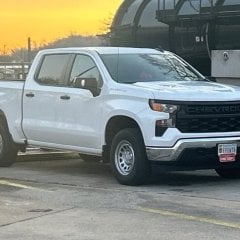
A little background just bought this truck 2 months ago, last week I went camping with a friend in the bed of the truck. After 2 days, I pulled the truck out of the parking spot in reverse and there was an extremely loud grinding and very loud clunking from the rear end. The noise was so loud people in a cabin 20 yards away came outside because they thought I had hit something. Check engine light came on, pulled code P25A2 and U0146. 


Now whenever I use the brake in reverse, there is a loud grinding sound from the rear drivers side wheel. The truck did not make this sound before these codes showed up. It's usually louder in the morning/when it's cold. I've had it at 2 dealerships who say they can't reproduce the noise (by the time they get around to examining the vehicle it has quieted significantly) But the next morning when I back out of my driveway the loud grinding and squealing has returned.

  • 4 months later...
Posted
On 1/18/2025 at 2:30 PM, Rowe Ingram said:

Did you ever find the fix? My 24 1500 with 12,000 makes it too. No clue what causes it

Our team understands how this grinding noise concern can be worrisome, and we would like to take this time to learn more. When you can, please send us an email to [email protected]. Make sure to include your Username and Forum name in the subject line with further details. We will watch for your reply. 

  • 2 months later...
Posted

I experienced this issue this past year as well on my 2019 Sierra 1500 Denali with 76,000 miles from what I think is the left (driver’s side) rear wheel assembly.  It was so disconcerting at first that I immediately took it to the dealer a few miles away but it wasn’t occurring any longer when I got there. They pulled the wheel and didn’t find anything significant other than a broken brake sensor which they fixed.  I also had them check the parking brake since use it regularly.  Nothing unusual other than a dead mouse in the wheel/brake assembly.  A week later, the grinding occurred again while backing up.  This time, while driving forward slowly, I applied the parking brake until the truck came to a stop.  When I put it in reverse, the grinding did not occur.  About a month later while backing up, it occurred again for a third time and I did the same thing - stopped, drove forward to about 10mph and applied the parking brake until the truck stopped.  Put it in reverse again, no more grinding.   It’s been a few months now since then without a recurrence.  In the meantime, the truck underwent the state safety and emission inspection, and was on the lift to have a rear flat tire removed and repaired.  Nothing out of the ordinary was identified.

Create an account or sign in to comment

You need to be a member in order to leave a comment

Create an account

Sign up for a new account in our community. It's easy!

Register a new account

Sign in

Already have an account? Sign in here.

Sign In Now
  • Latest Articles

  • Posts

    • I had skimmed through that article when you posted the link and honestly I felt rather defeated in a sense and realized that all these years in changing oil that in fact putting in what I was told was a good quality oil was probably not filtered as well as it should be although the filter put on the engine would be what ( as long as it never went into bypass mode ) would be the final filtering of the new oil that the engine components would first see, but then the filtering media itself is not up to par to what is ideal because a full flow filter would be too restrictive to filter fine enough for the engines best outcome in the long run. Only one of our tractors over the years which was a Versatile with a 855 Cummins had a separate bypass filter, some engine manufacturers did spec a partial bypass system within the main oil filter but I don't believe any other trucks or equipment I was servicing used such a filter. No doubt a product like the Amsoil bypass system is of benefit as long as nothing goes sideways with the extra plumbing and filter such as a rupture/leak that could cause the oil to pump out of the engine ( yes that Versatile had a remote canister with hoses routed to it as well ). With the idiot egr system on a diesel and as a result forcing a lot more soot into the oil, that certainly isn't helping the diesel engines cause or as you pointed out the GDI engine issue with creating more soot and aside from having a fancy secondary filtering system, changing the oil more often helping lower the total soot load.     So oil manufacturing and the end product is not something one can control and I wonder if there are specs on what various oil packaging companies produce in particle count or size. As to the filtering, if the OEM is not designing a filter size and spec that is really what it could be, they too are short changing the end user and so what is the answer. Of course as you say the oil side can only do so much if the air side isn't keeping up its end of the picture and air filters are only so efficient and if in a dusty environment such as farm or construction or driving gravel roads there is a lot of dirt to filter out and some of that ends up into the air stream.    Of course the irony in places like where I am where they dump the salt on the highways but also will mix in some calcium or outright pure calcium for problem road area's, or using calcium as dust control on gravel roads, the vehicle that gets used in that environment may rust out before a properly engineered engine and maintenance finally wears out so one has to face that reality in the rust belt. 
    • Has anyone run these on their 2500?
    • have you stuck with dealer oil changes since then? I made the same switch after getting tired of crawling around under the truck, but I’ve found some dealers are way better than others about getting you in quickly. Curious if yours has been good about scheduling or if you’ve had to look elsewhere for quicker turnaround.
    • Thank you.   I am set on a 3.0 Duramax as my previous truck with a Ford Ecoboost had just as many, if not more, "common" issues.  Cam phasers, timing chain issues, 10-speed valve body and CDF drum, emissions issues, etc.  So I figured, why not get 2x the fuel mileage (these things got 27+mpg on every mixed city/highway test drive I put them through) and better towing capability with resale value to boot?   My minimum, shortest trip will be 50 miles 1-way and I regularly go out of state with a travel trailer.  I'm planning on using this for a marketing/event promotion business also, which would require regular towing of trailers for bands, DJs, sound and lighting gear, along with my personal camera gear for filming events.   Looked at other trucks in the $30k+ price range but the issues seem to be everywhere, plus too many with gaudy mods.  I'm literally sticking with RWD trucks because they tend to be actually used as trucks, vs. the 4x4 models I've seen with unsafe lifts, huge tires, and general mods that would affect reliability (I'm wondering if some of them were tuned, hence the aggressive throttle response and hard shifting).   So my goal is to find a stock, 3.0 with 1 or 2 owners, in good physical condition, and decently well maintained.  Can't seem to find that up here, everything in the $27-30k range has had multiple owners, smoke smell, issues, or body damage.  Or the ridiculously modified trucks with 80k miles for under $27k but lots of problems...
    • That’s pretty tough Grumpy. I reread the previous few posts. They all reference oil changes. Much like your last thread. In my humble opinion it keeps things interesting.
  • GM-Trucks.com Clubs

  • Popular Contributors

×
×
  • Create New...