
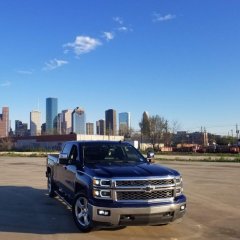
Random noise from underneath truck?
-
Similar Content
-
wiring help Rewiring but I cant identify this component - 1991 Silverado K1500 4x4
By Malicious_Apeman,
- wiring
- electrical
- (and 5 more)
- 7 replies
- 574 views
-
- 1 reply
- 449 views
-
*UPDATE WITH PHOTOS* For anyone wanting OE metal skid plates for their 2019-2026 Silverado 1500 or Sierra 1500
By s10dragracer888,
- 14 replies
- 3,660 views
-
- 31 replies
- 7,436 views
-
- 3 replies
- 643 views
-
-
Recently Browsing 0 members
- No registered users viewing this page.
-
Forum Statistics
250.5k
Total Topics2.7m
Total Posts -
Member Statistics
342,982
Total Members8,960
Most Online
-
Who's Online 9 Members, 0 Anonymous, 422 Guests (See full list)



-
Latest Articles
-
Posts
-
 Thanks for that, yes just because I could I measured what came out just to give me some guidance although I already knew to expect it to take at least 9.5 to just throwing in the whole 10 quarts off the shot and doing a one and done heat cycle to drop out the excess to get to the proper level. I don't recall exactly now what I measured that came out but was less than I put back in, I knew I spilled some on the garage floor but the main part was that I was thrilled in the discovery I did not have to touch my exhaust to flex it down. The gasket manipulating is a pain of course to create that clearance to take the pan out and put back in but its all very doable if one is careful and not forcing the gasket to flex too much. From the quote I got at a transmission shop of 900.00 here in Canada ( never asked at the dealer what they charge ) I saved 700.00 doing it myself after paying for the supplies so that to me paid very good wages !, and I knew what fluid was put in and that I had changed the filter and that the level is correct without any doubts.
 -

By bojanglespa · Posted
I do have one of the AFM diasable box, using it for last 1.5 years. -
 I found a setup that lets me open the cover partway with racks installed, using side-rail-mounted systems for easy access.
 -
Typically its said and I agree so far that the engine oil drain plug oring is not required to be changed out unless you see some damage happening to the oring as apparently the oring lasts well. The dealer I have been getting a few parts from never even stocked the oring but instead stocked the whole drain plug that comes with a new oring which for the dealer is easier because they just throw in a new drain plug if there was any question about damage on it as well and charge the customer accordingly but again only if it is needed. Also a hint about the drain plug oring to help it last vs a risk of causing damage to it, after its been removed and wiped off or washed off ( that is a whole other topic about some solvents damaging orings because some solvent types do ) to make sure to relube the oring with a bit of new oil so that it won't "grip" on the sealing surface of the pan and needlessly stress out the oring. Its no different than putting some oil on the sealing ring of the engine oil filter. So I just grabbed a new drain plug to have on hand although more recently bought just the oring as well but as its special it costs half the price of the drain plug ... ! Since you mentioned the hate to be empty handed theme, I am not sure what you have in the way of filter removal tools as I like using the exact sized for the filter steel 1" wide band with side to side swivel handle filter removal tool, and it can be used to snug up the filter without risk of damaging a filter as well ( its probably a lisle brand I have ). The drain plug hex size is 15mm and I always like using a 6 point socket if I have a choice and with this truck I've been using just a 3/8 ratchet that has a fairly long handle. Do you have a funnel that will work to pour oil in as that is definitely the short coming bastard part about the design with that fill port on the valve cover on such an angle that no normal funnel will even work. There are adapters and things on the market that will set into or screw into that fill port, I didn't want to deal with US shipping as that is all I was seeing at the time so caved and bought a Lisle brand multi vehicle fit adapter funnel kit and it really works well but there are much less expensive adapters out there that work in conjunction with an off the shelf funnel that would do the job also. Now that I have it, I like how it works and works so slick with the shape of the Amsoil 1 quart containers I have now switched over to. Whatever you do, have a funnel system of some sort as you will be swearing if you dropped the oil and then realize you have nothing to properly pour new oil in without spilling it all over the engine !. Other comments, quite a bit of oil flows out down the filter when its cracked loose due to the housing above the filter so let it dribble down the filter until it slacks off flow and then remove the filter to create less possible mess. It seems these engines can sit for quite a while and drip and if you have time let it sit there and drip out of the engine as much as it wants. Also a good time to grease the 9 zerks on the front end, that's my typical practice anyway to grease the suspension and steering each time I change the oil. And remember to reset the oil change minder ( not something I am used to doing with older vehicles and equipment ).
-
 I really did not measure what came out. I carefully followed directions to check level after i did the spill and fill and filter change. I used 10 quarts. 9 was not quite enough. My trans temp was about 175 when I checked it. Truck sitting in my driveway very close to level where I always check oil pretty much every time for consistency. My driveway is just ever so slightly downhill to run water to the street.
-
-
GM-Trucks.com Clubs
-

Black Truck Club
Open Club · 613 members
-

White Truck Club
Open Club · 381 members
-

Canadian Owners Club
Open Club · 282 members
-

Red Truck Club
Open Club · 158 members
-

diesel 3.0
Open Club · 281 members
-

Texas Owner's Group
Open Club · 371 members
-

NorthSky Blue Club
Open Club · 118 members
-

Midwest Owner's Group
Open Club · 213 members
-

2015 Custom Sport Club
Open Club · 5 members
-

GM Snow Plowing Club HD
Closed Club · 14 members
-
-
Popular Contributors
-
.thumb.JPG.2c573de60d3a3a4407c7d92298db46dd.JPG)




Recommended Posts
Archived
This topic is now archived and is closed to further replies.