Jump to content

Recommended Posts

Posted (edited)

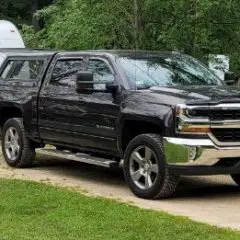
Ok guys, reporting back as promised. Drive shaft went on with no problems. It came with new Ujoints and yoke to slide in. So very easy to install as it came all in one piece...I don't want to jump the gun here because I only drove down a back road but I hit 70mph. USUALLY the second I hit 60mph I start to vibrate and it stays steady unless I push out to 70-80 and its much less at that speed. Well...it was GONE! I was screaming for joy in my truck when I hit 60-70 and no vibration!! Like I said...I still need to get on the freeway and do more testing but the first test drive was a complete success!!! I will note that I also put on my Magnaflow exhaust (Which sounds amazing) so I don't know if that could have changed anything (highly doubt). I'll get back to you guys after I do more driving. Today was a good day!! (Ice Cube Voice)

Edited by Bowtie619
Posted (edited)

So my service director is stating that they have hooked the vibration testing machine up to my truck. They stated that there are no spikes in the graph and that they do not see anything that gm would advise them to do work on. I am going to be taking a ride with the technician on Monday. I asked them to balance the rear drive shaft, they didn't do it. I told them about shimming the engine 3mm, I told them about the rear leaf springs and nothing. Getting frustrated!

Edited by Jamesandrew4
  • Like 1
Posted

I purchased a 2016 2500hd GMC 6.0 L gas. i have a vibration issue in the gas pedal, steering wheel. The dealer had the truck for a week. He installed new motor mounts and some type of weights to the exhaust pipe. Has lessened to problem for now, I am not sure this has solved the problem. My question is does this occur with the diesel trucks?

Posted (edited)

I purchased a 2016 2500hd GMC 6.0 L gas. i have a vibration issue in the gas pedal, steering wheel. The dealer had the truck for a week. He installed new motor mounts and some type of weights to the exhaust pipe. Has lessened to problem for now, I am not sure this has solved the problem. My question is does this occur with the diesel trucks?

I test drove a new 2015 HD2500 Sierra crew cab 4X4. 6.0 gas engine recently, I did not like the way the truck rode. There was a hint of vibration in the steering wheel even at 45 MPH, the steering wheel was off center when going straight. It is enough to say that I did not buy the truck. It could have been something minor but I will not take any chances. And I am not even considering any new GM truck until I see a positive proof that they have fixed these issues and instituted decent quality control. As for diesel trucks having these vibration problems - some do, as evidenced by some complaints of this type on the HD forum.


As for the "exhaust pipe weights", what exactly are those? Perhaps they help alleviate exhaust system vibration?

Edited by pm26
Posted

I am very close to purchasing a 2014 sierra rcsb. i love the look of the truck inside and out, my secondary option is the ram with the 8speed but frankly i like the gm design better.


I stumbled across this thread in my research and 550 pages have me worried. knowing how many of these trucks are sold overall is the consensus that the shakers are the exception and there are fine examples quietly out on the road?


Do you think a thorough test drive would show these problems and this headache could be avoided by choosing a good driver? I intend to keep the truck i buy as long as possible so would hate to run into this issue down the road.


Basically i thought i was all set to purchase my new/used truck but now i'm second guessing myself, please help.


I would not buy one of these used.

Posted

Stiffness of suspension is usually dictated by stiff springs. But very stiff shock absorbers will cause a rough and stiff ride over uneven surfaces even with softer springs, which is probably the case here.

Stiff shocks simply rebound too fast and they do not allow for full movement of the springs to absorb the road shock. Shock absorbers actually do not absorb shock at all - springs do. "Shock absorbers" simply dampen the spring oscillations.

Actually, the shocks don't rebound. The suspension spring is attempting to rebound and the shock resists that due to its dampening. Most shocks provide dampening in both the compression and rebound motion.


As mentioned, the suspension stiffness is done by the springs. That is essentially fixed for a given spring. The shocks provide the damping, which is essentially resistance to movement. Sounds the same as spring force? Well, it's not.


Here's the best way to understand the difference. The spring rate dictates the force, so many lb of force per in of deflection. That is the same whether compressing the suspension slowly or quickly. However, the force residing movement of a damper (shock absorber) is greatly affected by the speed of motion. Apply the movement very slowly, and the shock will move with very little resistive force. But try to move it quickly, and it almost locks up! This is essentially frictional resistance, as the fluid tries to get through the tiny orifice holes in the shock.


Now, don't be confused by the fact that most modern shocks are gas charged, and seem to excited spring-like ability. The gas charge does give the shock some amount of "springingness" and they will fully extend themselves but the amount of force is minimal in comparison to the suspension spring itself. Now, the gas s not there for spring rate, it's there to keep the oil from cavitation (bubbling) as its forced through the orifices inside.


High end and competition shocks are adjustable. That means the damping rate (or friction generated) is adjustable. This is usually done by some kind of adjustable orifice (ie valve) on the outside of the shock that the user can adjust. Some have compression adjustment, some have rebound adjustment, and some both. The electronically adjustable shocks on the GMs do this adjustment from the computer multiple times a second, as per the program.


As pm26 indicated, the entire function of damping is to absorb the natural oscillations of a spring that would occur if there was zero friction (damping) present. And as he said, shocks with excessive damping will provide excessive resistance friction to even small/slow suspension movements and this will make the suspension feel stiff. But it's not the same stiffness as stiff springs. Still makes for a hard ride, either way. Many folks do refer to shocks as having stiffness (he put stiffer shocks on his sports car...) but as I'd explained, it's really not stiffness in the classical sense (lb/in).

Posted

The best way to think of the shock itself is as a brake for the movement of the spring. Kinetic energy is ultimately converted to heat via friction and dissapated to the atmosphere. Gently apply the brakes and the car comes to a stop nice and smooth over a long distance. Slam on the brakes and you quickly test the lock mechanism on the seat belts. I've talked to fox, king and radflo and they all say the same thing it's not a stiffer ride it's "firmer" lol. Stiff carriers a very negative connotation in the suspension world but firmer implies performance, semantics at work. I've got the rs9000 adjustable shocks all the way around. The lightest setting lets the spring travel further with input and "feels" softer, the trade off is degraded handling and an increase in body roll. one thing for sure, it doesn't matter setting 1 thru 9 the vibration is always the same.

Posted

I just want to say that my 2015 Denali vibrated stock. The vibration always felt like it was coming from the passenger front tire.


It vibrated after balancing tires. After rotating the tires to put max RFV max on back tires and min at front passenger.


It vibrated after a 2 in lift / level kit in the front (with sensor adjustments to compensate for added distance between sensor and angled upper a-arm)


It got a little better after I added leaf spring clamps in front of the axle. But in order for them to work without interfering with sensors, it had to be too far forward and lowered the rear of the truck a little.


It still vibrated after and alignment done by independent shop.


It still vibrated after I added a 2.5 inch add-a leaf (with sensor adjustment to compensate for added distance between frame and bracket on axle)


It vibrated after I reinstalled the leaf spring clamps to the rear of the axle but closer than before when I put them in the front. The rear of the truck lowered about .5 inch (lift was now 2inches) and vibration was maybe a little better.


It vibrated after I got a second alignment.


It got a lot better when I started tweaking the toe-in to spec myself using the front tie rods and a tape measure.


It has almost completely stopped vibrating when I got a third alignment where they adjusted the caster and camber on the passenger's side.


Sometimes it comes back though. So we shall see. Today the temp was above 50 degrees. The truck seems much tighter/rougher below 40 degrees.


Also I'd like to say that I can't believe this thread is 552 pages with over 8000 posts. That is an incredible problem that GM has with these trucks.

I wouldn't get caught up in the absolute number of posts. I think the 90/10 rule may be applicable here - meaning over 90% of posts are made by less than 10% of posters. Example; check out the number of posts made by pm26.

Posted (edited)

I wouldn't get caught up in the absolute number of posts. I think the 90/10 rule may be applicable here - meaning over 90% of posts are made by less than 10% of posters. Example; check out the number of posts made by pm26.

Hmm. Ok. So 10%. Of 8200 is 820. But then wouldn't the 90/10 rule also apply to the number of real world people with this vibration vs the number of people that post here,


Heck lets go ahead and say 1 out of 100 people with the problem post here.


That gets us to what? 82000 issues?


And based on the efforts of those offered replacement trucks, it sounds like 90% vibrate. It usually takes 5-10 before they find one that doesn't.


How many did they make? 800,000?

Edited by jblanks
  • Like 1
Posted

Just wanted to let you guys know. Don't waste your time calling GM. At first they show you that your issues is a great concern to them. After they try and repair your truck and they have a Final attempt to fix it no matter how the truck comes out vibrating or not they will say it is fine.


I took my truck to the dealer the GM engineers drove a saw that it was shaking ask the dealer to perform the necessary repairs after that they left never drove the truck again but yet they an email to the dealer saying the truck is fine.


So the local dealer not to go against GM orders they wrote on the paperwork that the truck was fixed to spec. They told me that the truck was ready to go I went to pick it up I test drove it with them and they stay it's still shaking. But they can do nothing about it.


That tells you something here about this issue. They know their truck shake. They don't care if the customers complains as long as they get their money that's all that matters. So if you want to go on here and tell me different go right ahead. I know what happends I just went thru it.


Like it or not this is what GM dose.

  • Like 1
Posted (edited)

I wouldn't get caught up in the absolute number of posts. I think the 90/10 rule may be applicable here - meaning over 90% of posts are made by less than 10% of posters. Example; check out the number of posts made by pm26.

Yes, and I have been posted in this particular thread since 2005, just as soon as I joined the gm-trucks forum. :rolleyes:

Edited by pm26
  • Like 1
Posted

Yes, and I have been posted in this particular thread since 2005, just as soon as I joined the gm-trucks forum. :rolleyes:

That's a long time to pound sand. Why don't you just move along and buy a Ford or Ram? Try getting a life ?

Posted

Or a Tundra, go buy a Tundra, I love my mine. Don't miss my Chevy's at all.


But I just can't stop watching this train wreck of a thread. Still feel bad for all of you stuck with these vibrators. Too bad GM couldn't care less if you like your trucks or not, they got your money. Now they will just sit back and wait for the next sucker to walk through the door.


And anyone who would even consider buying a 14 or 15 after reading this thread .....I have some nice ocean front property to sell you in Nebraska.


Why do you think the used lots are full of these things with extremely low miles ??? Yup, they sure do look good and the price is fantastic for a 1 or 2 year old vehicle. But there is a real good chance you will be right back here trying to figure out why GM won't fix your truck.

  • Like 2
Posted (edited)

If a state lemon law allows one to force the GM to buy back their vehicle if it cannot be fixed after so many attempts, why isn't there a similar law that would prevent GM from selling the same vehicle, in the same condition as a "certified used vehicle" to another unsuspecting customer through their dealers? Don't they have to disclose that this vehicle is a former lemon buyback and that nothing has been done to it to correct the defect?

Edited by pm26

Create an account or sign in to comment

You need to be a member in order to leave a comment

Create an account

Sign up for a new account in our community. It's easy!

Register a new account

Sign in

Already have an account? Sign in here.

Sign In Now

  • Latest Articles

  • Posts

    • 2017 Silverado L83 5.3l 6speed transmission Hello, not a new member but havent posted in a while and my old signup info isnt working so had to create a new account. anyways, I have an issue with my truck and hope someone can spread some light on whats happening: -when it goes to 4cyl mode it makes a clunk sound (but not when coasting or going downhill) -when in 4 cyl mode and under load it makes a load pulsating sound (not a tick). -goes away completely when in M5 gear or when plugging in an AFM delete. Im guessing it is one of 2 things but im not convinced of either to be honest. 1. lifter stuck in v8 mode 2. torque converter shudder realistically it doesn't seem like the TC as there is no physical vibration , and it never happens in v8 mode. but maybe? and wouldnt a lifter make a sound whether with load or not? any ideas let me know please. thank you!  
    • Which has made me wonder with the various engine failures of a few brands in the last few years, is it sub par materials such as lifters etc causing failures, or bearing clearances on the crank etc or perhaps bad designing of an engine physically or causing too much load on the components due to the hp/torque they can push out of them. Or is the oil viscosity and additive package of current oils or a lack of oil flow by an oil pump not able to supply sufficient oil at idle or under high load at low rpm. Or is it every item I listed that combined together has pushed the limits so far to the left that there is hardly a margin of safety left and add in some fuel dilution and too long of an OCI and premature engine failure is the result ?. 
    • He is not saying that an SAE *W20 will have more viscosity than a *W40 due to MORE VII polymers. He is saying that although multiple *W40 may post in the PDS the same or similar 100 C and 150 C viscosities that the blenders choice of modifier TYPE and AMOUNT to get his chosen base to grade will not give identical real world viscosities in shear and at temperature. All will pass the SII test but not all will pass the 100 C HTHS (unpublished value) testing the blender does and relies on to get the required by law "percentage improvement' referenced to his last great work.    Tis the problem with the lie. Once told others are required to support it. 
    • I have a `25, 1500 that auto sets on incline. Never knew that at first. I have the electronic shifter. Just think if it didn`t do that? Unlike a mechanical shift that you can muscle out of park, how would you get this thing out? That would be a problem.   What I found out later is, I don`t have to push the button to release. Just put it in gear.   Setting parameters? Don`t know if it`s possible.
    • 2023 GMC 3500 HD, SLE, 6.6L Gas, 4x4, 6 Spd Options:  SLE Convenience Package; Driver Alert Package 1; Spray on Bedliner; X31 Off Road Package; TRAILERING MIRRORS, HEATED POWER -ADJUSTABLE, AUTO DIMMING, WITH TURN INDICATORS WHEELHOUSE LINERS, REAR INC. REAR AXLE - 3.73 RATIO INC. GVWR, 11,350 LBS. (5148 KG) INC. FRONT AND REAR PARK ASSIST, INC. ULTRASONIC     I have been launching my new boat and noticed some things related to the parking brake.. I usually set the parking brake (habit) when on flat ground for typical driving.    When backed down on the launch ramp to launch the boat and I place gear selector into Park, the parking brake activates automatically. My second nature is to set parking brake manually and noticed I was turing the parking brake off.  The parking brake appears to be setting itself automatically.   I looked all over my owner's manual and only found references to being on an incline and manually setting parking brake, or at times parking brake will be auto engaged, but nothing specific to my situation.    When is the parking brake automatically engaged?  Under what specific circumstances?  Can the auto set parameters be changed?     I like the auto set feature.  It would be nice if always engaged when shifted into Park and released when shifted out of Park (like my wifes 2025 RAV4).   Thanks!    
  • GM-Trucks.com Clubs

  • Popular Contributors

×
×
  • Create New...