

-
Similar Content
-
*UPDATE WITH PHOTOS* For anyone wanting OE metal skid plates for their 2019-2026 Silverado 1500 or Sierra 1500
By s10dragracer888,
- 14 replies
- 2,402 views
-
oil cap and neck oil engine receiver current condition , engine working fine but low oil ...what is goin on ?
By Waldem Mir,
- 8 replies
- 685 views
-
- 2 replies
- 1,044 views
-
- 3 replies
- 4,255 views
-
- 1 reply
- 1,634 views
-
-
Recently Browsing 0 members
- No registered users viewing this page.
-
Forum Statistics
250.4k
Total Topics2.7m
Total Posts -
Member Statistics
342,770
Total Members8,960
Most Online
-
Who's Online 5 Members, 0 Anonymous, 596 Guests (See full list)



-
Latest Articles
-
Posts
-
 I hope to high heaven this is wrong. My Chevy farm trucks frame is lasting way longer than a newer Nissan Titan XD I got for a steal, and it only pulls trailers. A decade younger and it's frame is already way rustier than the waxed Chevy I drive across longs and ditches. Also, hasn't Ford been having tones of troubles with rusted frames?
 -
 Batteries don’t always show signs of a few years ago my vehicle started fine in the morning and took me to work. After work the battery was completely dead and I needed a jump. No, I didn’t leave anything on and the battery was only a couple months old. It was replaced under warranty.
 -
AFM is confirmed in the Corvette engine, so I'm assuming the higher volume trucks will get it as well
-
 If his battery was that bad I would think it would have been showing signs before this that were ignored. Stinks that it happened the way it did in rush hour traffic, but this seems like a pretty fringe scenario. I don't mind it that bad and never turn it off. The only slight annoyance for me is the slight delay between brake to gas, but I have gotten used to it and figure if it can save a little gas why not.
 -
 That is a good correction. I think “severity” was probably the wrong word for what I meant. What I really mean is closer to event priority, relevance, and actionability — not “this code is severe” or “replace this part.” I agree that a truck can have a lot of trivial or historical communication codes, and if the product starts pushing alerts for every stored or low-value event, people will ignore it very quickly. So the alert logic would need to be filtered. For example, I would not want a random old communication code to generate a push notification by itself. A useful alert would probably need to be based on things like: - new vs historical - active vs stored - repeated vs one-time - duration of the event - whether it happened near the driver-marked symptom - whether it happened together with voltage drop, reset, bus-off, misfire, oil-pressure change, etc. - whether the same pattern repeats under similar conditions So instead of saying “severity,” maybe the product should organize events by affected system and priority. For example: Misfire event: Show misfire counts / roughness first, then fuel trims, RPM/load, DFM/AFM state if available, coolant/oil temp, voltage, and related DTCs. Oil-pressure event: Show oil pressure first, but only in context — RPM, load, oil temperature, coolant temperature, DFM/AFM state if available, voltage, and baseline comparison. Communication event: Show which module/network/message dropped, whether voltage dropped, whether the recorder reset, whether it was active or historical, and whether it repeated. Voltage/reset event: Show battery voltage, crank/wake/sleep state, module reset, communication dropouts, and what came back online first. That also solves the display-order problem you mentioned. The main report should not always show the same fixed list first. It should show the system that appears abnormal first, and then the supporting values for that system. I also agree that the truck already has an oil pressure gauge and MIL. The point would not be to duplicate those. The value would be in showing what else was happening before and after the warning or symptom. For example, if the MIL comes on for a misfire, the truck already told the driver there is a problem. The useful part would be: - which cylinder or bank looked abnormal first - whether it happened after an AFM/DFM transition - whether fuel trims were already moving - whether oil pressure or voltage changed at the same time - whether the same pattern happened previously without a MIL On the OBD port point, I think you may be right for a consumer-facing version. OBD is much easier for the average owner: - easier install - easier removal - inside the cabin - easier phone connection - easier data download - easier to include a pass-through port for another scanner OBD is also the right place for DTCs, freeze frame, VIN, calibration information, Mode 6, and normal scan-tool parameters. The reason I was looking at ECM-side recording is that some events may be gone by the time someone plugs in a scanner, and some powertrain-side network evidence may not be available the same way through the DLC. But I agree that if an OBD-based version can capture enough useful evidence for most owners, that is probably the cleaner consumer product. Maybe the split is: - OBD/DLC version for most consumers - ECM-side version only if it proves it adds evidence that the OBD version cannot get - shop/pro version if deeper powertrain-side event evidence is actually useful So I would not want to force the inline approach if the OBD workflow solves most of the real-world problem. Your last point is probably the key product requirement: the report should be specific to the system showing the abnormality. Not “here are 50 parameters.” More like: “Misfire-related event detected. Here are the misfire/fuel/DFM/context values.” or “Oil-pressure-related event detected. Here is oil pressure compared with RPM/load/temp/baseline.” or “Communication event detected. Here is what dropped, when, and whether voltage/reset happened first.” That is a much better way to think about the report.
-
-
GM-Trucks.com Clubs
-

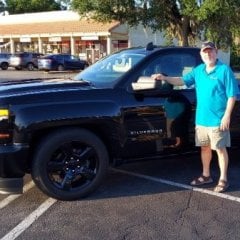
Black Truck Club
Open Club · 612 members
-

White Truck Club
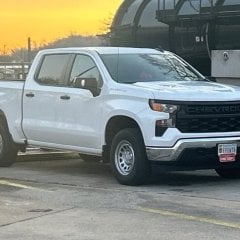
Open Club · 380 members
-

Canadian Owners Club
Open Club · 282 members
-

Red Truck Club
Open Club · 156 members
-

diesel 3.0
Open Club · 279 members
-

Texas Owner's Group
Open Club · 371 members
-

NorthSky Blue Club
Open Club · 118 members
-

Midwest Owner's Group
Open Club · 212 members
-

2015 Custom Sport Club
Open Club · 5 members
-

GM Snow Plowing Club HD
Closed Club · 14 members
-
-
Popular Contributors
-

.thumb.JPG.2c573de60d3a3a4407c7d92298db46dd.JPG)



Recommended Posts
Create an account or sign in to comment
You need to be a member in order to leave a comment
Create an account
Sign up for a new account in our community. It's easy!
Register a new accountSign in
Already have an account? Sign in here.
Sign In Now