
Which would you choose and why?

2013 Denali HD or 2015 Silverado 1500
16 members have voted
-
Similar Content
-
- 9 replies
- 4,400 views
-
- 14 replies
- 1,812 views
-
- 3 replies
- 911 views
-
HELP! For the time being WAMS is not doing BCM programming to retro fit OEM ventilated seats!!
By Jgrazy22,
- 2 replies
- 1,776 views
-
Nothing but PROBLEMS with the 2024 GMC Denali Ultimate 2500 1 2
By ShibaPauly,
- GMC
- Denali Ultimate
- (and 8 more)
- 23 replies
- 58,794 views
-
-
Recently Browsing 0 members
- No registered users viewing this page.
-
Forum Statistics
250.5k
Total Topics2.7m
Total Posts -
Member Statistics
342,914
Total Members8,960
Most Online
-
Who's Online 6 Members, 0 Anonymous, 514 Guests (See full list)



-
Latest Articles
-
Posts
-
By AidenVorpagel · Posted
hello I recently bought a 2012 gmc 1500 with a 5.3 and have a AFM disabler on it I'm interested in doing a cam but I'm worried if I remove the AFM system I will fail smog does anyone have info if they are able to detect that or a work around to it (not talking about hot smogging) please let me know thank you -

-
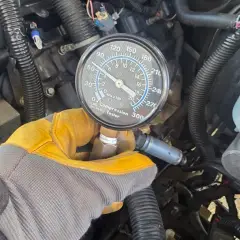
Update. I started chasing down my symptoms. Started first with pulling valve covers and looked at everything. Everything looked good and couldn't hear or feel anything different. Then a compression test. 240 psi or really close on each cylinder. I was worried I was a tooth off of timing. Not bad for an engine with 173,000. Granted I did put new heads on. I sprayed water around the injector area to see if I could hear a change. Nothing. I hooked up my new hp tuner which I should have done in the first place but I don't really know what I'm looking at just yet but am learning. I noticed the fuel trims were way off so that told me I have to have either a bad injector or exhaust leak. New injectors, so I did the shop vac on blower and in the tail pipe. Sprayed soapy water and found the exhaust flange on the drivers side was leaking. I didn't think it would be that considereding I pulled the heads and left the manifolds attached. I did have the transmission replaced not long ago. They must have not seated them properly but I guess I didn't notice. I put in new gaskets on both sides. Which by the way isn't a bad job but I had a hard time getting them to seal right. Took two attempts. Reset the fuel trims and the ticking is gone, engine runs smooth and acceleration has improved. Got to feel the real difference with that stage 1 cam. It's not that big of a difference but it does add a little more. It feels like how the truck should have been from the factory.
-
.thumb.JPG.2c573de60d3a3a4407c7d92298db46dd.JPG)
By Grumpy Bear · Posted
Can it still be Assembled I? Stribeck says that we need a certain amount of viscosity under conditions of load and velocity to prevent two surfaces of a know roughness from tearing each other asunder. And we have marketing trying to tell the masses that those two surfaced require less of that commodity due to more exact limits being placed on the same old clearances. We also know that there are limits to how hard something can before it becomes to brittle to be viable and to smooth to 'wet' the surface and that both of those conditions have been known and met since about the Second World War. That viscosity value shook out at 10 centistokes at 212 F just under a hundred years ago. Give this a look: [Anton Parr] What is advertised is the Kinematic viscosity (mm2/s) or that which has been density adjusted but the value we are after is the dynamic viscosity (mPa.s) or true viscosity. You can see that this number is dependent on density thus base stock and temperature. You can also see that an SAE 30 doesn't reach that value in this example. However an SAE 30 that is at the upper end of the SAE 30 range; 12.5 cSt (mm2/s), might. 12.5 * .83 = 10.375 (mm2/s). If you could find an SAE 30 at the upper end these days. Then there is the complication of viscosity modifiers or VII or VM, whatever you wish to call them. Polymers added to very thin base oils, perhaps 3 to 6 cP oils, that will meet the SAE *W30 spec at 'tested' shear rates and 100 C/212F target temperature. So a polymer fortified base that is a fraction of the 10 cP requirement Stribeck insist upon. This could be all well and good if those polymers didn't have two very problematic 'features'. They shear or loose viscosity both 1.) permanently and 2.) temporality. And they do both omitted in the advertised data with the distinct purpose of deceiving the consumer of the actual operating state of the fluid. I've shown the example of Warren Oils COSTCO 10.91 cSt 5W30 formuation several times where the 100 C HTHS value is 6.9 cP!! That's the temporary shear down and with and SSI or shear stability index of 9.4 cSt. Note the intentional deception in using mixed units? After a short while that 9.4 cSt oil has a viscosity corrected dynamic value of 7.8 cP. But as the SSI is still within the range of an SAE *W30 whose lower value is 9.3 cSt. This allows them to continue to call this SAE 16 weight oil a 30 weight, the cake, and still meet the API requirements for fuel efficiency IMPROVEMENT mandated by the EPA. The eating of the cake. By the time you've worn out your motor doing the responsible thing by adhering to the warranty requirements, (the stick), you get deprived of the carrot, wear control. So sad, to bad. So what can be done? Do I need actually say? [Anton Parr] Even this must be monitored if the oil is on the low side and the VII an organic or you opt for a 0W40 with an even lighter base oil and more / higher MW VII. (Note the lower density of the 40 weight versus the SAE 30 mono-weight?) There is another workaround. Temperature. An SAE *W30 run at a bulk temperature of between 180 and 195 F. Being the belt and suspenders sort I am I do both. Run it cook and run it heavy. In Part II I'll work the AW package. -
 So, do I go elbow-deep on this thing or list it for sale and play dumb? Seems to "runs good." I'm about $1200 away from having: -a rebuilt injector ($300) -a new cat ($250) -a new cat back exhaust (OE style) ($300) -a new AC compressor ($200) -AC refrigerant charge ($150) In theory, this should rectify the obvious detracting issues from its value and operability. Cold AC with a non-squeaking AC pulley both sounds and feels good. An exhaust that isn't cut/hacked in 17 different places and doesn't vibrate on a crossmember would make it sound and feel less janky. A working cat would help the stink, and will save the earth, but *if and only if* the fuel system is working properly, which would also address the intermittent "rich" CEL. Heard a good one... CEL for "Rich condition" means you haven't spent enough money on the truck lately, and it's letting you know. Rebuilding the injector would seem to be the most important part. Replacing the cat would be secondary. I don't think mine is plugged or overly restricted, but it might be a little restricted? I have no good way to tell other than seat of the pants feel. I hate the smell. The current theory is I have a rich idle problem: A bad fuel pressure regulator, or a leaking injector(s) being the highest probabilities. I already replaced the FPR but that doesn't mean its replacement isn't also bad. It was a new part from Dorman, but the packaging looked like it had been sitting on a shelf for 20 years. This is the (single) upstream O2 sensor shown at idle. I'm getting a lot of "rich" it seems. Sometimes it stays high like that and doesn't drop down. That makes me think it's processing injector leaks or a partially stuck open injector. Other times it looks like this. Nice oscillations between rich and lean, which is what I think it should be. Under load and at speed, the oscillations are nice and tight and uniform looking, high and low. Fuel trims suggest the PCM is compensating pretty hard at idle to pull fuel out. But it's not enough to trip a CEL. Something about slowing to a stop: brake vaccum booster, EGR, or the EVAP purge is delayed, or there's pooled fuel in the intake again that's draining into a cylinder is enough to set the CEL. Of course, in two days of driving, it hasn't set. I was hoping to actually look at the freeze-frame data when it sets. IAT is high because it's idling on an 83 degree day here.
-
-
GM-Trucks.com Clubs
-

Black Truck Club
Open Club · 613 members
-

White Truck Club
Open Club · 380 members
-

Canadian Owners Club
Open Club · 282 members
-

Red Truck Club
Open Club · 158 members
-

diesel 3.0
Open Club · 281 members
-

Texas Owner's Group
Open Club · 371 members
-

NorthSky Blue Club
Open Club · 118 members
-

Midwest Owner's Group
Open Club · 213 members
-

2015 Custom Sport Club
Open Club · 5 members
-

GM Snow Plowing Club HD
Closed Club · 14 members
-
-
Popular Contributors
-



Recommended Posts
Archived
This topic is now archived and is closed to further replies.